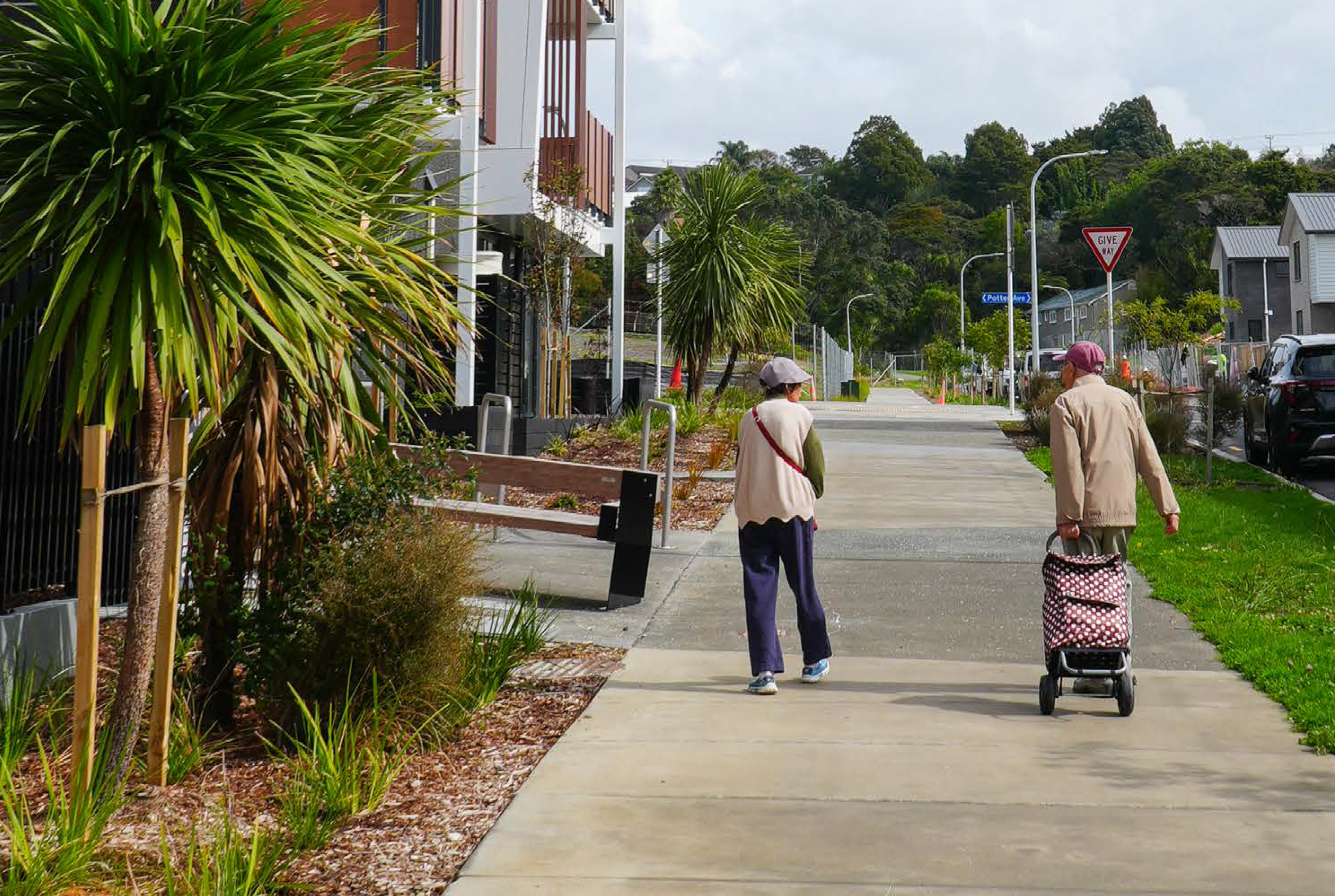
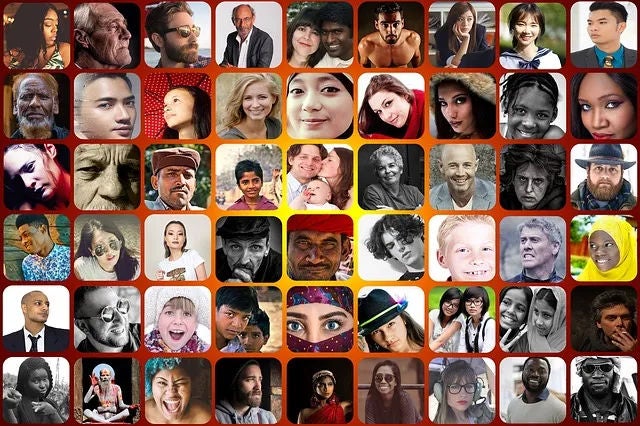
‘Universal design’ means designing for inclusivity and independence. It caters for human diversity as well as life stages and scenarios, such as pregnancy, childhood, injury, disability and old age. Universal design is good design. It makes using our homes, places of work and recreation spaces easier, safer, healthier and friendlier for everyone.
Te Ao Tangata Universal design
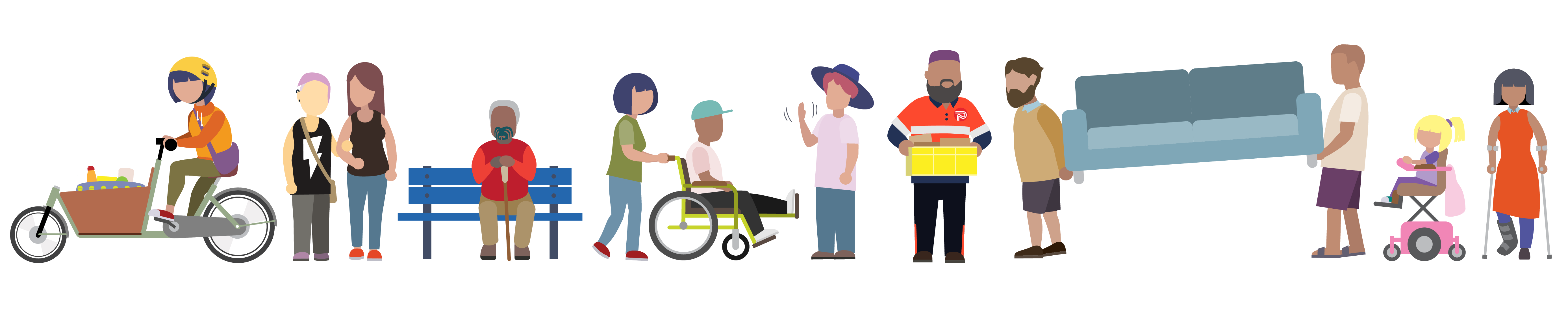
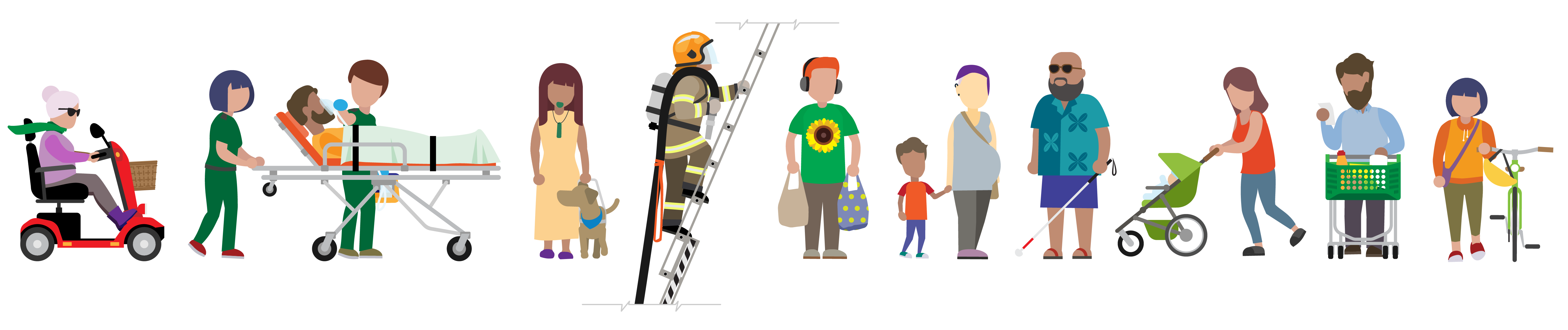
The eight goals of universal design
How do we go about achieving outcomes such as social inclusion, health and wellbeing, and equity through design? There are eight practical goals that provide a framework for designing with universal needs in mind.
A video hosted by Elise Copeland, doing a walking tour of Auckland Central, talking about the 8 goals of Universal Design.
Body fit
Accommodating a wide range of body sizes and abilities
People come in a range of shapes, sizes and abilities. Many people require more space around their bodies when they are pushing prams, using wheelchairs, carrying luggage, walking with walking frames or sticks, or being assisted by other people or guide dogs.
Currently, building regulations set minimum dimensions to an 'average' body size rather than catering for a broad range of body sizes, shapes, and abilities.
Instead of designing for 'averages' the Universal Design approach aims to accommodate a broader range in people's dimensions and to provide people with choice. Designing buildings, places and spaces for everyone results in more successful design outcomes for all users.
Comfort
Keeping demands within desirable limits of body function
People have different ranges in human body movement, strength and capability. Some people are more flexible, others have reduced strength or grip and a large number are left handed in a world designed for right-handers.

This kitchen tap has a lightweight flexible hose and raised controls, making it easier for people with decreased upper body strength to use.
When designing for the diverse range of human abilities, bio-mechanical data can be used to help inform the design of spaces, places, buildings and products so that they:
- Promote good body position such as providing height adjustable storage.
- Make operating forces as easy as possible to use, such as lever handles or sliding mechanisms on doors.
- Provide environmental supports that are easy to use, such as well-designed handrails on both sides of the stairs.
Cultural appropriateness
Respecting and reinforcing cultural values and the social and environmental context of a design project
Aotearoa-New Zealand is a bi-cultural nation with a unique history and heritage. It is important to reflect Te Ao Māori in our built environment. This can be expressed through design, language, signage, and providing spaces and places that enable cultural protocols to occur.
Being able to clearly see our tangible and lived culture in the built environment helps to foster a sense of place, and can help to normalises the use of both of our national languages in everyday life.
The Te Aranga Māori design principles offer a framework for enacting culturally appropriate and human-centred design.
It is important to recognise that Auckland's population is increasingly culturally and socially diverse, and that this diversity offers Auckland a strength and richness. Over 39% of Auckland's population were born overseas, and English is not everyone's first language.
Providing different ways of communicating information is important, so that all people can participate in city life. Having signage translated into multiple languages in places that are ethnically diverse, and the use of graphics and widely recognised symbols for important wayfinding or emergency signage helps to ensure everyone understands important messages.

Tukutuku panelling at the entrance of the Te Oro Music and Arts Centre in Glen Innes doubles as both signage and a traditional artwork that expresses the relationship between people, place and time.
Awareness
Ensuring critical information is easily perceived
People search, gather, interpret and organize information in their environment using their senses. Therefore, spaces need to be multi-sensory.

A stair landing between two flights of stairs. There are studs in front of each flight showing that people with impaired vision were taken into account when designing these stairs.
For those who rely predominantly on sight- signage, sight lines, and visual safety signals are important. For those who rely on hearing and touch to get around, sound and tactile materials can be used to communicate information.
This is important in everyday use, but especially so in cases of emergency, where awareness and communicating important information quickly is crucial.
Understanding
Making methods of operation and use intuitive, clear and unambiguous
People gather information and make decisions on what action to take as they travel through different environments. These decisions and the resulting actions should be intuitive. Following patterns and using repetition can often help to inform people's understanding of space.
A change in floor surface materials can be a good indicator that the function of the space has changed. For example, a soft sound-absorbing surface such as carpet can be used in workspaces, while corridors and circulation spaces can be indicated with harder surfaces like wood or tile.
Wellness
Contributing to health promotion, avoidance of disease and prevention of injury
This goal is all about designing spaces and environments that contribute to people's mental and physical wellbeing.
This includes designing with injury prevention in mind, promoting active movement, and creating environments that are comfortable and enjoyable, rather than stress-inducing.
Providing access to natural light, ventilation and outlook is important for people's well-being, as these contribute to healthier and more pleasant environments, and have been shown to reduce stress. An example of injury prevention is designing driveways and parking areas to enable safe and accessible routes for all users, including pedestrians, cyclists and vehicles.
Social integration
Treating all groups with dignity and respect
Everyone needs social interaction and contact with other people. Designing spaces for social integration in both the public and the private realm helps to create healthy and resilient communities. This is particularly important for community social infrastructure, such as parks, public squares, leisure centres and libraries, that all people should be able to enjoy and take part in.
Factors that can influence social integration within a space are the levels of sound and light. This can effect whether people linger in a space and interact with one another, or move swiftly through. Acoustic design and light levels should respond to the context of the space, for example, a library should be well-lit, with acoustic dampening to reduce noise from other parts of the space.

This play area is designed for children and adults. Play materials, combined with a variety of seating options and sound dampening materials make the room a pleasant environment for all.
Personalisation
Incorporating opportunities for choice and the expression of individual preferences
Everyone is different, and providing people with options can influence how comfortable they feel using a space. Having the ability to personalise the facilities allows people to make adjustments to suit their own needs.
Examples include being able to move seating around in public spaces, and having adjustable office furniture and equipment to cater for individual dimensions.

This desk can be adjusted for personal use while sitting or standing. Everybody works differently, so it's important that office spaces are flexible to accommodate for individual working preferences.
14 personas to keep in mind
People using crutches
I need...
- Slip resistant surfaces
- Even and unobstructed footpaths
- Resting seats with arm supports
- Gentle gradient ramps
- Step free entrances
- Wide automatic doors
- Enough space to turn around
- Accessible bathrooms
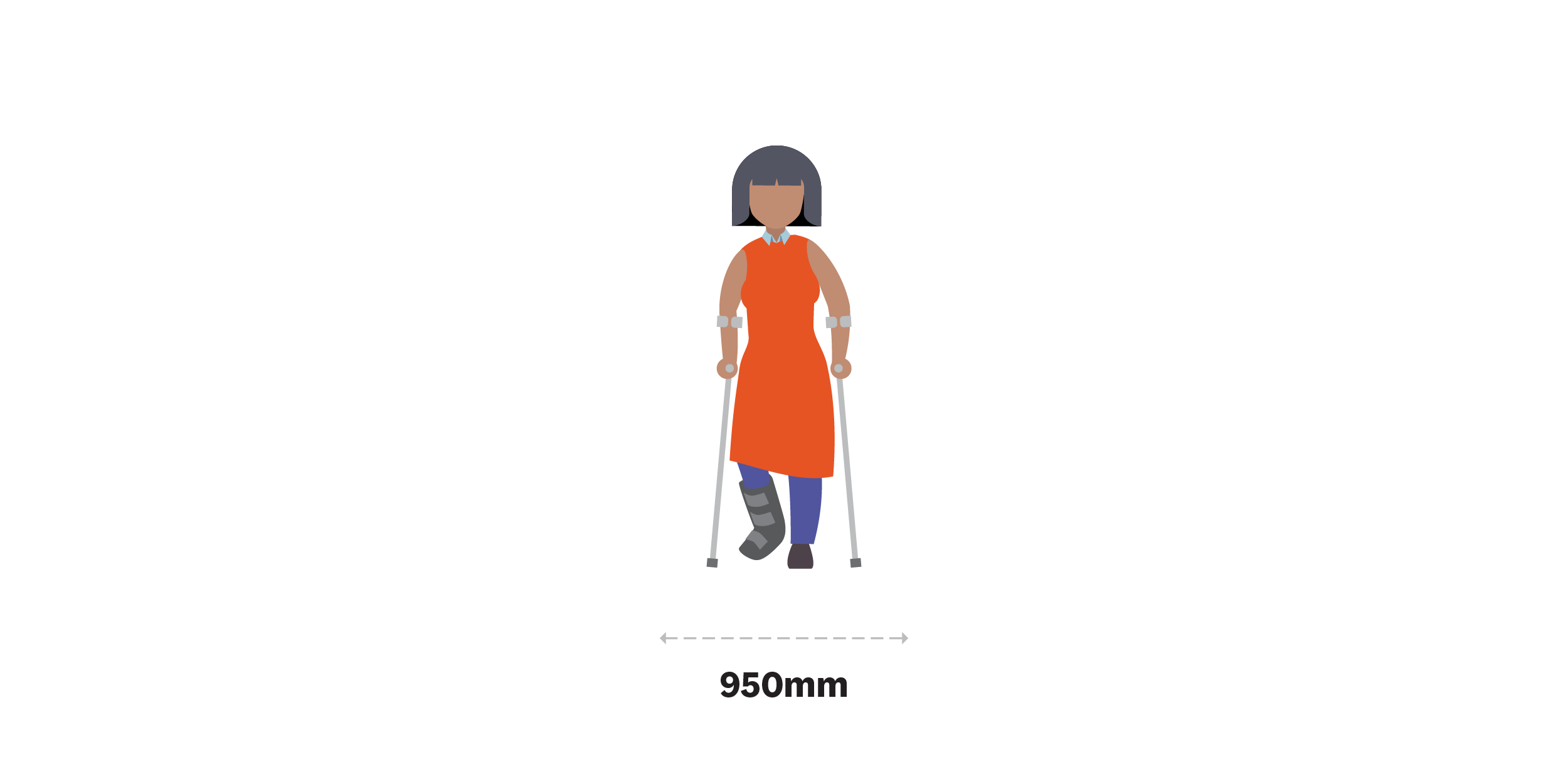
A person using forearm crutches needs a space 950mm in diameter.
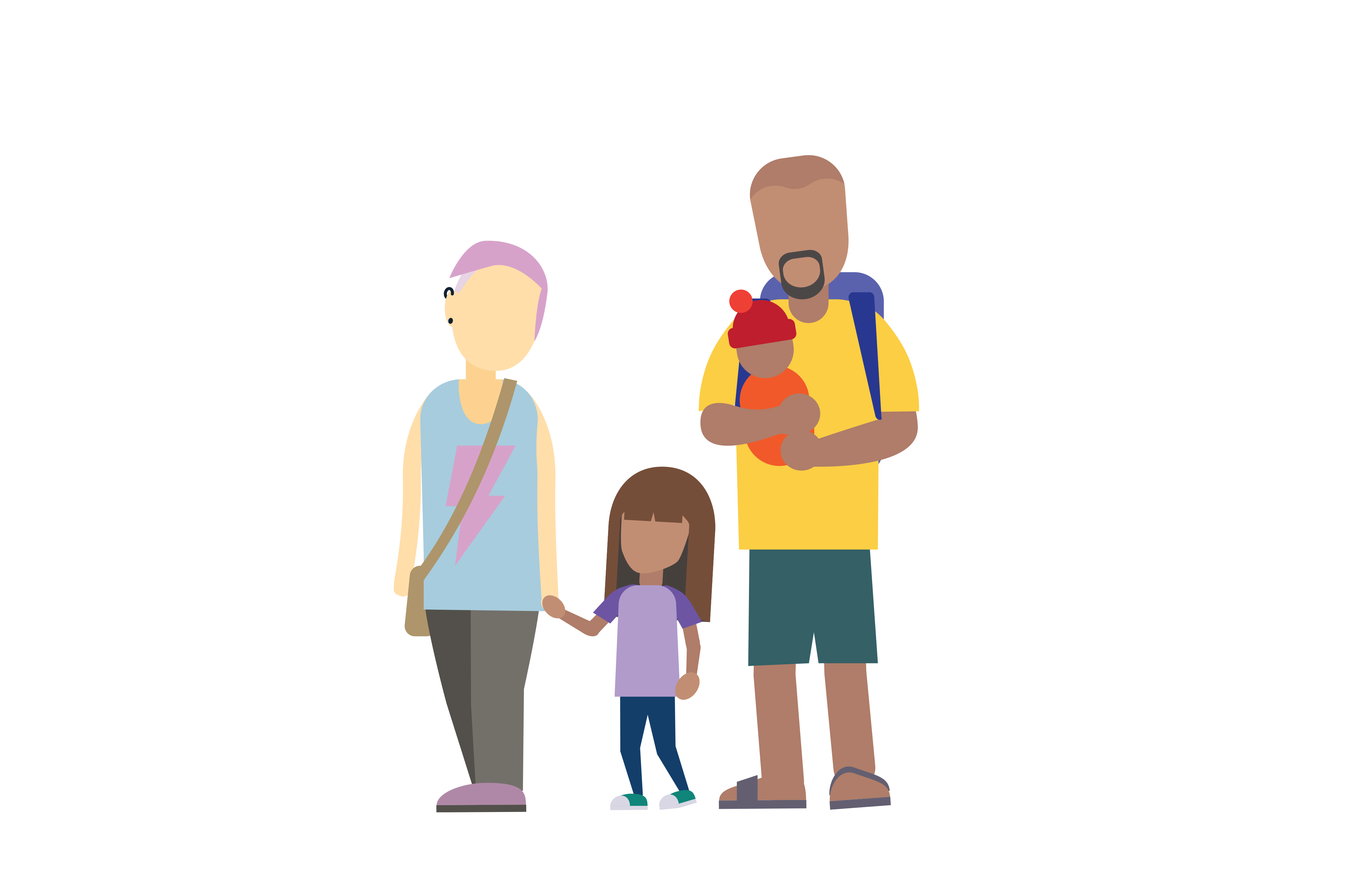
Adults with young children
We need…
- Family bathrooms/changing facilities
- Child sized toilets, lower basins and hand dryers
- Space for breastfeeding mothers
- Slip resistant and even footpaths
- Playgrounds and play areas for children of all ages and abilities
- Water fountains children can use
People with luggage
I need…
- Wide even footpaths
- Ramps without tight corners
- Step free entrances
- Wide doors and entrances
- Access to lifts within buildings
- Extra space within toilets

People who are blind or have low vision
We need…
- Level, wide and unobstructed footpaths
- Strong tonal contrast between street furniture and pavements
- Use texture and colour contrast to provide pathway guidance
- Use audible or tactile indicators to provide warning or wayfinding information
- Clear signage with appropriate colour contrast and font
- Braille and embossed print located to the left of activation buttons in lifts
- Good lighting levels, especially near entrances
- Sensory cues on stairs and ramps including handrails, warning Tactile Ground Surface Indicators (TGSIs) and colour contrasting nosing
- Comprehensive toilet signage including Braille, embossed print and internationally recognised pictograms with strong colour contrast

People using a wheelchair
We need…
- Step-free entrances
- Accessible parking on an accessible route
- Well designed accessible toilets
- Gentle gradient ramps with level landing areas
- Level and slip resistant surfaces
- Wide corridors
- Wide automatic doors
- Linkage buildings to help manage steep streets
- Enough turning space
- Enough time to safely cross at pedestrian crossings
- Dropped kerbs
- Turning space inside and outside of lifts, easily accessible buttons
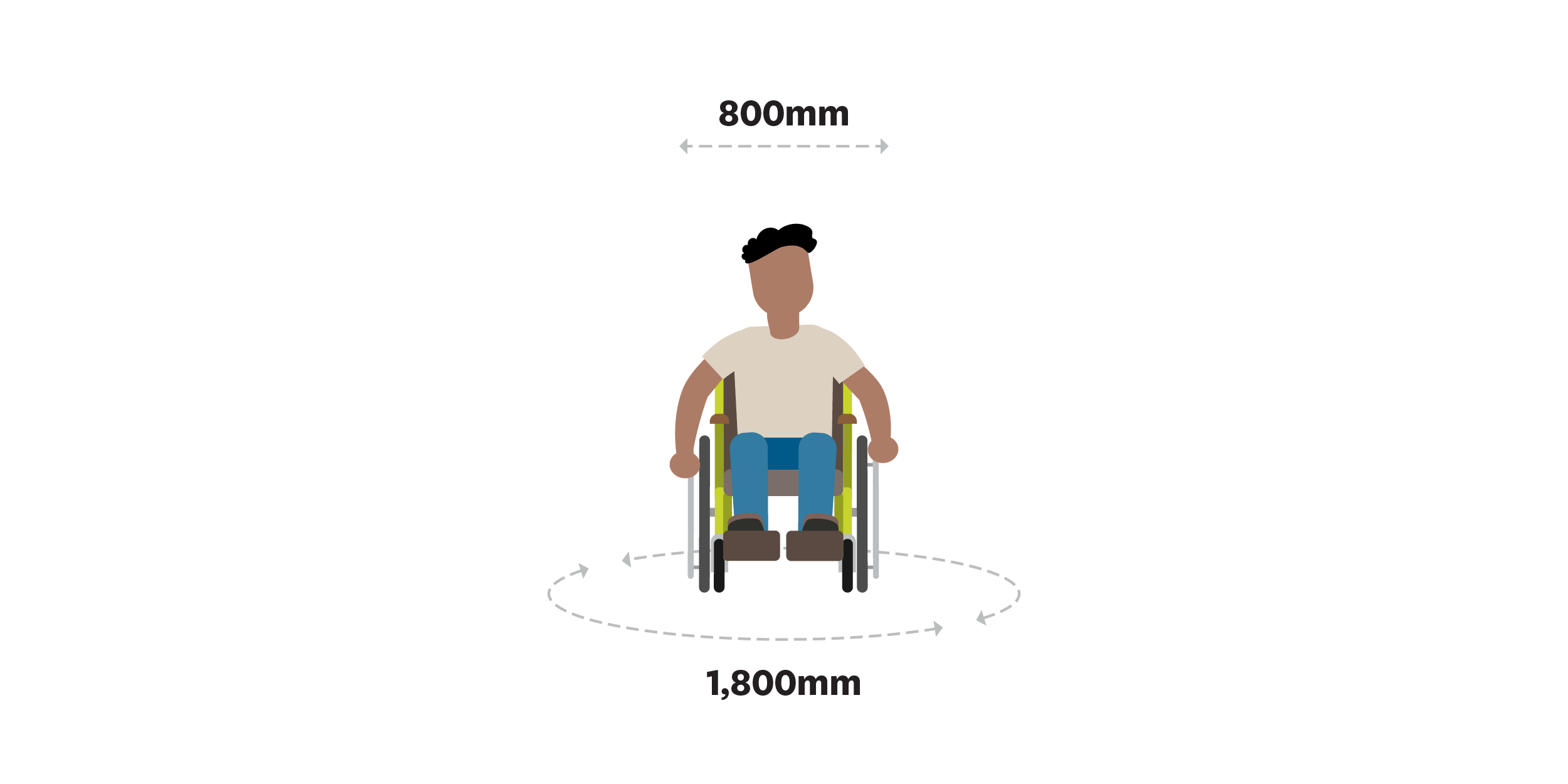
A person in a manual wheelchair needs a space 800mm wide, with a space 1800mm in diameter to turn around.
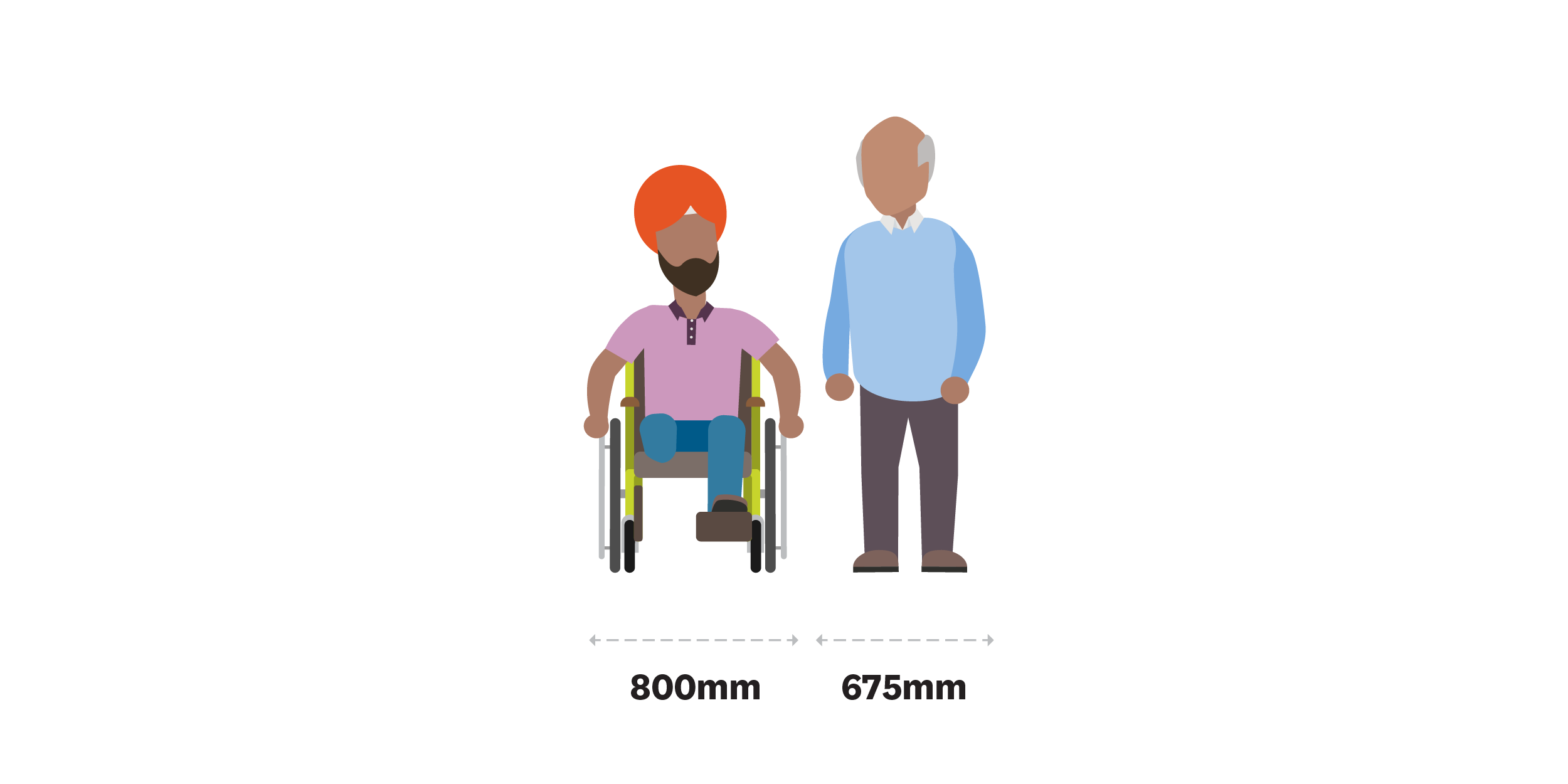
A person next to a person with a wheelchair needs a space 675mm wide, next to the 800mm space for the person using the wheelchair.
People with a pushchair
I need…
- Wide, level entrances
- Automatic or easy to open doors
- Ramps with generous turning space
- Dropped kerbs on footpaths
- Access to drinking fountains children can use
- Easy access to playgrounds and parks
- Accessible or parent and child toilet facilities
- Turning space inside and outside of lifts, easily accessible buttons
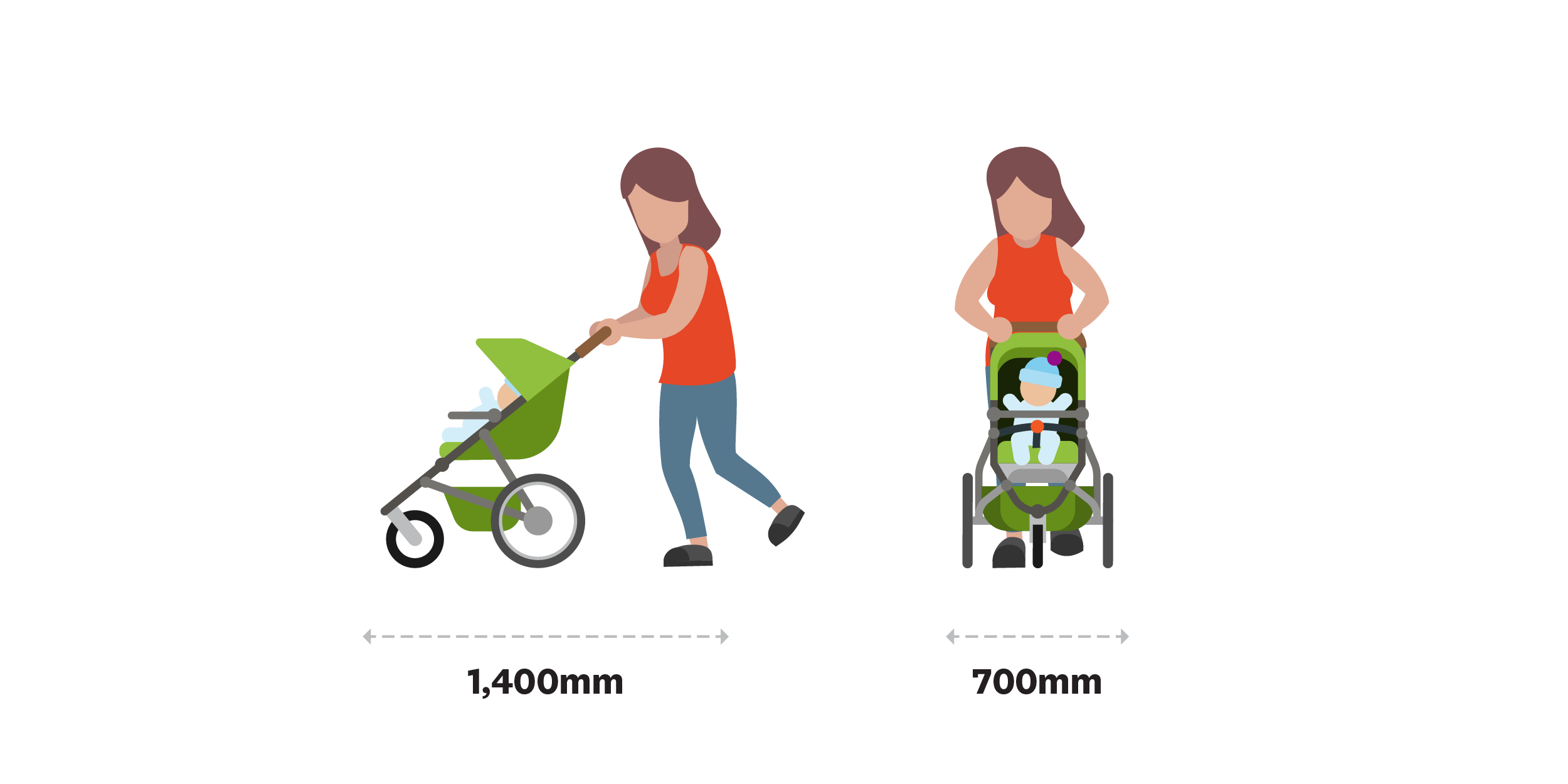
A person with a mountain buggy needs a space 1400mm long and 700mm wide.
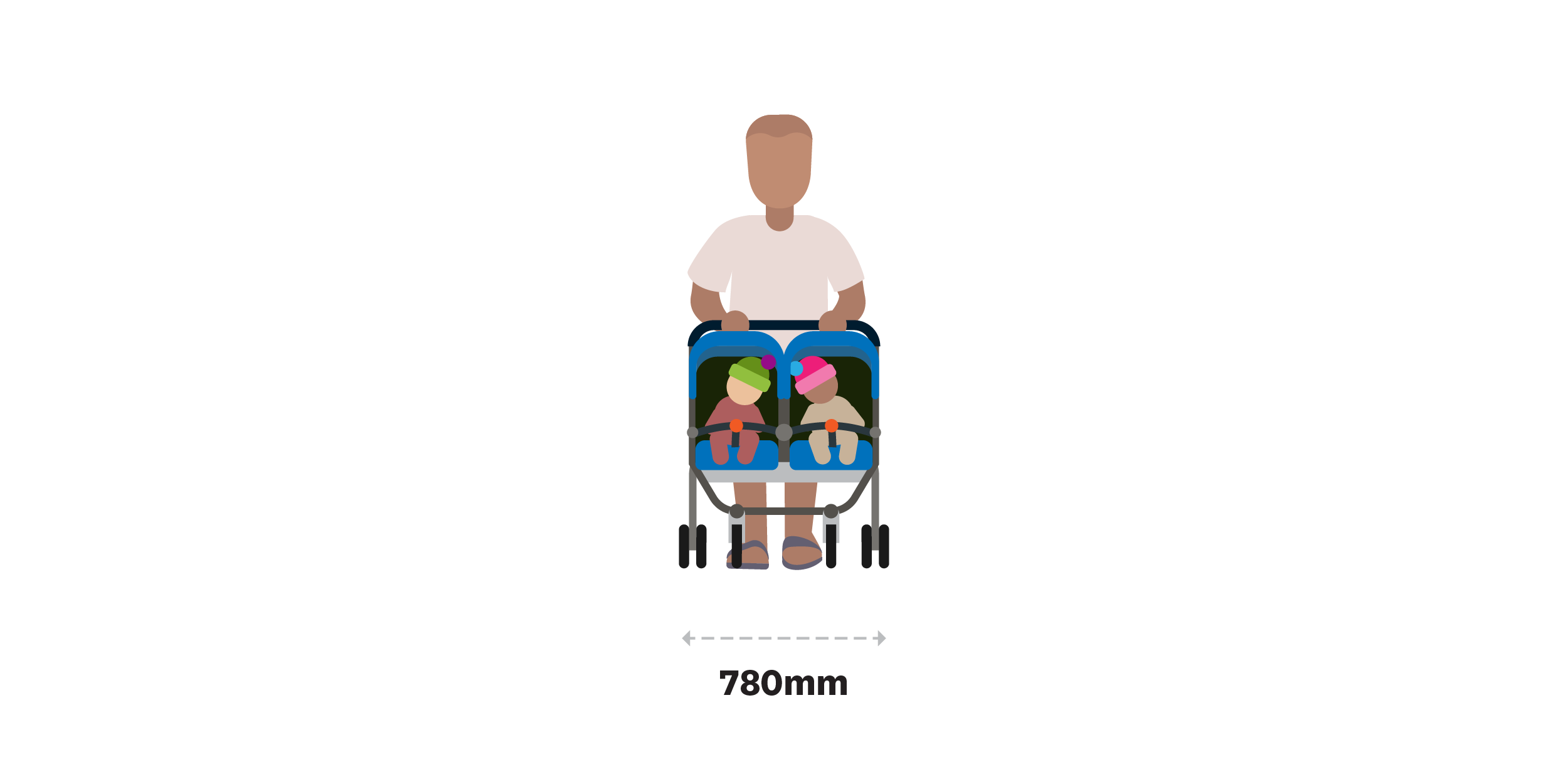
Person with a side-by-side stroller needs a space 780mm in diameter.
Pregnant people
I need…
- Handrails on both sides of stairs
- Even, slip resistant surfaces
- Resting seats with arm and back supports
- Easy to open doors
- Large and easy to find toilets

Delivery person
I need…
- Ramps
- Loading dock same height as floor of vehicle
- Step free entrances
- Slip-resistant surfaces
- Easy to open or automatic doors
- Dropped kerbs
- Level, wide paths without obstructions
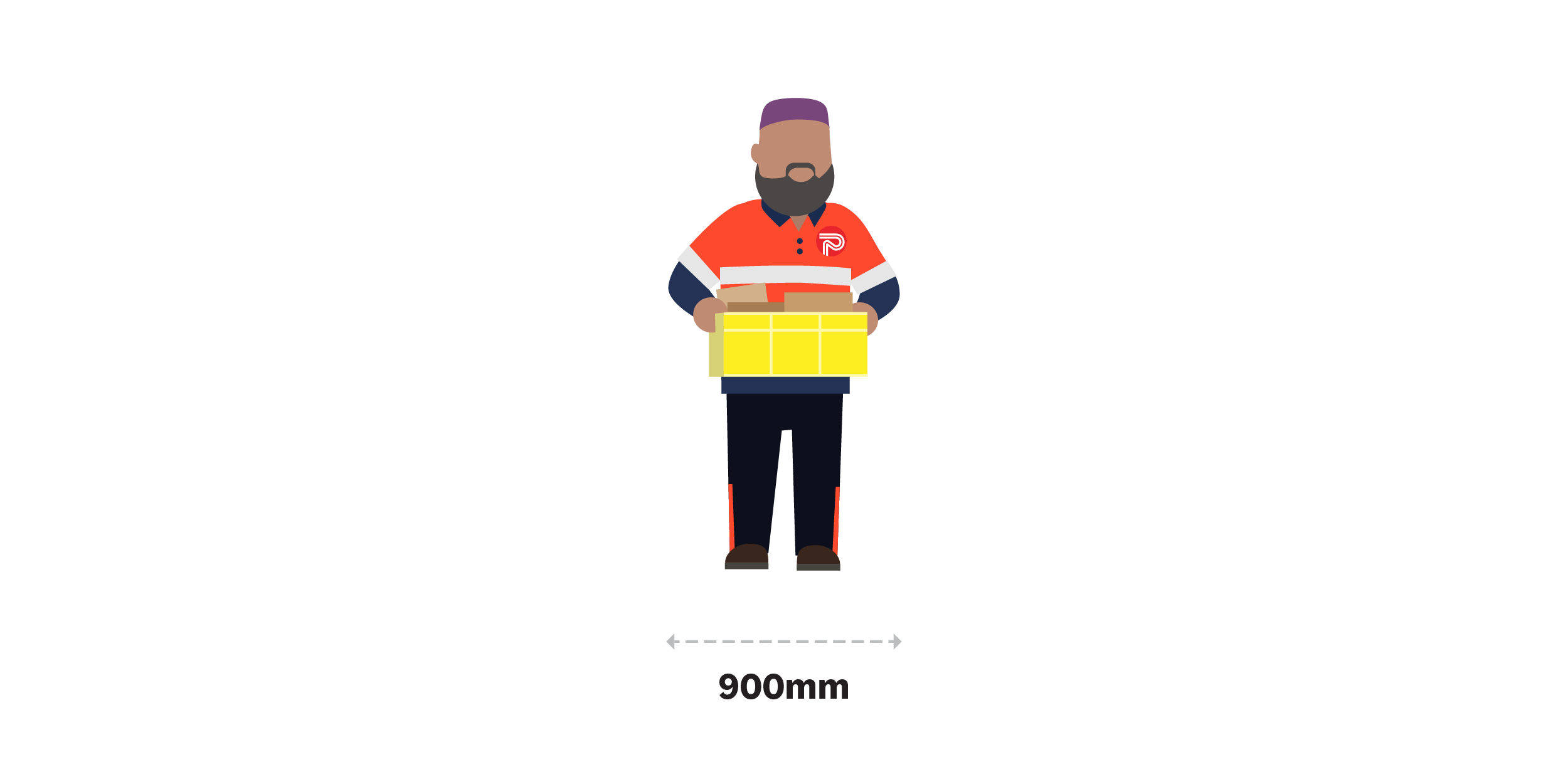
A person with a grocery crate needs a space 900mm wide.
Older people
We need…
- Slip resistant, wide and level footpaths
- Seats with arms and back supports at regular intervals
- Even and sufficient lighting
- Landmarks for orientation
- Handrails on both sides of ramps and stairs
- Clear and easy to read signage
- Good sightlines to help find our way
- Automatic or easy to open doors
- Car parking such as priority parking for older people
- Ambulant toilets including wider cubicles and L-shaped grab rails
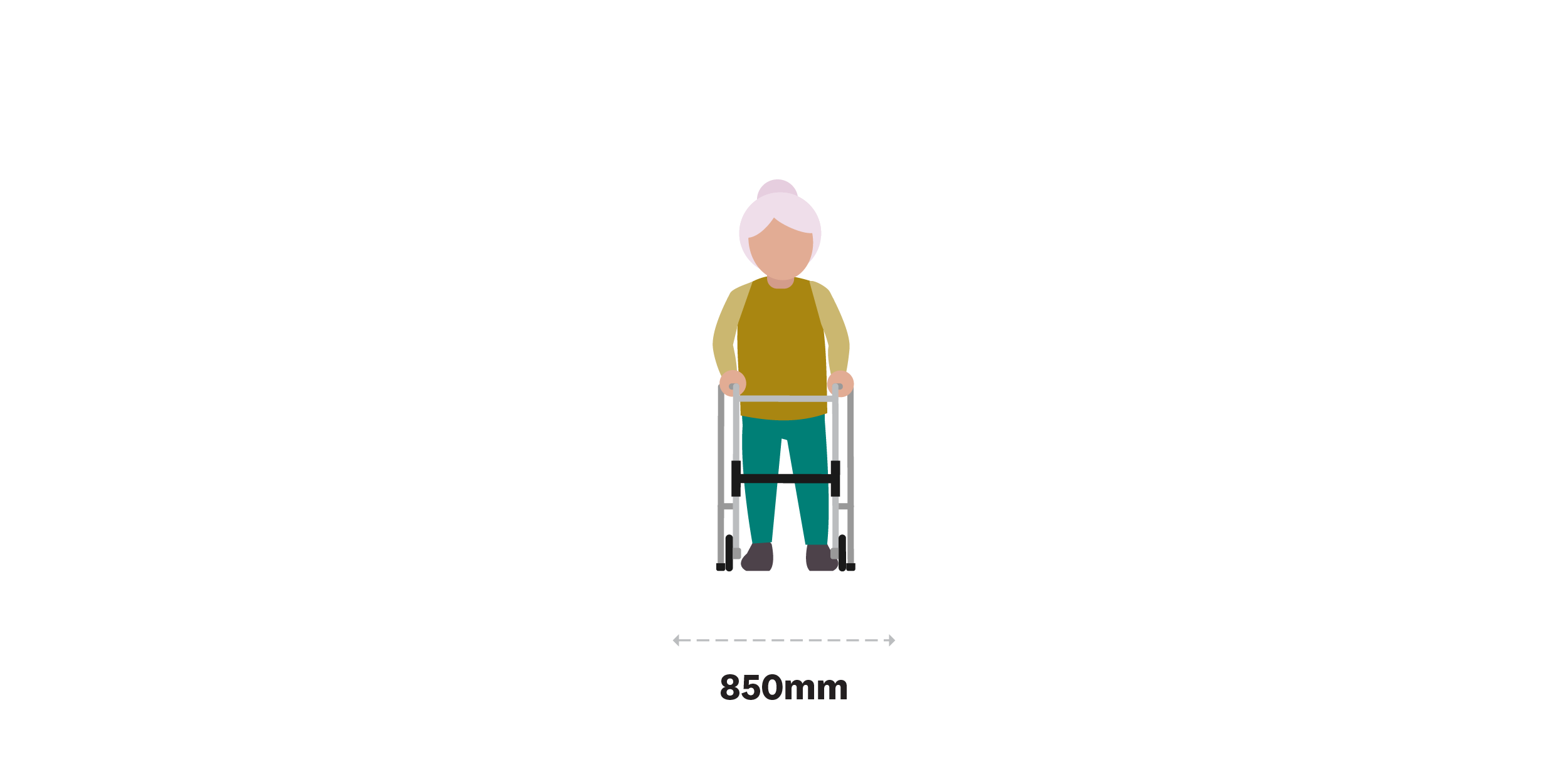
A person with a walking frame needs a space 850mm in diameter.
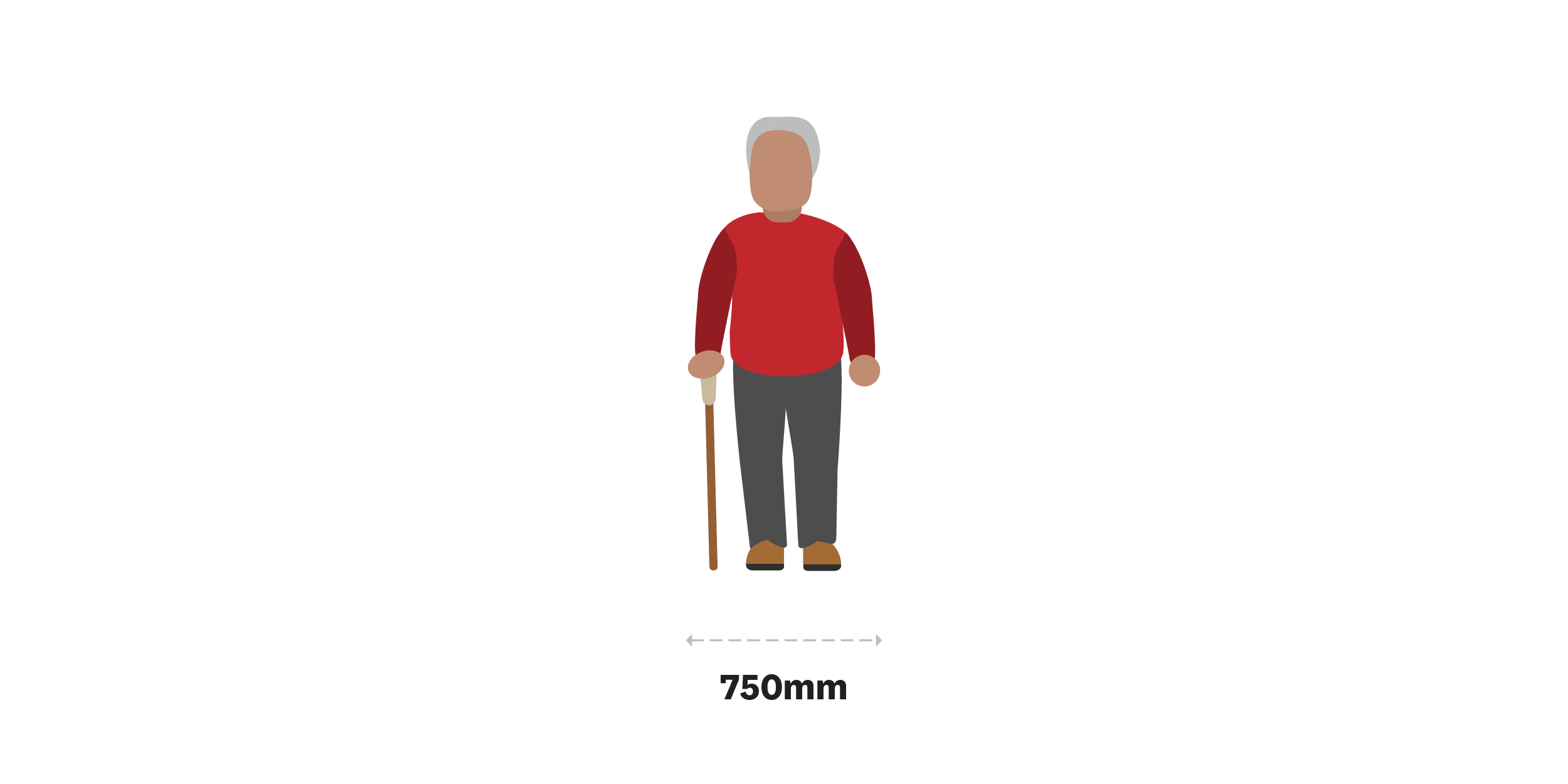
A person with a walking stick needs a space 750mm wide
Tourists
I need…
- Clear wayfinding maps in obvious places with key destinations
- Pictograms and translation of information
- Landmarks to orientate myself
- Accessible toilets that are easy to find
- Clear public transport information
- Seating, especially near public transport stops

Ambulance officers
We need…
- Wide corridors
- Lifts able to accommodate stretchers
- Wide automatic doors
- Emergency vehicle parking with dropped kerbs
- Even, slip resistant surfaces
- Gentle gradient ramps
- Step-free entrances
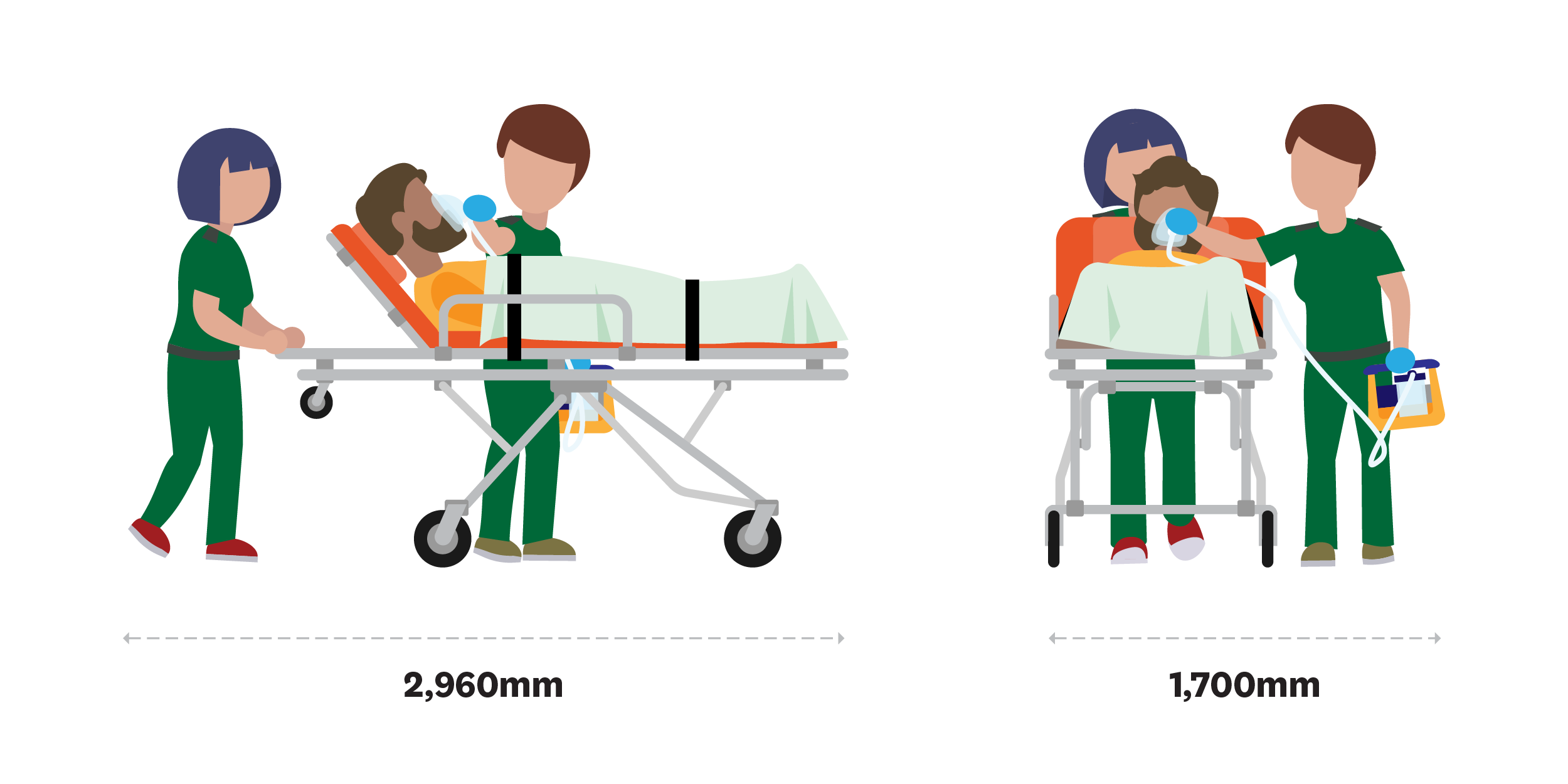
Ambulance officers need a space 2960mm long and 1700mm wide.
People with hearing impairment
I need…
- Seating where I can directly face others
- Even diffused lighting
- Clear sightlines, mirrors for blind corners
- Carpeting to reduce echo
- Quiet areas with less background noise
- Background colours which enhance skin tones for sign language communication
- Wide corridors/footpaths for sign language communication
- Visual/flashing alarms for emergencies
- Visual cues in lifts
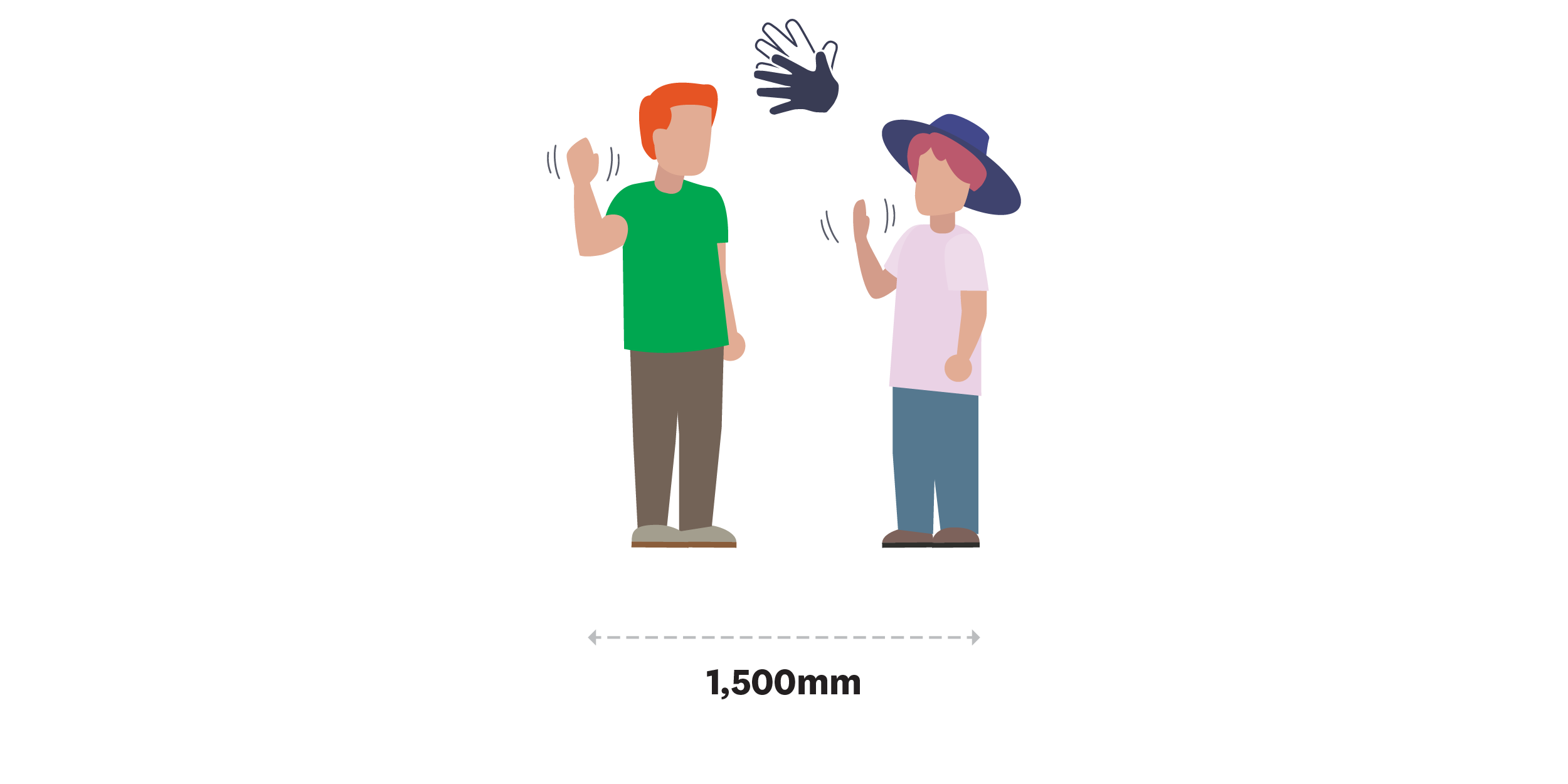
People communicating using NZ sign language need a space 1500mm in diameter.
Wheels
We need…
- Cycle and micromobility-friendly infrastructure that is direct, attractive, comfortable and safe
- Physical separation from high traffic speeds and/or volumes through rumble strips or kerbs
- Step-free, barrier-free, continuous, smooth, and wide cycle lanes
- Cycle lanes well-connected and lead to logical destinations
- Wheel friendly storm water grates and catch pits
- Clear demarcation between wheels and pedestrians
- Well-maintained surfaces
- Good corridor maintenance
- Easy and wide access to footpath from cycle lane/ crossing
- Dropped and chamfered kerbs
- Traffic signals have control buttons of varied heights
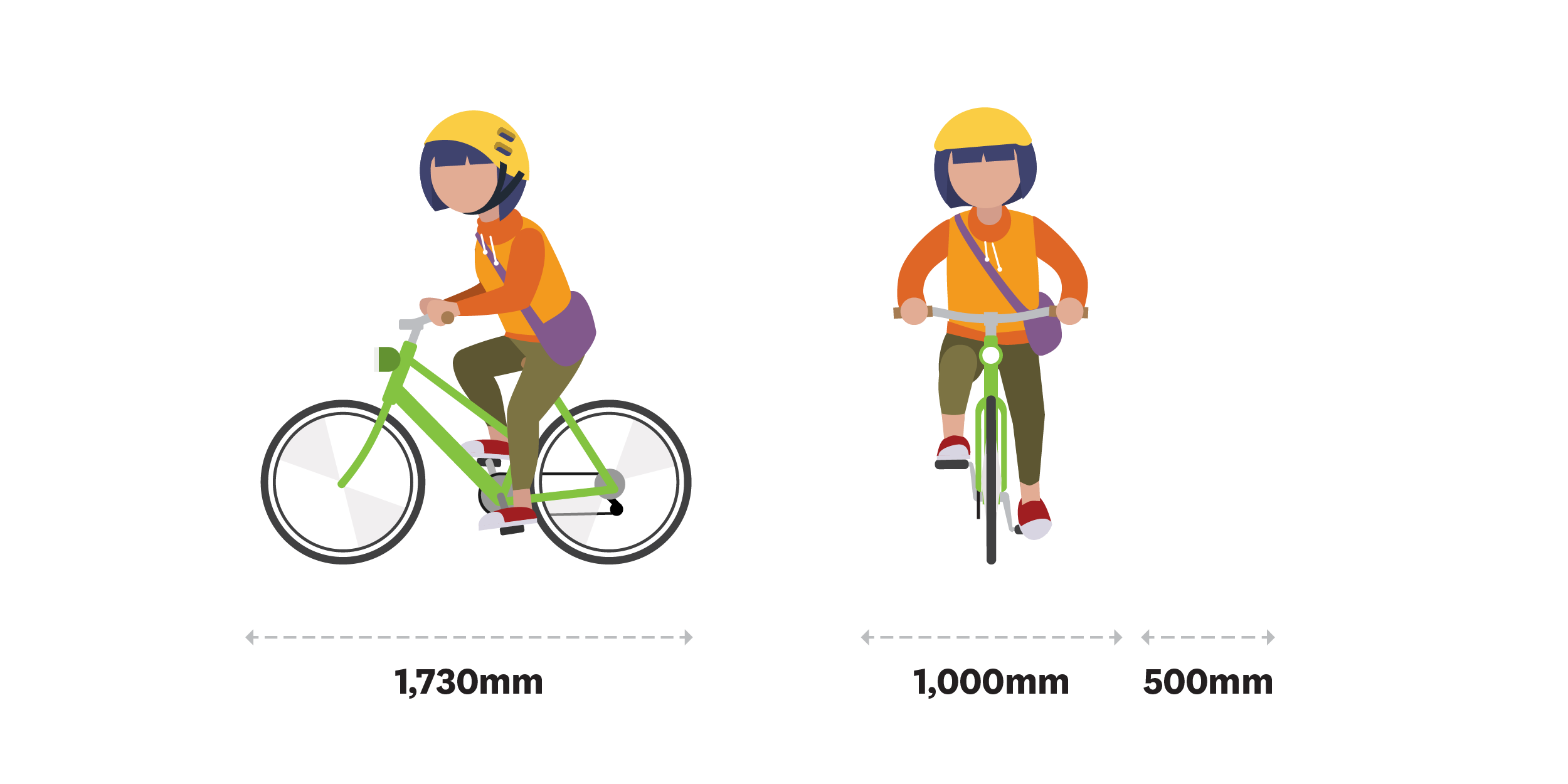
A person on a bicycle needs a space 1730mm long and 1000mm wide, with 500mm clearance on either side.
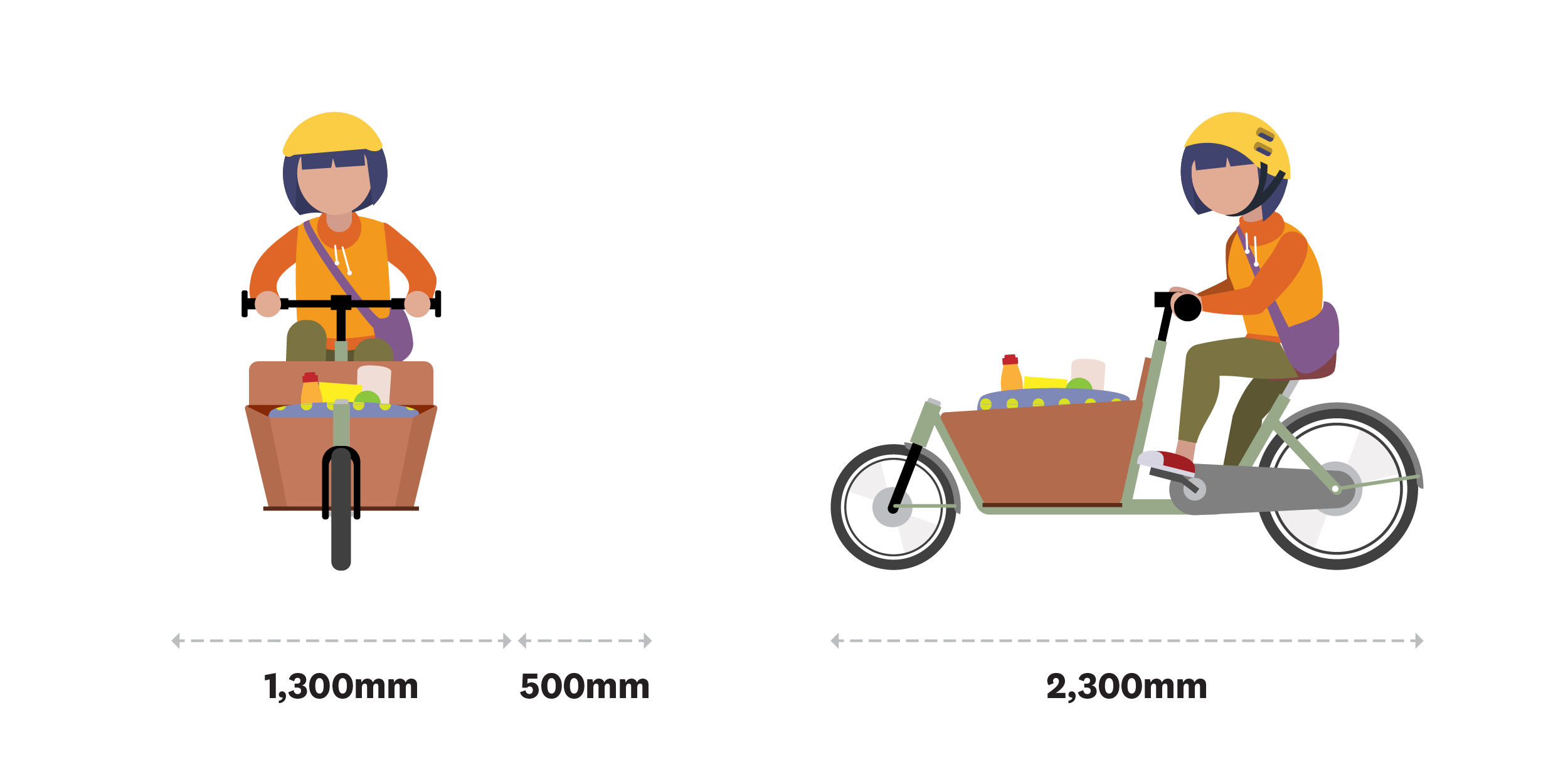
A person on a cargo bicycle needs a space 2300mm long and 1300mm wide with 500mm clearance on each side.
People who are Neurodivergent
We need…
- Continuous lighting without flickering, noise, or shadowing
- Lighting transitions between places/spaces that is gradual
- Glare and reflective surfaces significantly minimised
- Subdued colour palette particularly for furnishings; colour contrast to enhance wayfinding
- Good acoustic design, echo and reverberation minimised
- “Quiet times” promoted when noise is minimised
- Soft furnishings that absorb sound
- Rest areas/spaces that are quiet and calm, particularly important in large buildings and busy places
- Wide pathways with clear sightlines and without busy/3D ground art
- Well recognised and familiar landmarks to assist navigation – plain, literal and easy to understand
- Internationally recognised symbols and plain English/Te Reo Māori signage
- Indication of where to line up to join a queue, can be at ground level
- Lifts that have at least one solid/opaque wall and one glazed wall
- Heating/cooling elements that do not blow directly on faces

Universal design focus areas
Use these checklists and guidelines to help you achieve a universal design approach to key focus areas and make our buildings and places more inclusive for all.
Circulation spaces
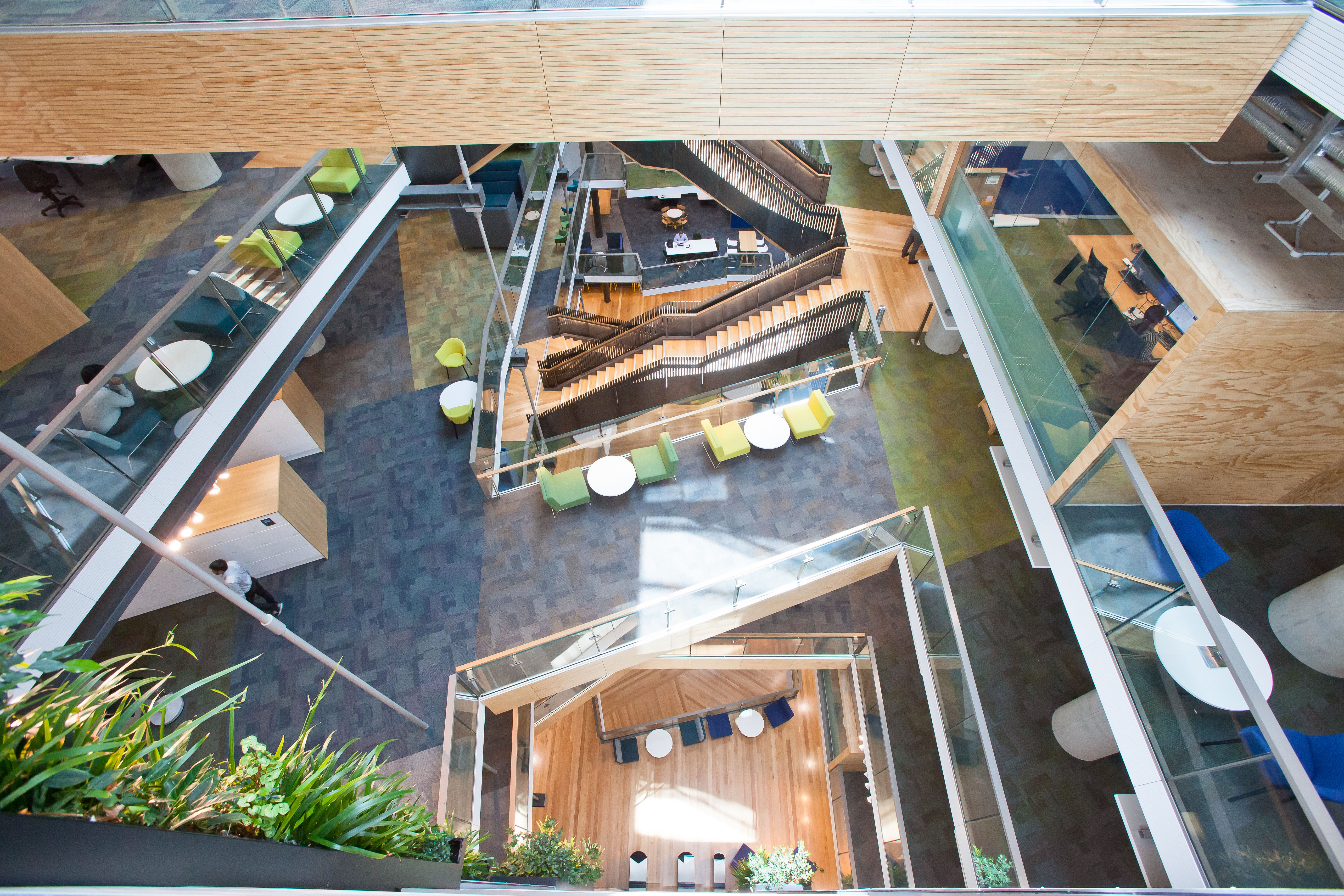
Providing wide pathways and circulation spaces enables a wide range of users ability to move through the space.
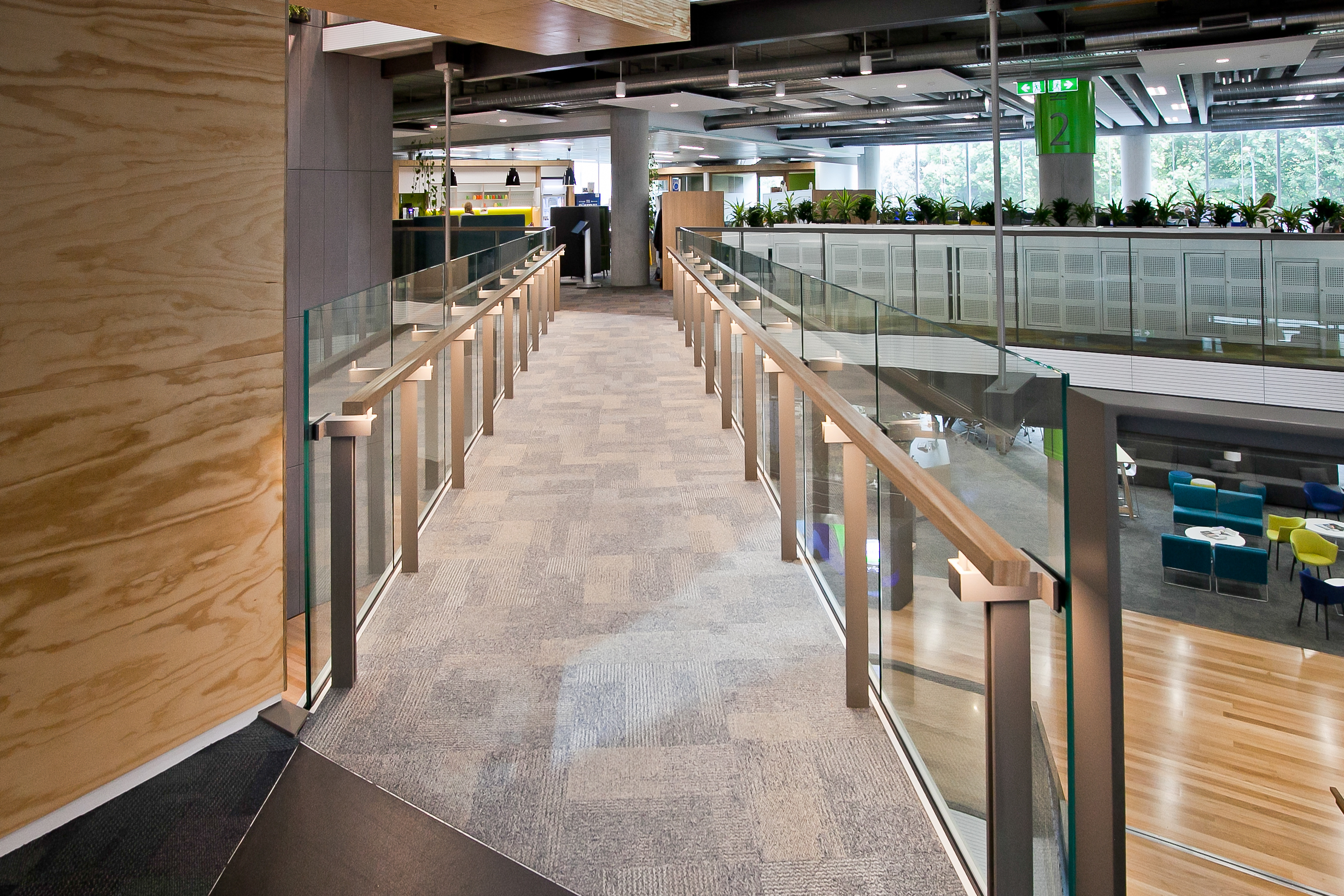
Providing wide access ways enables a wide range of users the ability to move through the space. Good lighting enables navigation.
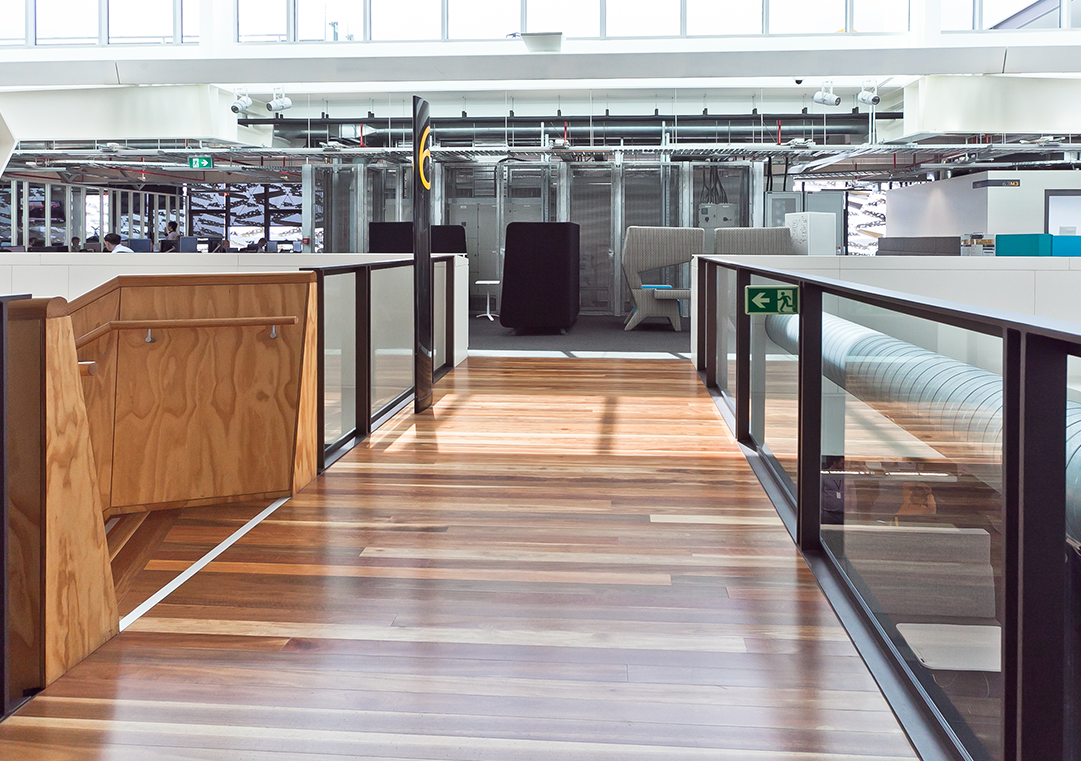
This corridor provides space for different users to pass including people communicating using sign language, people using trolleys or mobility equipment and those that who move furniture. Long corridors should have a clear width of at least 2m to enable people to easily pass each other moving in either direction. For shorter corridors of less than 6m long, a width of at least 1.2m may be acceptable.
Entrances and exits
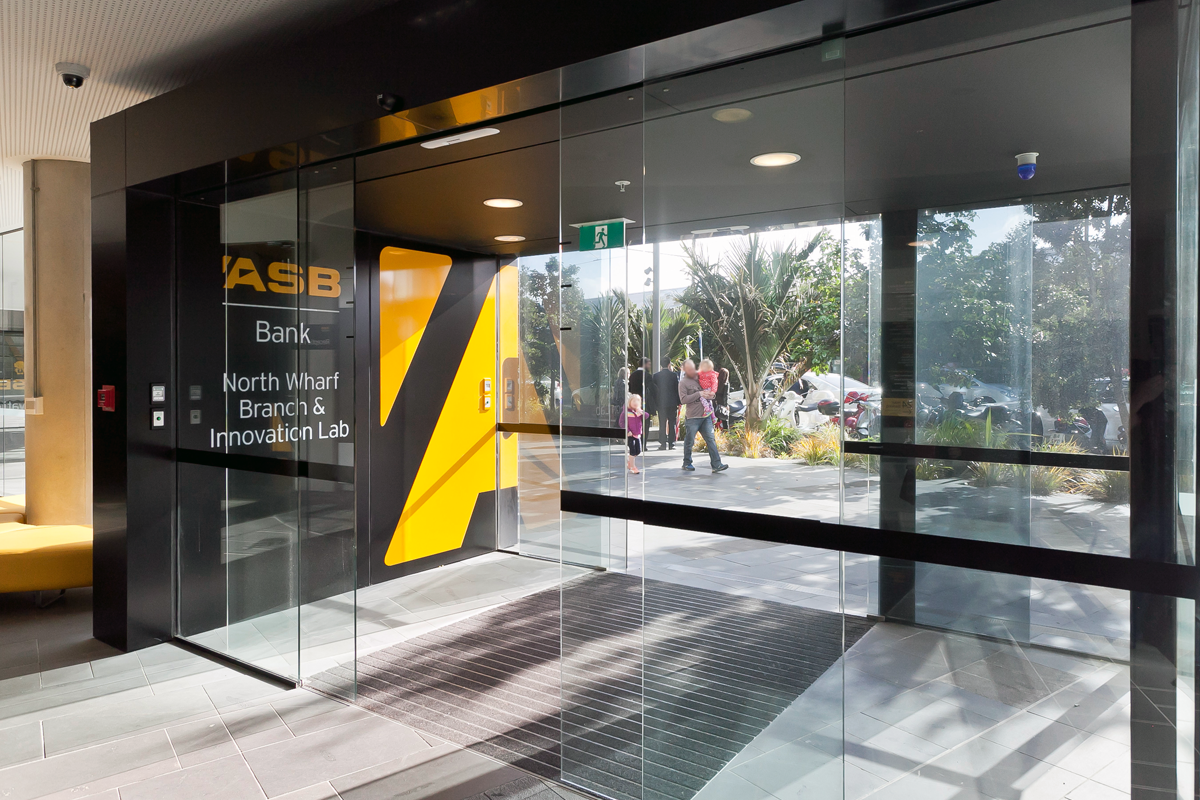
Integrated entrance mats help to ensure both a smooth transition and decreased likelihood of wet surfaces inside of buildings.
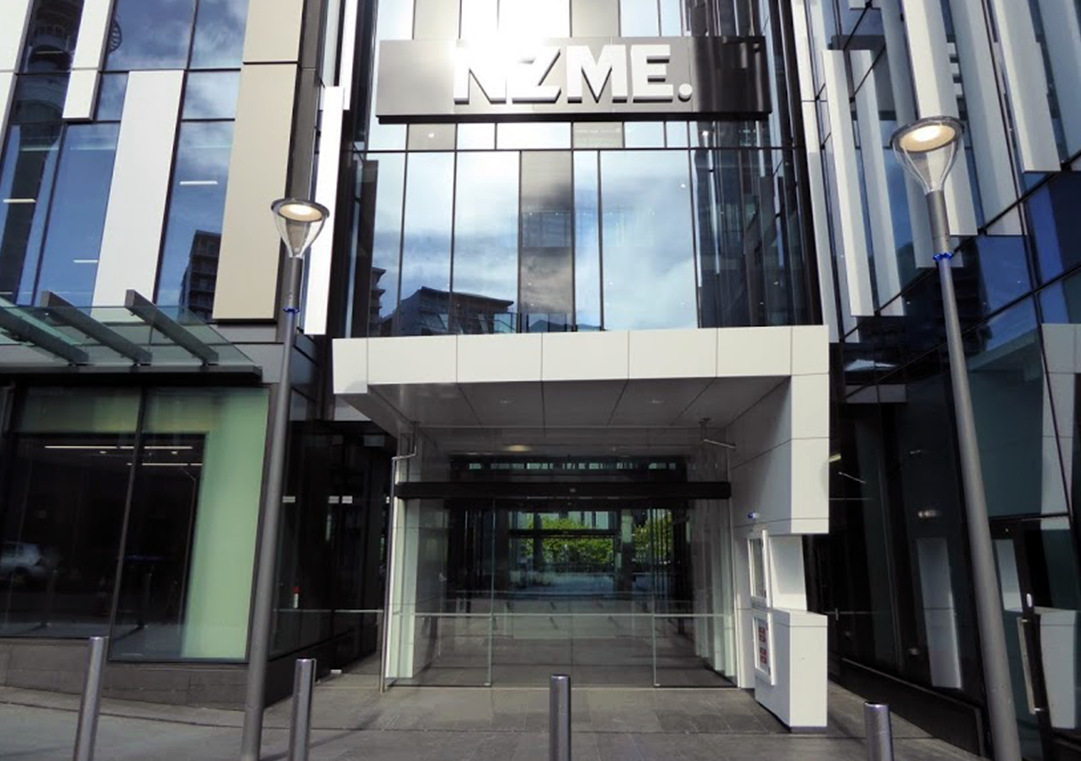
This entrance is recessed within the building, with a large canopy overhanging the approach allowing people to shelter or wait in inclement weather.
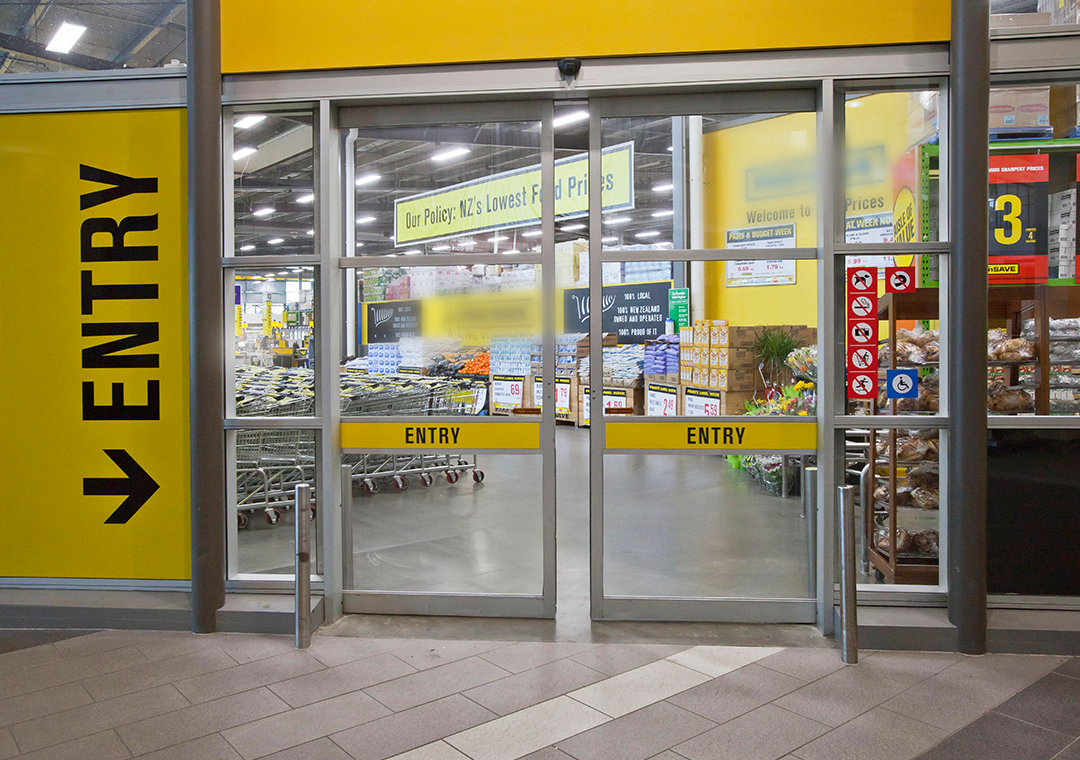
This entrance is easy to identify through its use of a bright colour to contrast with the surrounding environment. The use of large lettering with both “ENTRY” and an arrow further helps to distinguish it as an entrance point. Sentence case would further improve legibility.
Furniture and seating
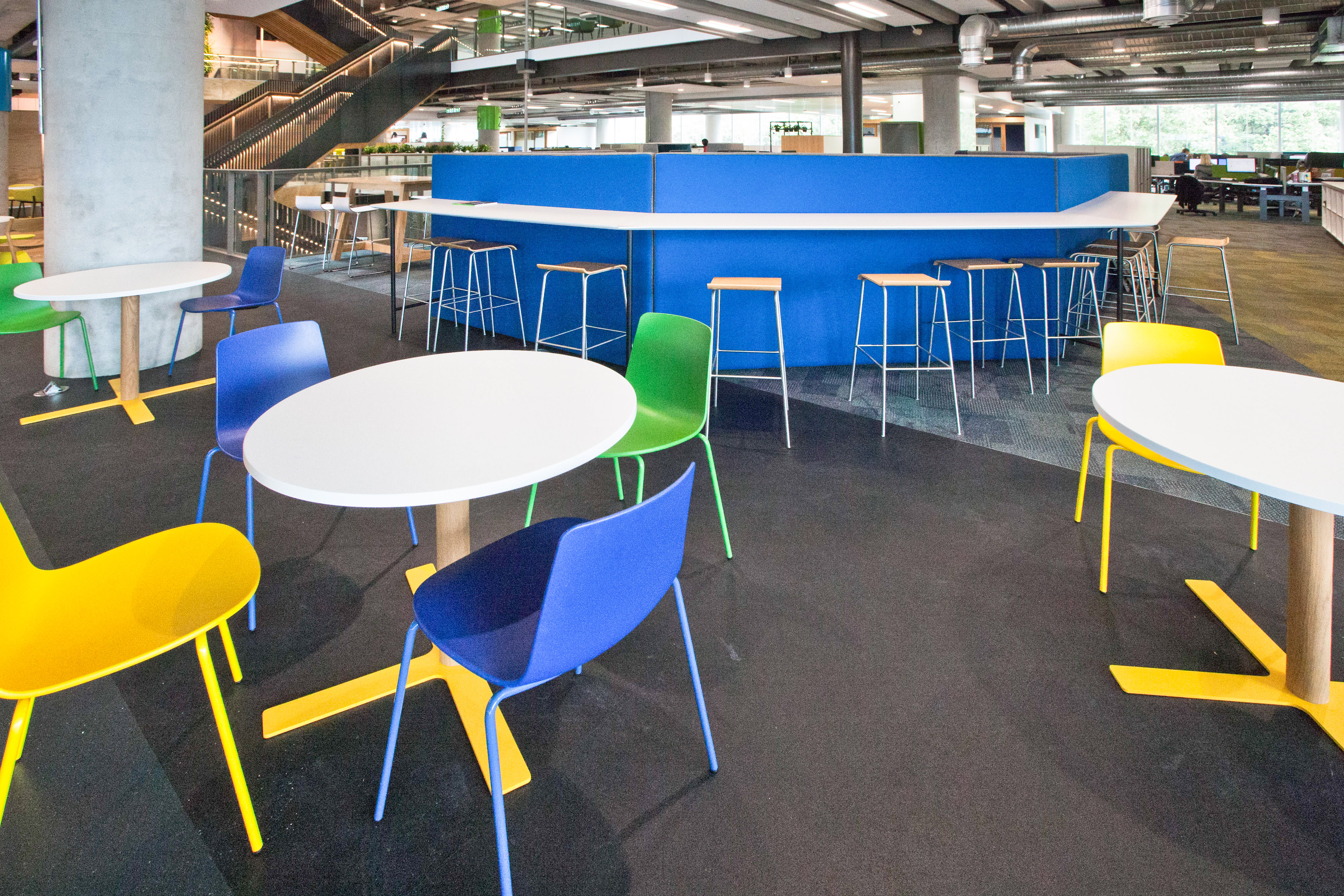
Providing a variety of seating gives people options of seats that suit them. Colour contrast is helpful for people who have low vision. Providing some seating with armrests would be helpful for people with decreased agility.
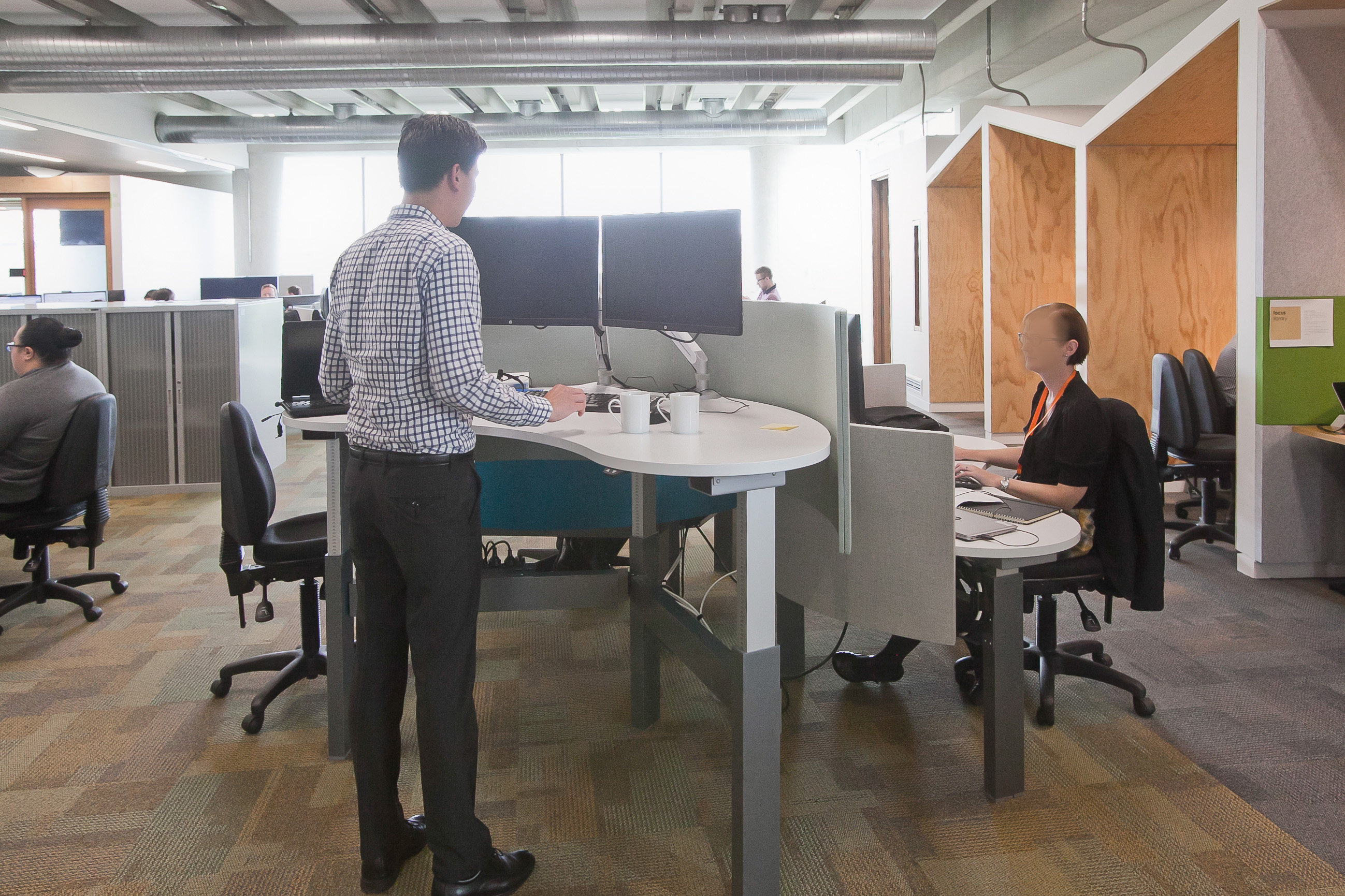
Providing desks that are height adjustable enables users to set the desk at a height that suits them, including the ability to be able to alternate between sitting and standing as able.
.png)
This integrated desk has both a higher and lower section, allowing people of different heights to be treated with dignity. The location of the desk allows it to be approached from different angles.
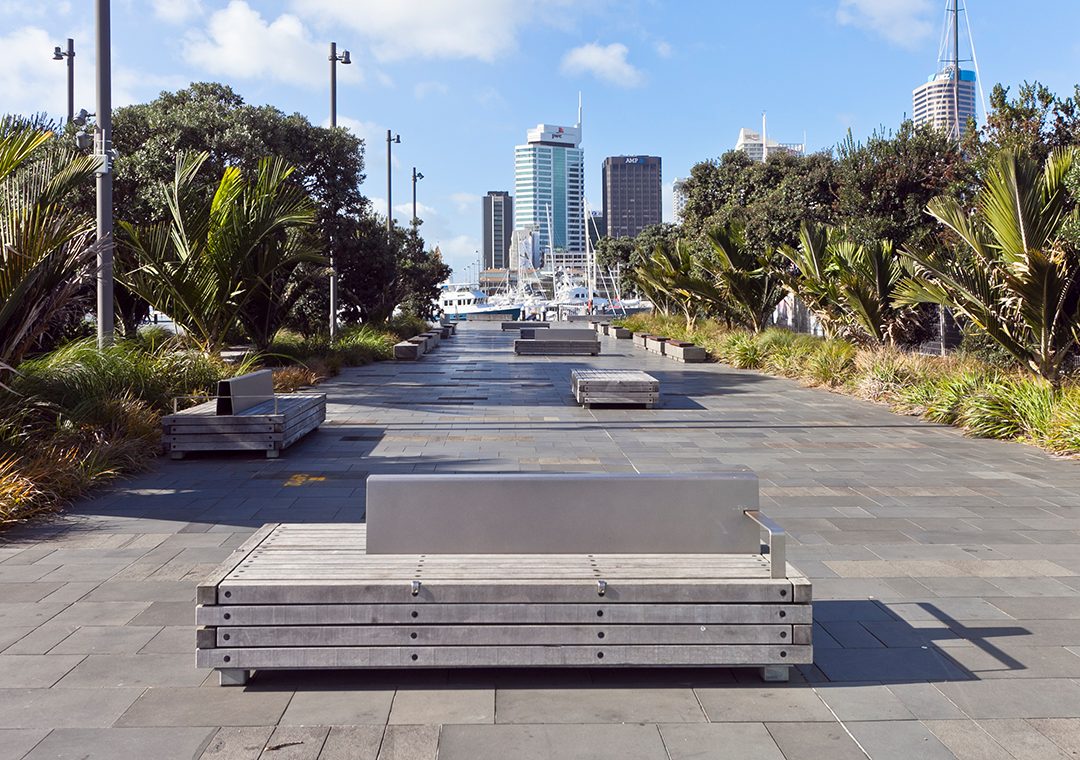
The seating along this popular pedestrian network has been designed to accommodate a variety of users. A stronger colour contrast between the seating and its surrounds would better enable those with low vision to identify the rest area.
Lifts
We have a checklist to show best practice guidance for designing accessible lifts.
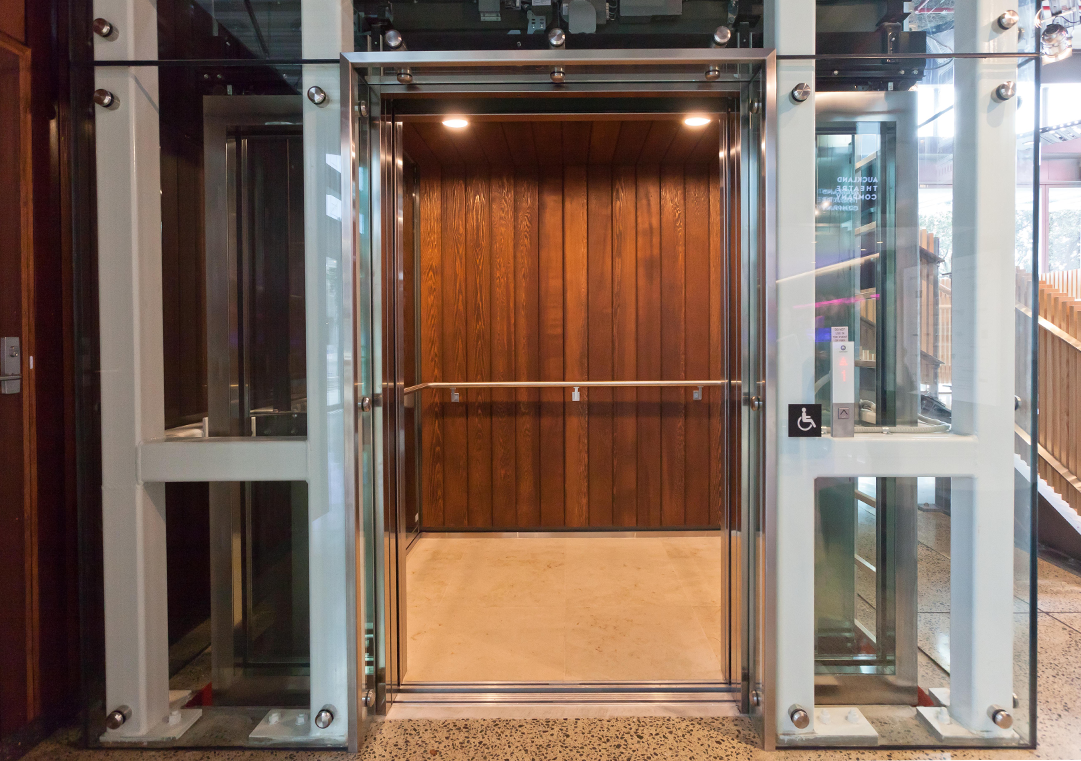
This lift uses wooden paneling to reduce glare. Glare is particularly problematic for people with low vision or cognitive impairment as causes visual distortions leading to disorientation. Handrails provide support to all users as the lift moves. Round handrails are the easiest to hold onto and should be provided on all walls that do not have an opening door.
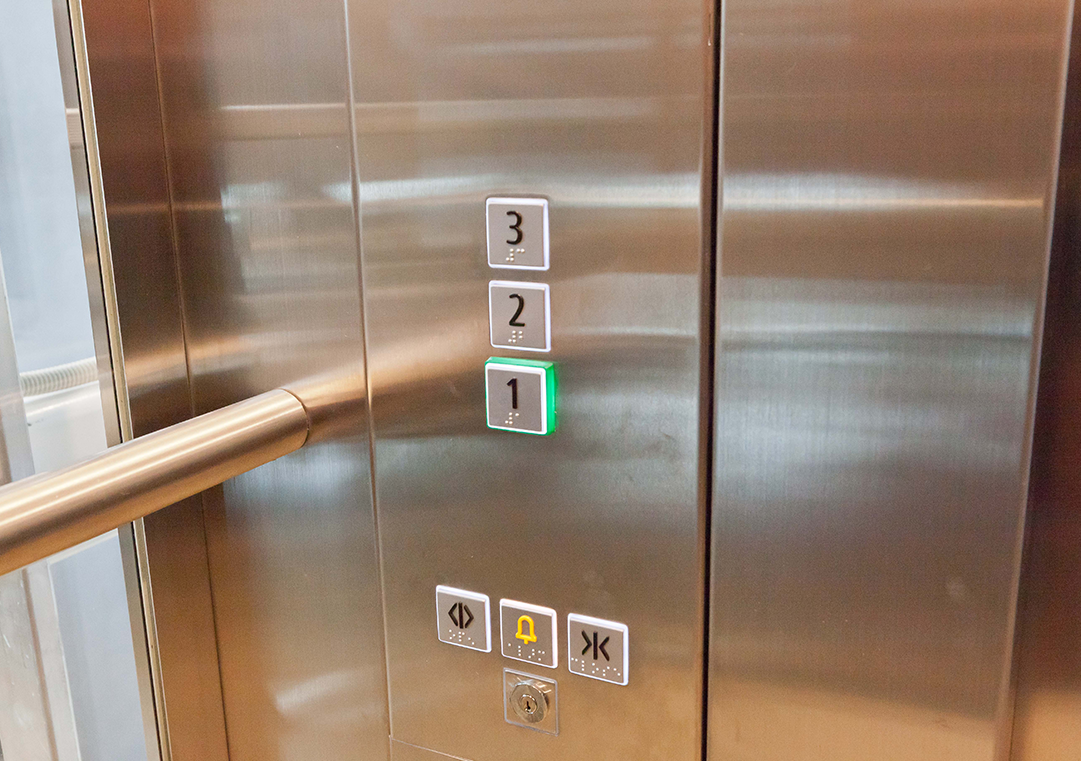
This lift has buttons with raised tactile numbers and Braille placed at a height which allows them to be pushed by all users. The emergency buttons are clearly demarcated through colour contrast. The selected floor is lit. Better practice is to locate Braille to the side of the buttons to enable them to be read without being accidentally pressed.
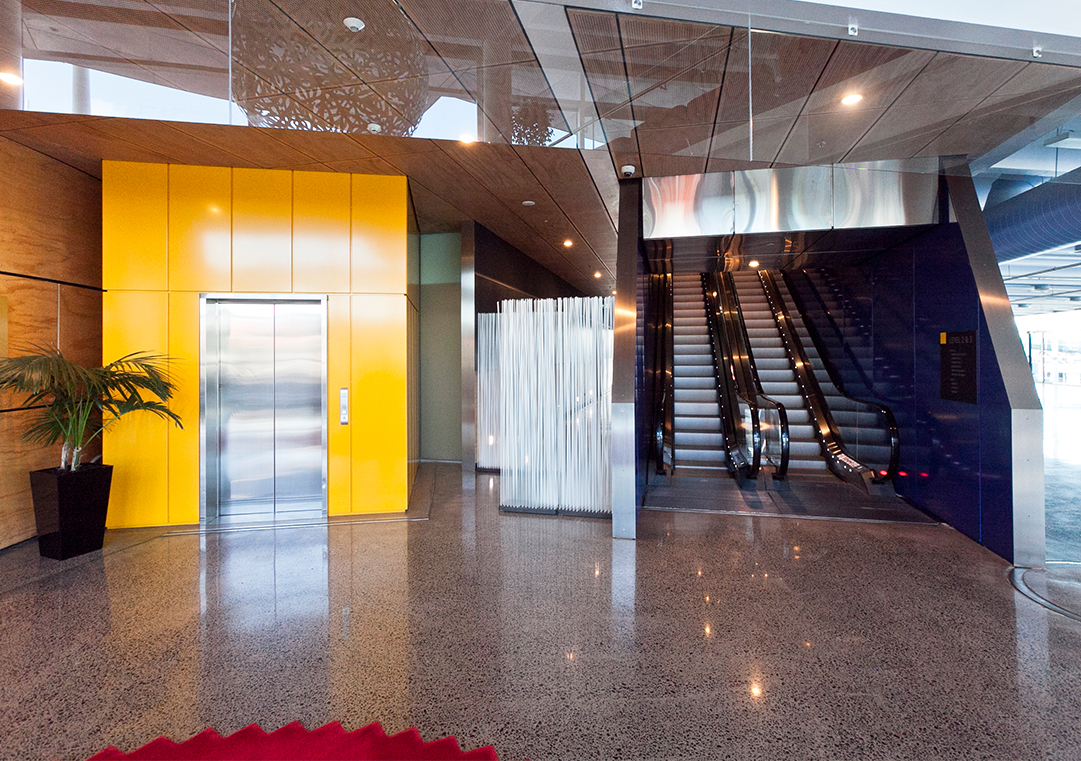
Locating the lift in sightline from the main entrance and providing strong colour contrast assists users in locating the lift. Co-locating vertical circulation provides users with choice. Stairs should not be the only means of accessing part of a building. This is not only for people with temporary or permanent mobility impairment, but also for people carrying boxes, using trolleys, or moving furniture.
Lighting
We have a checklist to show best practice guidance for designing and placing lighting.
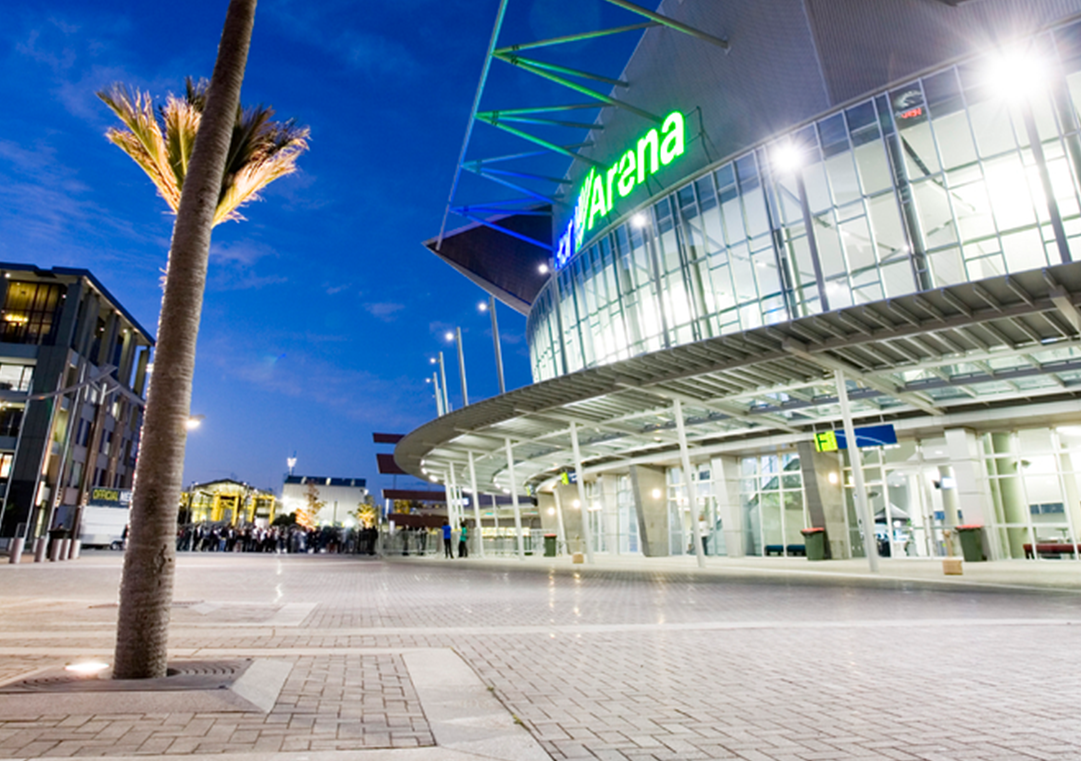
The outside surroundings of this building are well lit, providing safe access routes to and from the building at night.
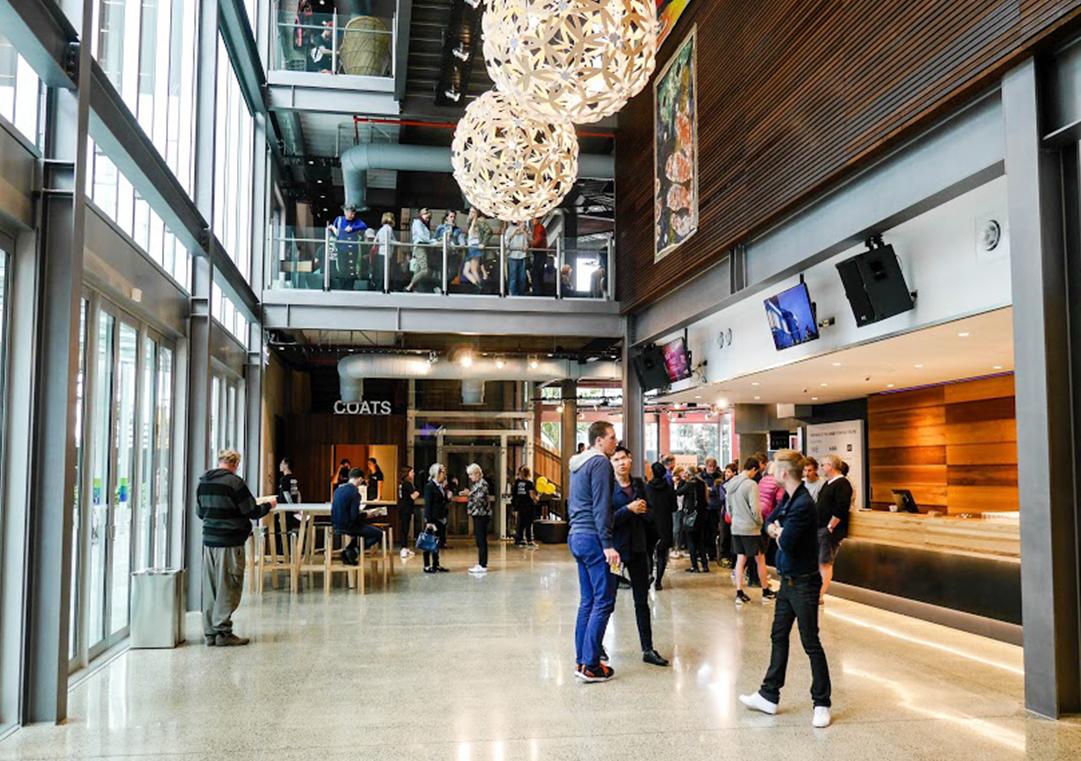
Providing both natural and artificial light can assist with wayfinding and decrease the potential of shadowing.
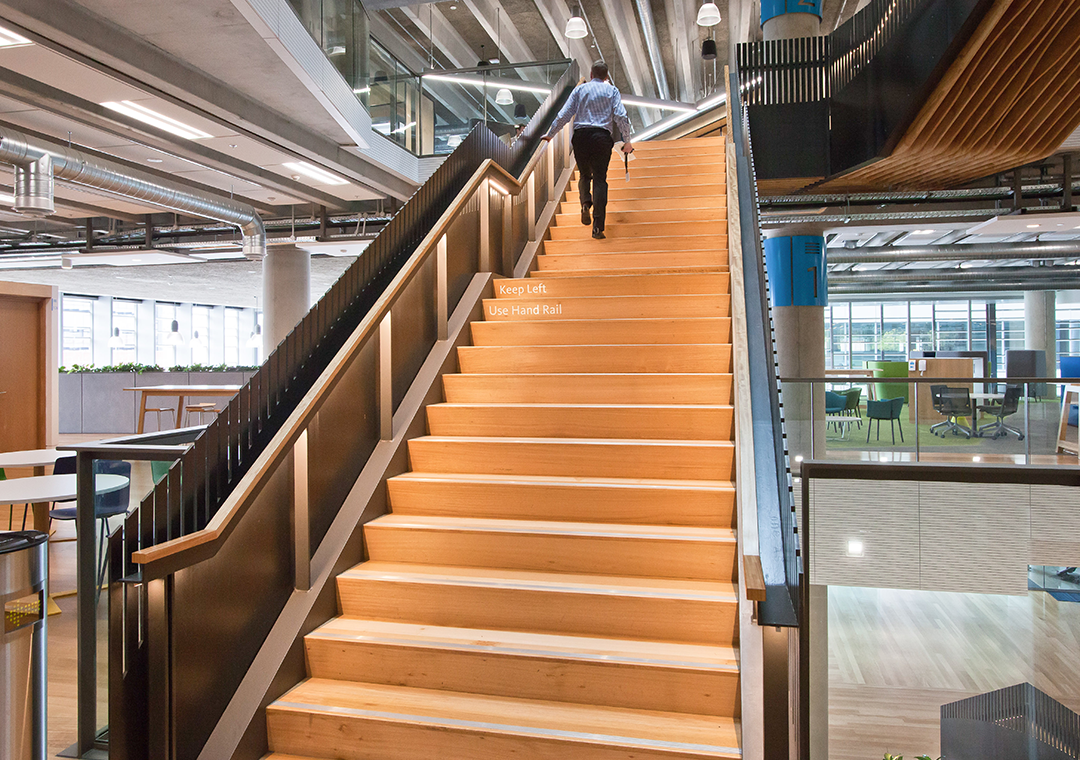
These stairs are well lit which improves safety, especially for people with low vision. Stronger colour contrast to the nosings would be beneficial.
This lift uses wooden paneling to reduce glare. Glare is particularly problematic for people with low vision or cognitive impairment as causes visual distortions leading to disorientation. Handrails provide support to all users as the lift moves. Round handrails are the easiest to hold onto and should be provided on all walls that do not have an opening door.
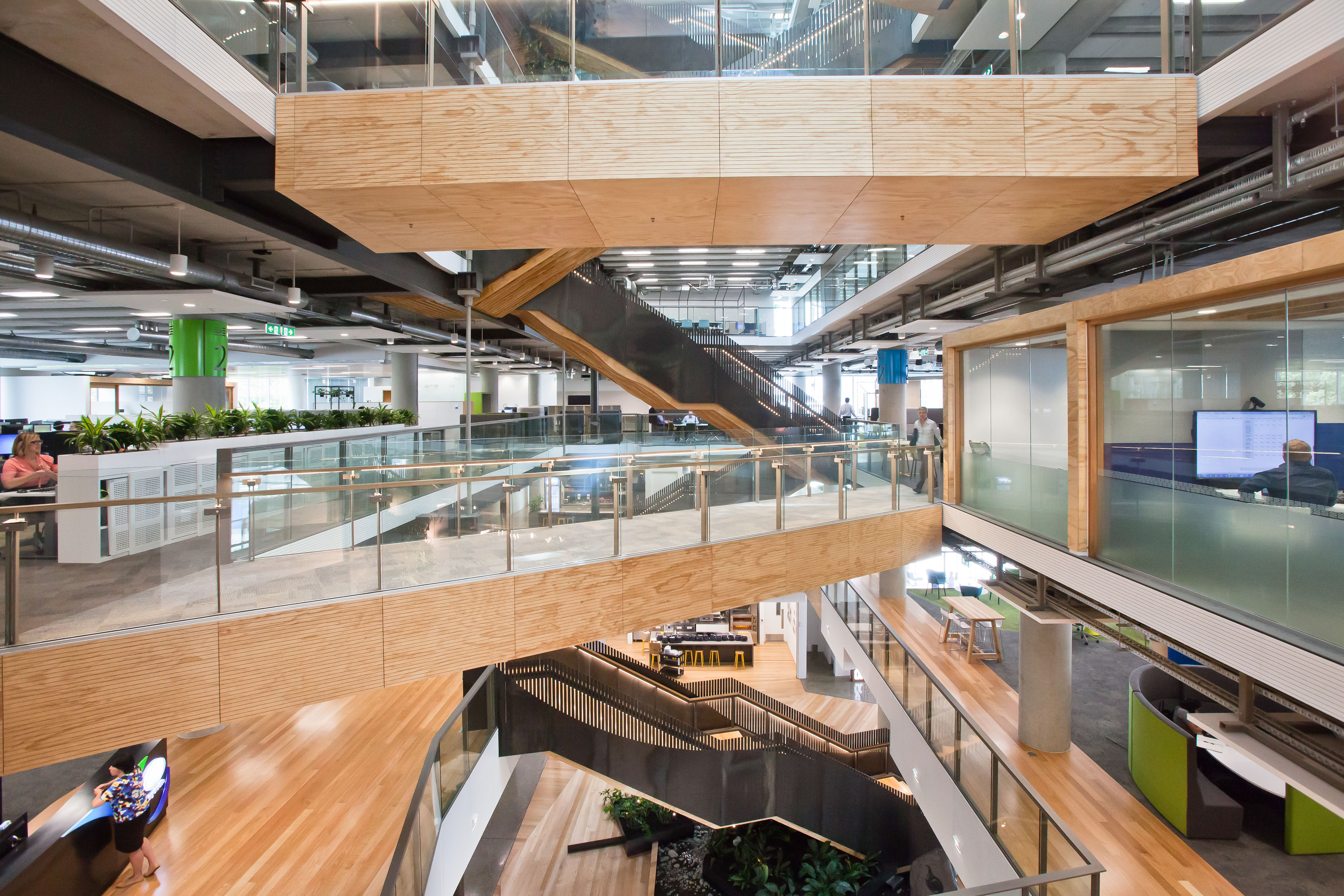
Well lit spaces with both natural and artificial light can assist with wayfinding, especially for people with low vision.
Parking
We have a checklist to show best practice guidance for designing parking.
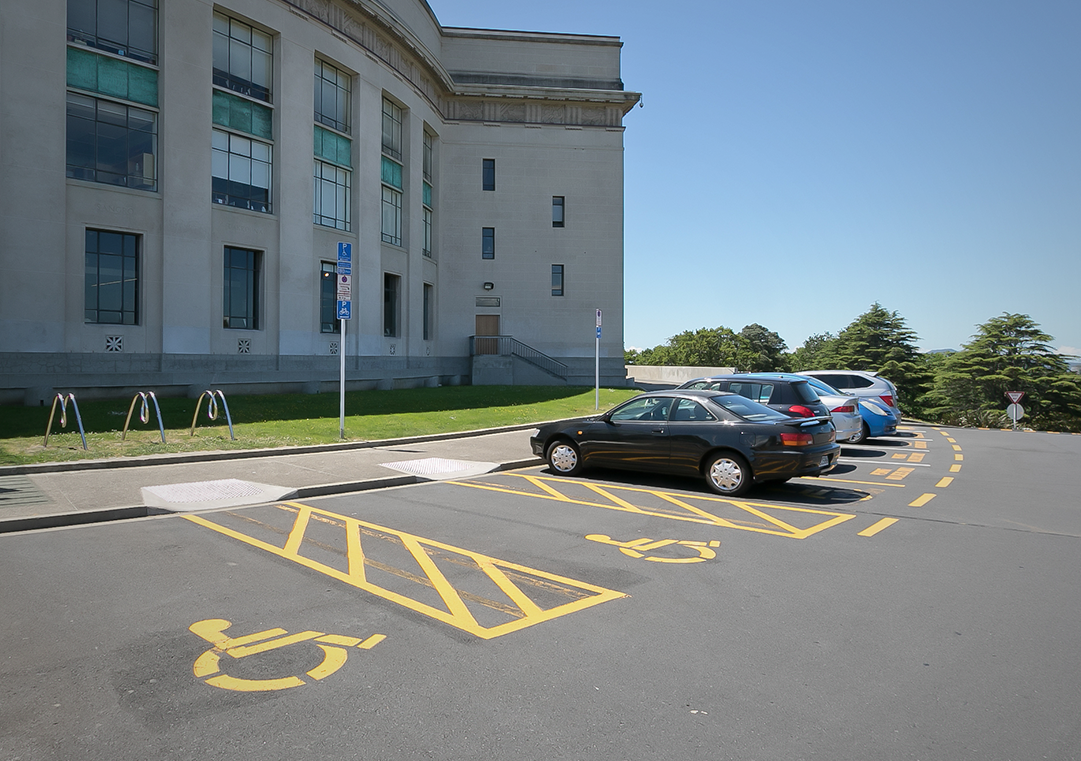
Accessible parking spaces are located adjacent the path leading to the entrance, so users aren’t required to cross the car park.
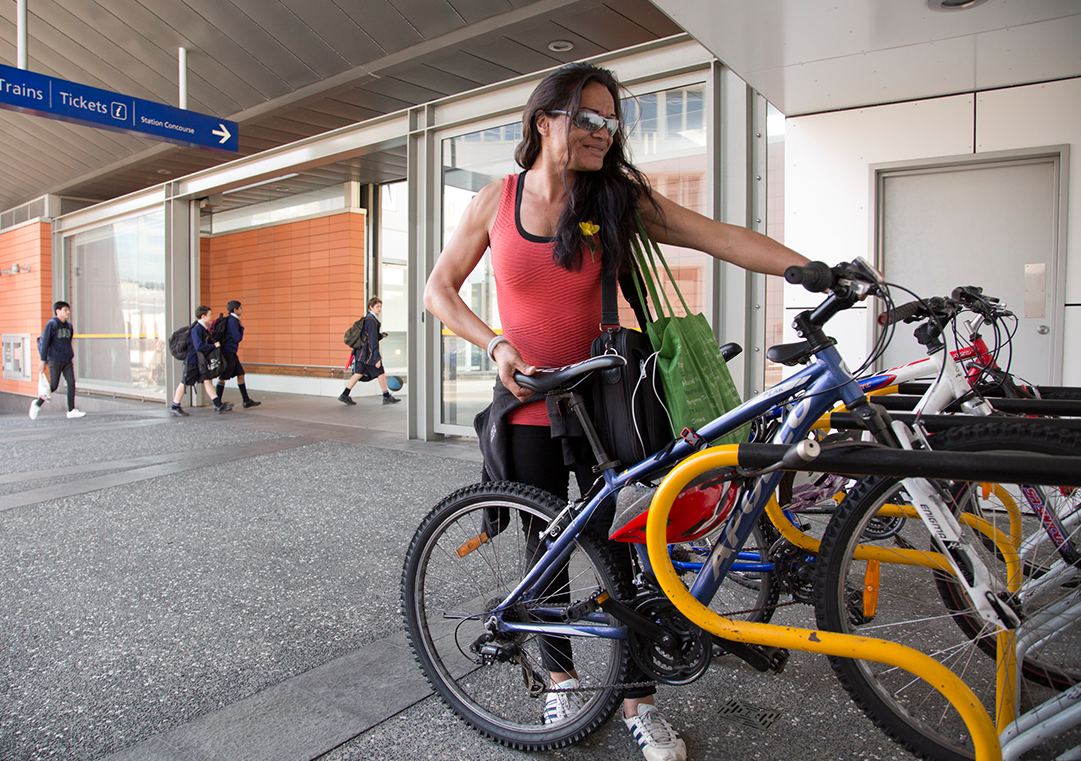
Providing covered cycle parking is appreciated by cyclists and people using micromobility.
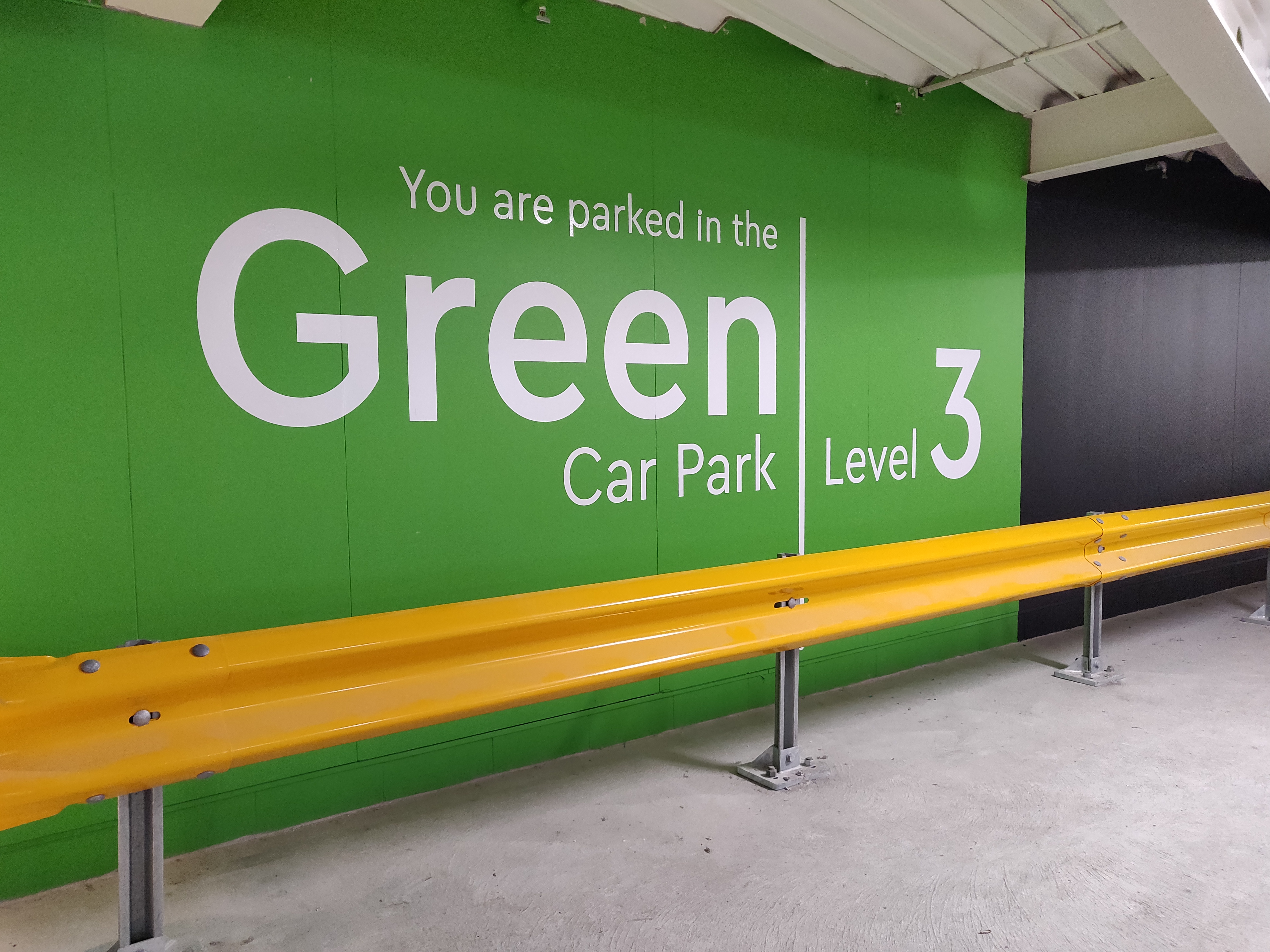
In addition to having numbered car parks, colour coding different parking levels can assist people to remember where they have parked.
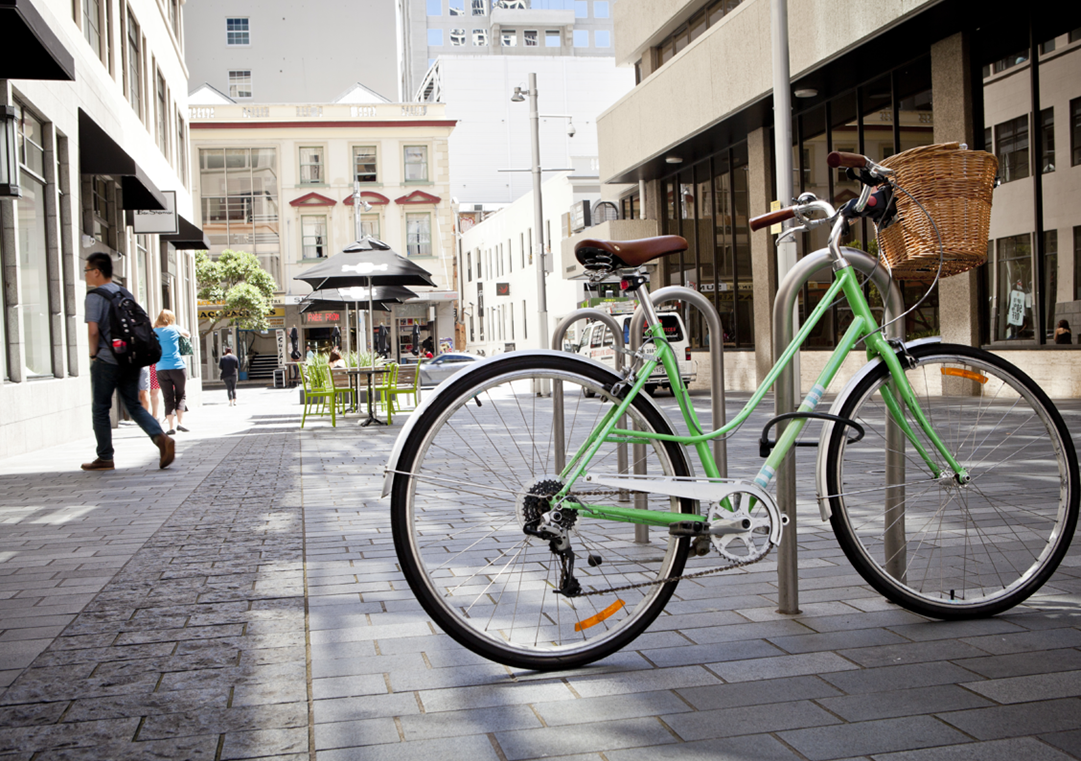
Provide cycle parking outside of the main circulation routes and capt – continuous accessible path of travel.
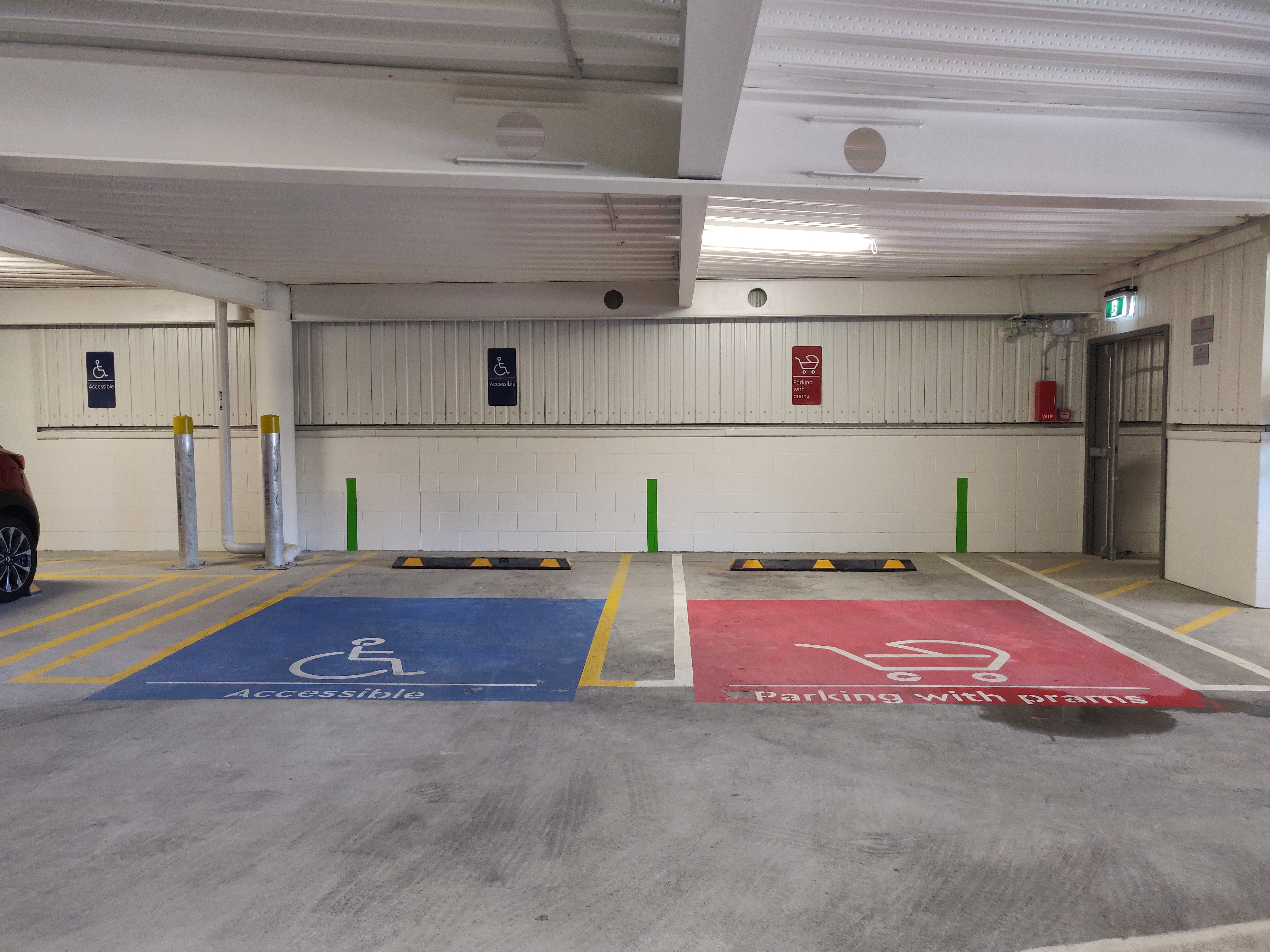
In addition to accessible car parks, consider the provision of priority car parking for example for caregivers with young children or older adults.
Parks and playgrounds
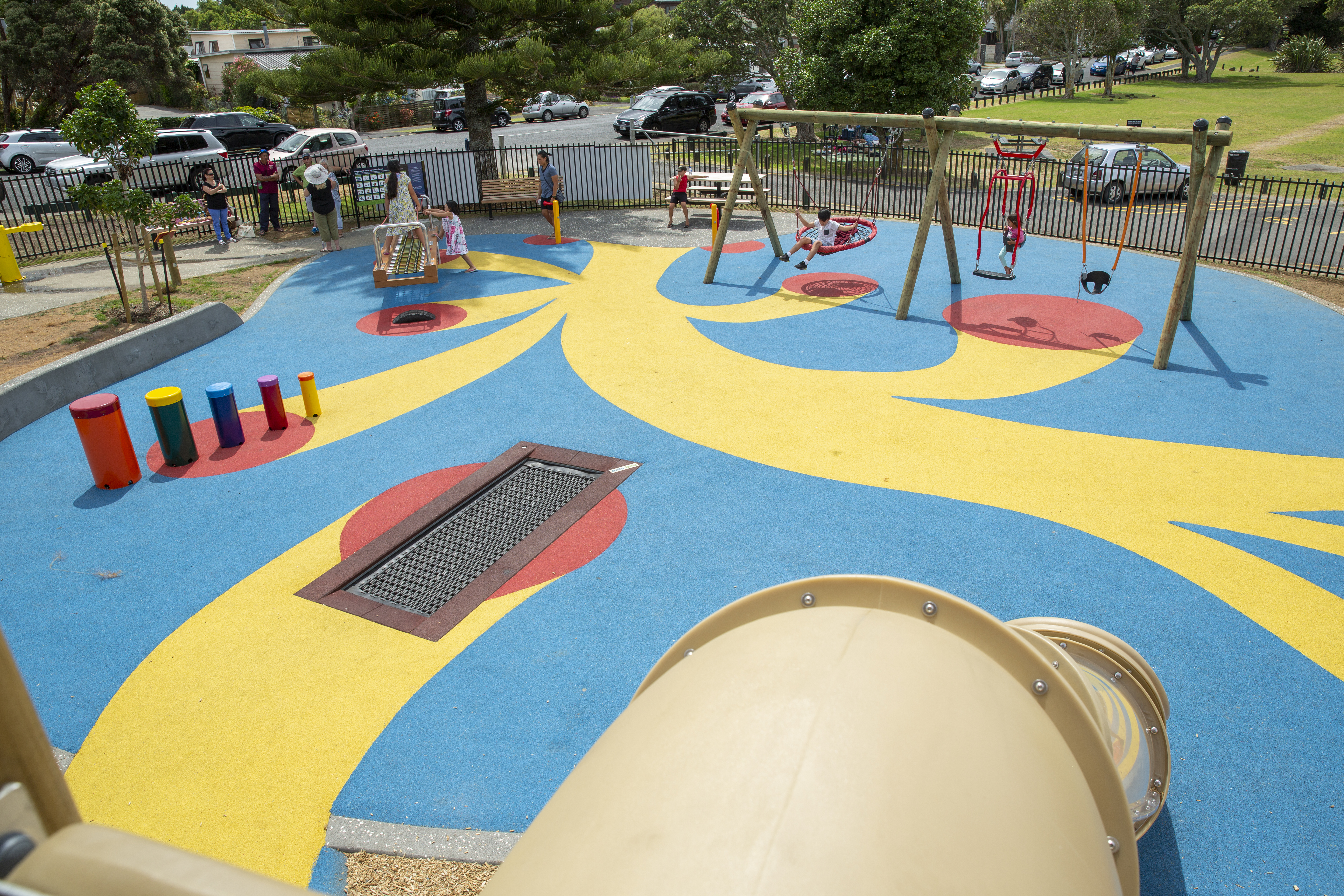
Provide a range of play options to suit a wide range of ages and abilities. The trampoline is accessible at ground level and large enough to accommodate mobility equipment.
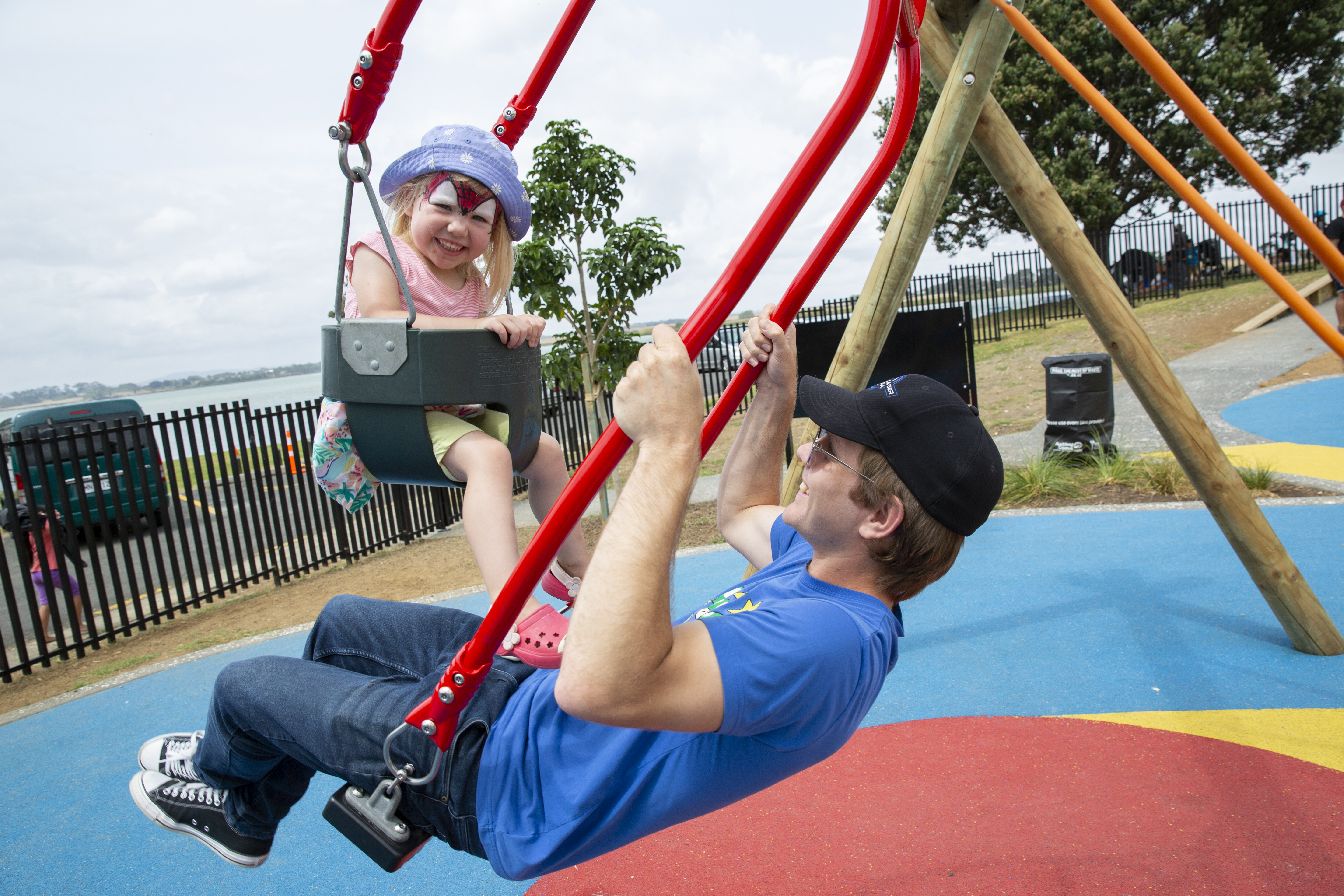
Caregiver and child swings enable social interaction and intergenerational play.
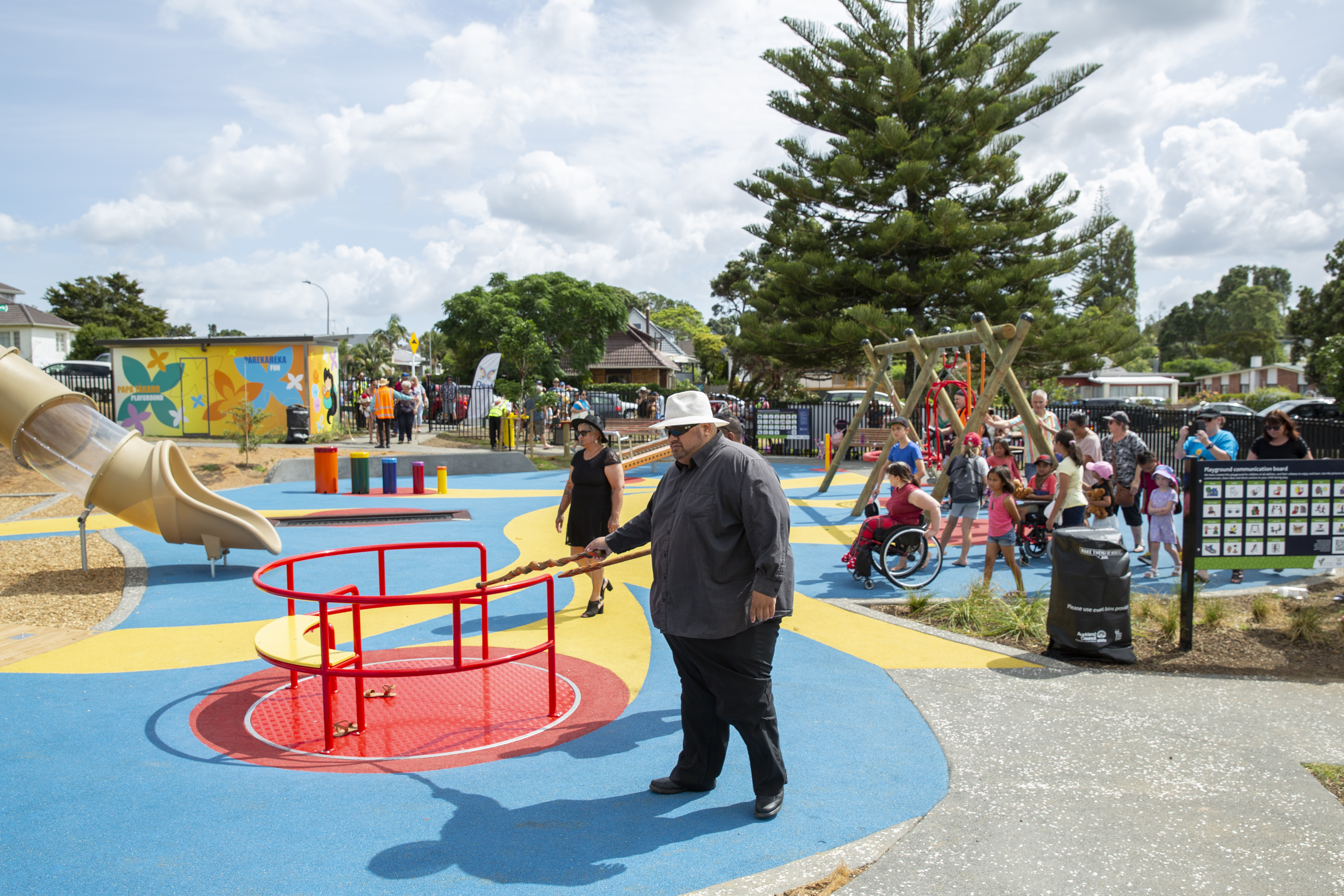
In ground carousels enables people with a wide range of mobility access. Communication boards assist people with decreased ability to communicate verbally.
Ramps
We have a checklist to show best practice guidance for designing accessible, safe and convenient ramps.
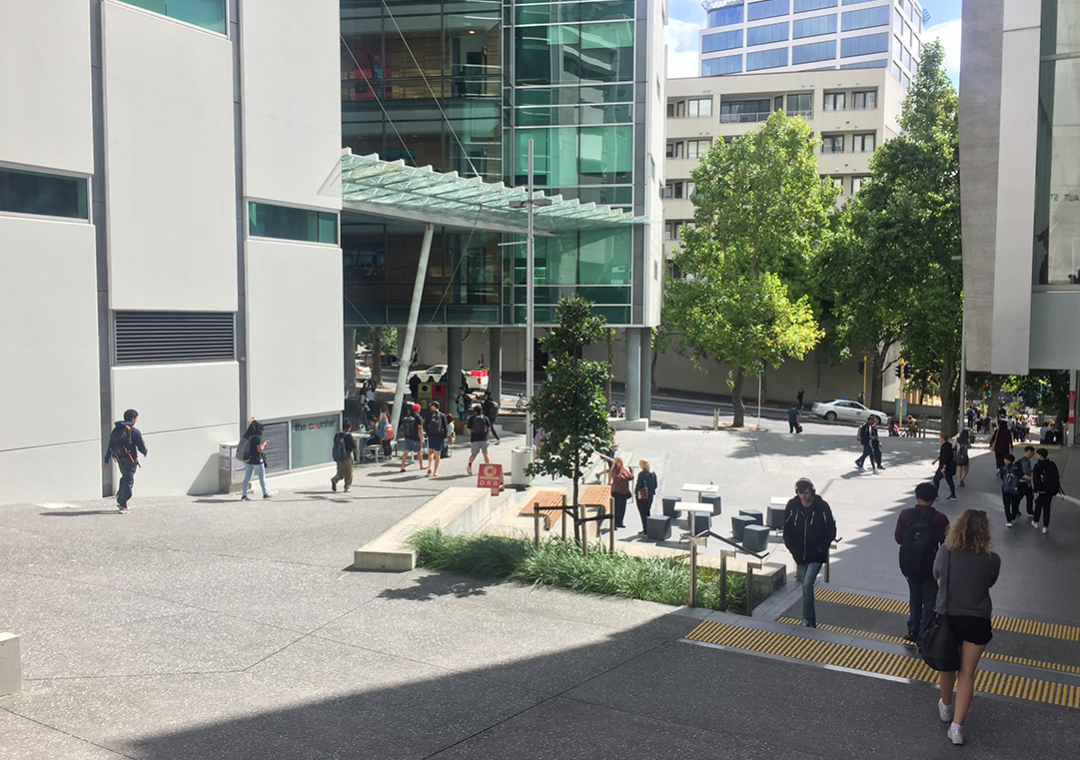
Providing both stairs and ramped routes to overcome gradient changes enables people to have choice to use the way that works best for them.
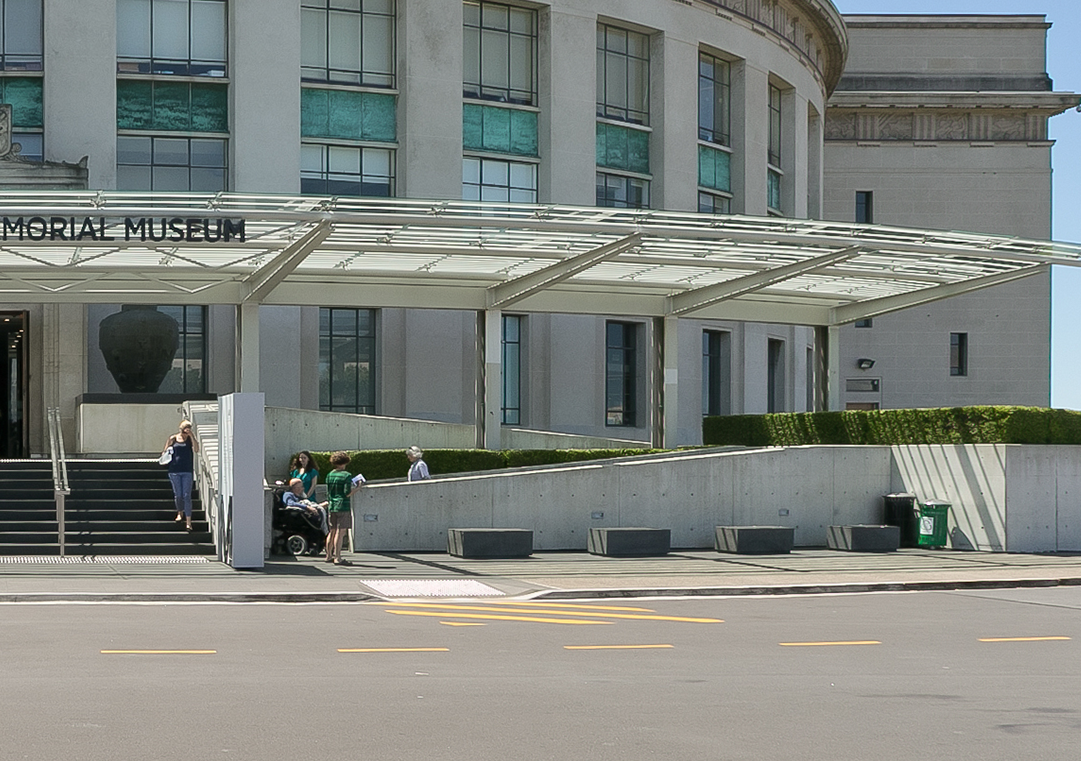
This second entrance provides users with choice of either stairs or ramp to access the building.
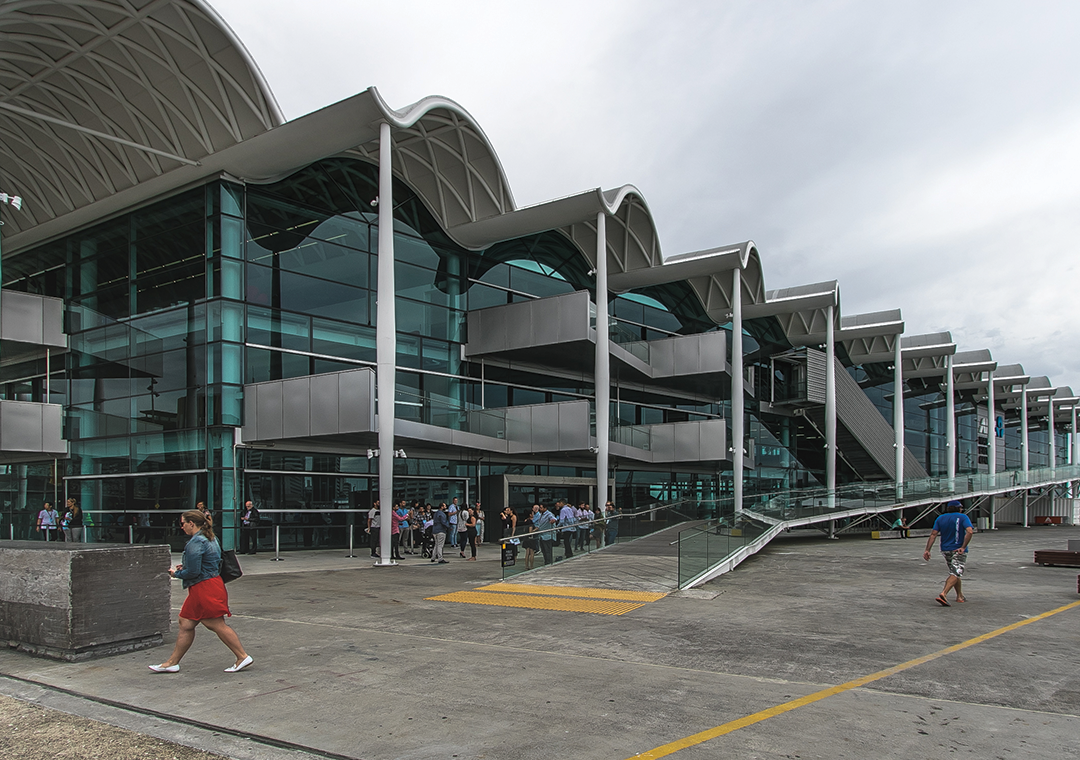
This wide and gentle gradient ramp accommodates a range of users. Colour contrasted warning tactiles are provided at the base and top of the ramp to let users know where the ramp begins and ends.
Stairs
We have a checklist to show best practice guidance for designing safe and accessible stairways.
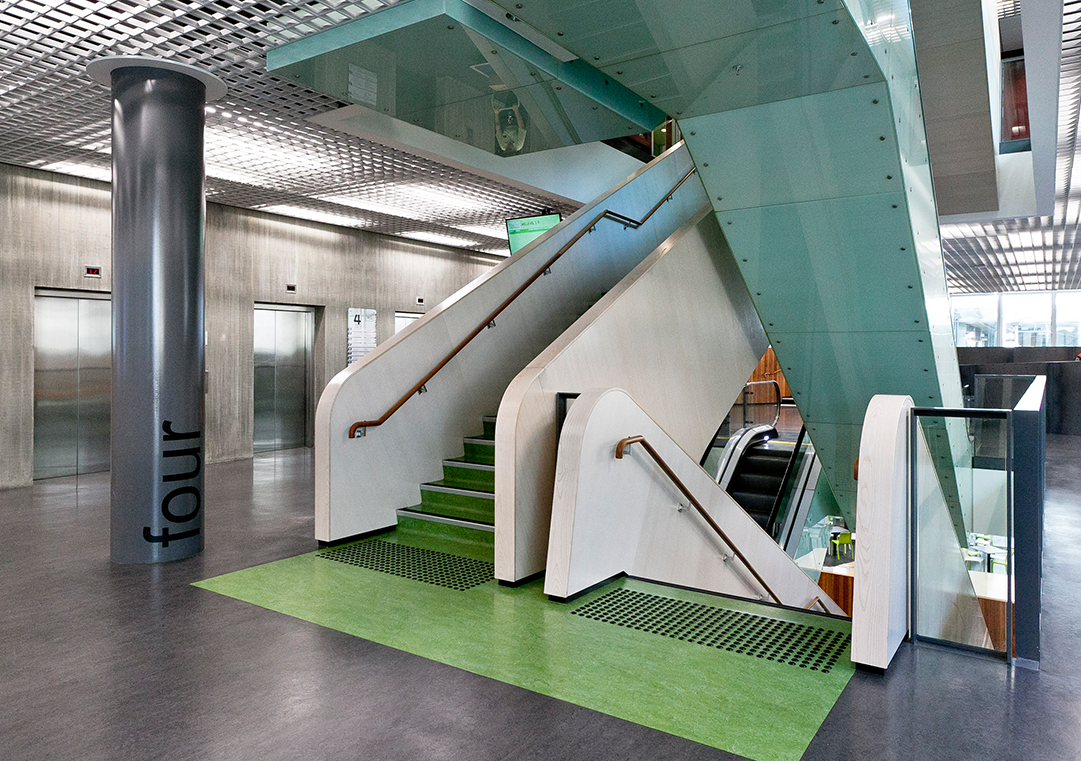
The stairs, escalator and lift are located within close proximity. The bilateral handrails and balustrades continue past the top and bottom of the stairs enabling users to move to a level surface before removing their hand from support. Strongly colour contrasted nosings and tactiles improve safety, especially for people who are blind or have low vision.
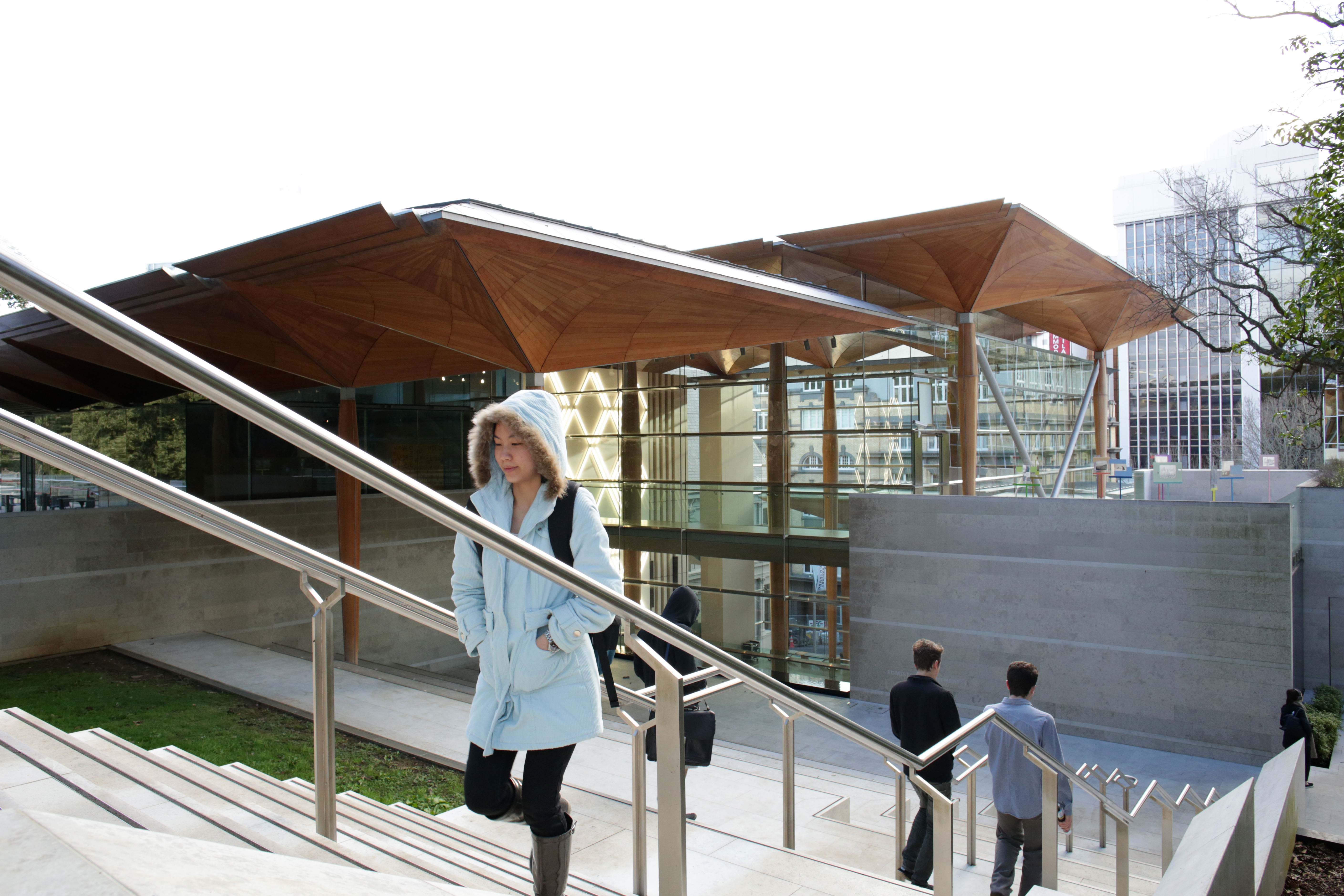
The handrails continue past the top and bottom of the stairs and are continuous around landings. This ensures users are able to grasp the handrail for support during the entire journey. The central handrail has a splitter which enables both people ascending and descending the stairs to hold the handrail at the same time.
These stairs are well lit which improves safety, especially for people with low vision. Stronger colour contrast to the nosings would be beneficial.
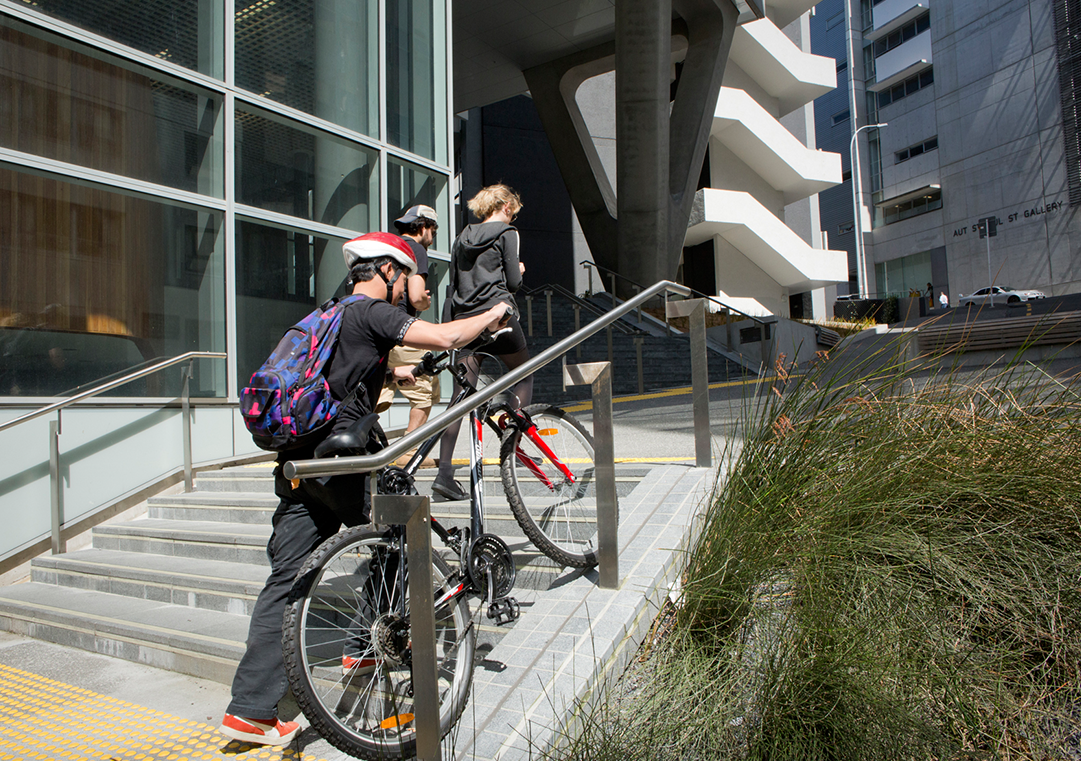
Space has been provided alongside a handrail on stairs to enable cyclists to wheel their bikes up.
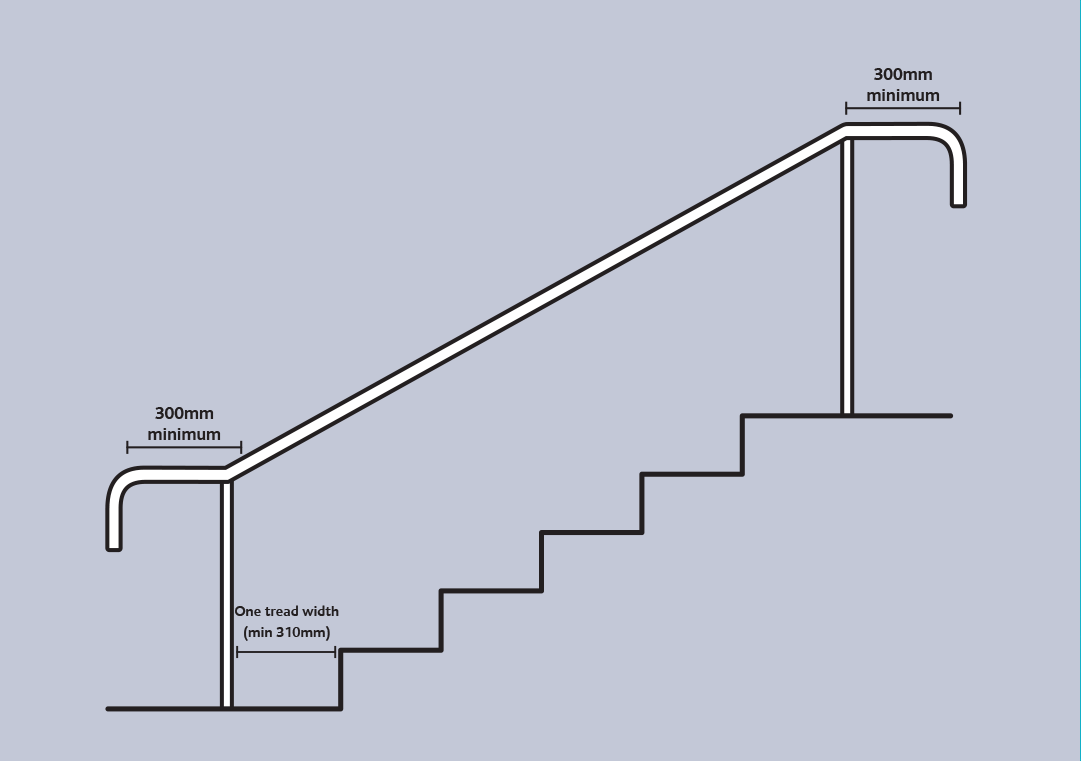
Provide handrails on both sides of the stairs so that people can use them with their right or left arm. Locate handrails to accommodate different users: 850-950mm for adults and 450-600mm for children. Diameters: 32-50mm round for adults and 25-32mm round for children with a 50-60mm clearance from wall. This diagram provides details on handrail design. Handrails are to continue 300mm past the top, at least 610mm past the bottom of the stairs. Handrails to provide continuous support around corners and across landings.
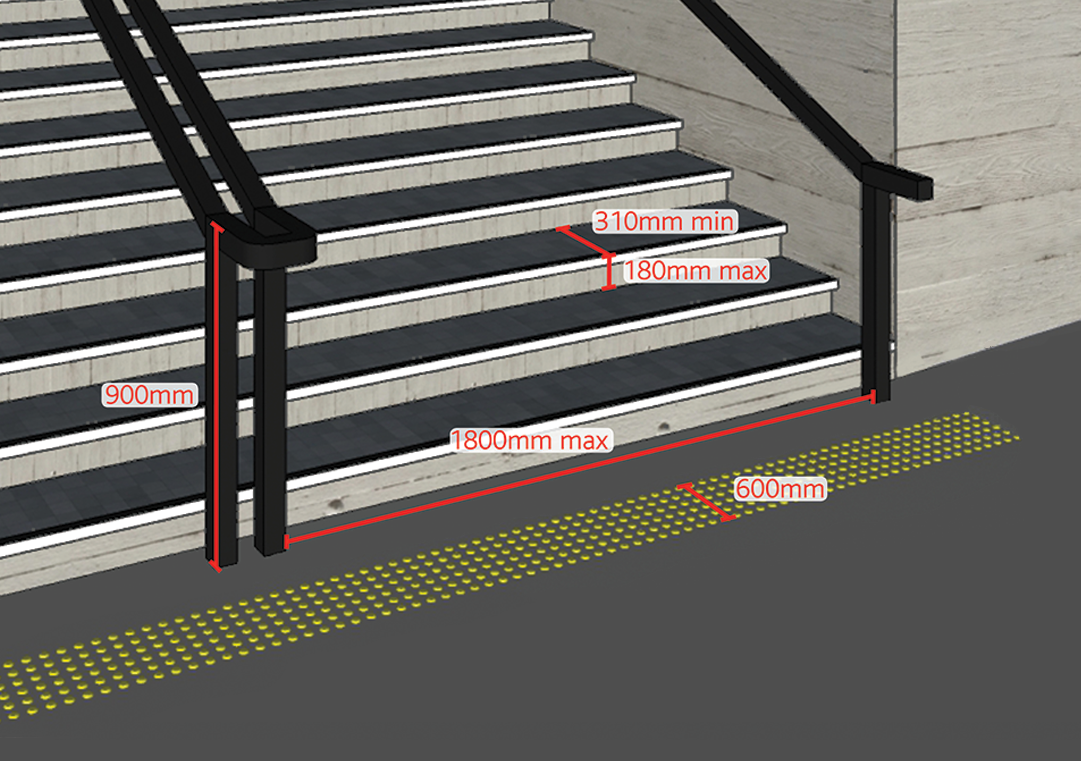
External steps should have a maximum rise of 180mm and a minimum tread depth of 310mm. Colour contrasted warning tactiles should be provided top and bottom of stairs to alert users to their presence. Metal studs are not recommended due to their light refraction and their potential to be slippery when wet.
Toilets
We have a checklist to show best practice guidance for designing toilets and restrooms.
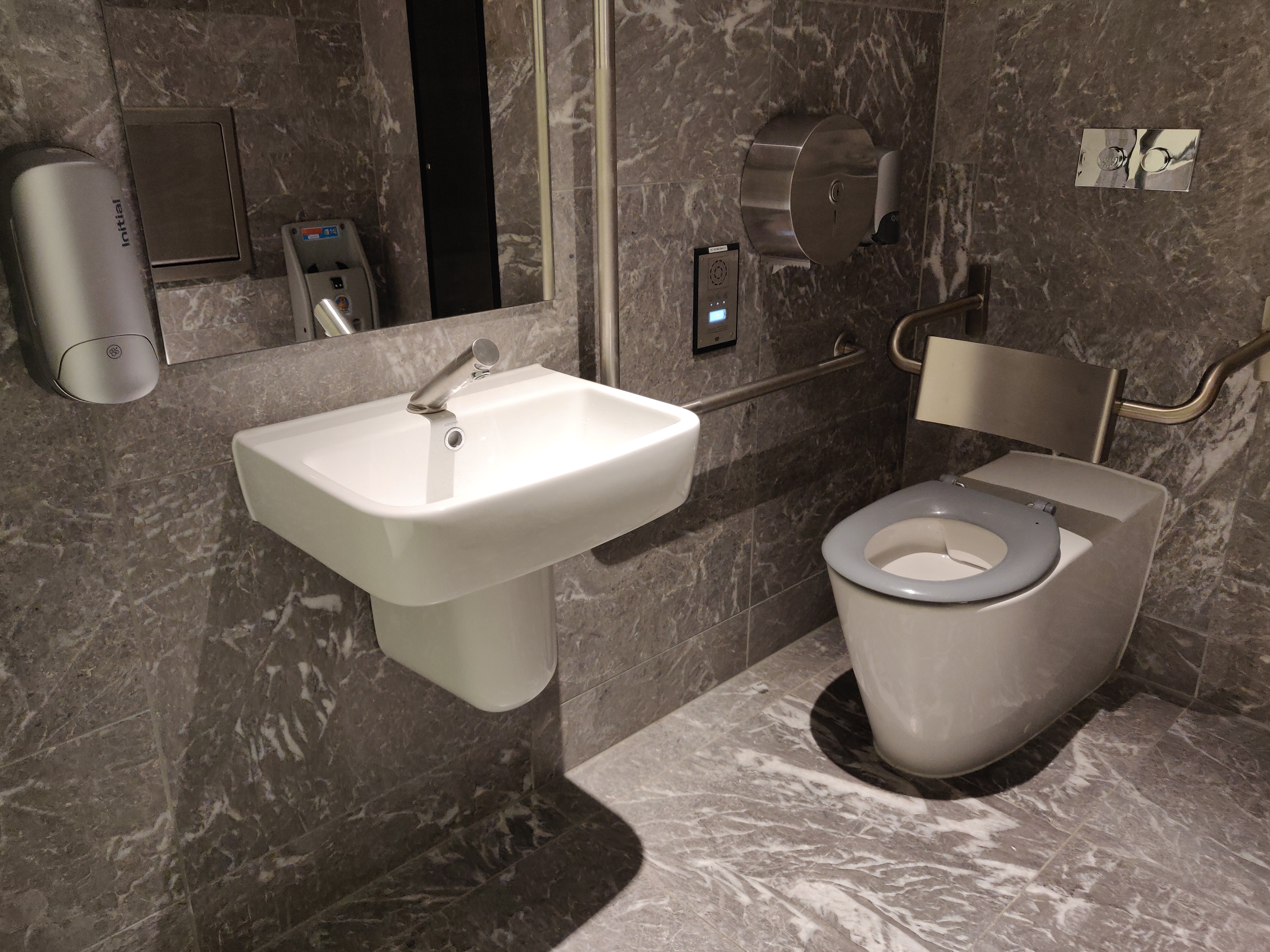
This accessible toilet provides hands free taps, supportive back rest and an emergency call facility.
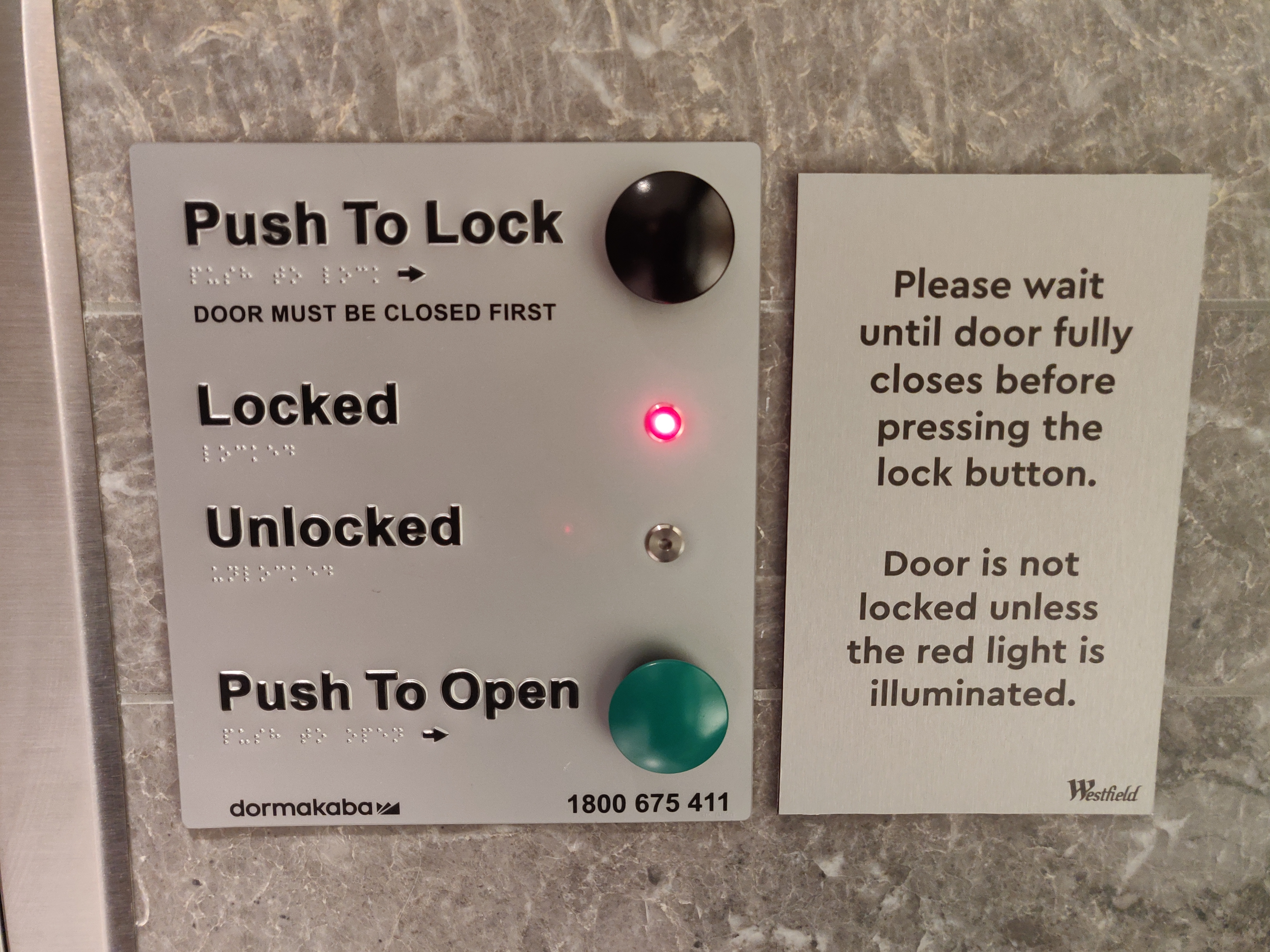
This toilet signage has tactile lettering, Braille and simple instructions for operation. The large buttons can be operated with decreased hand function/closed fist. The light confirms whether the toilet is locked or unlocked.
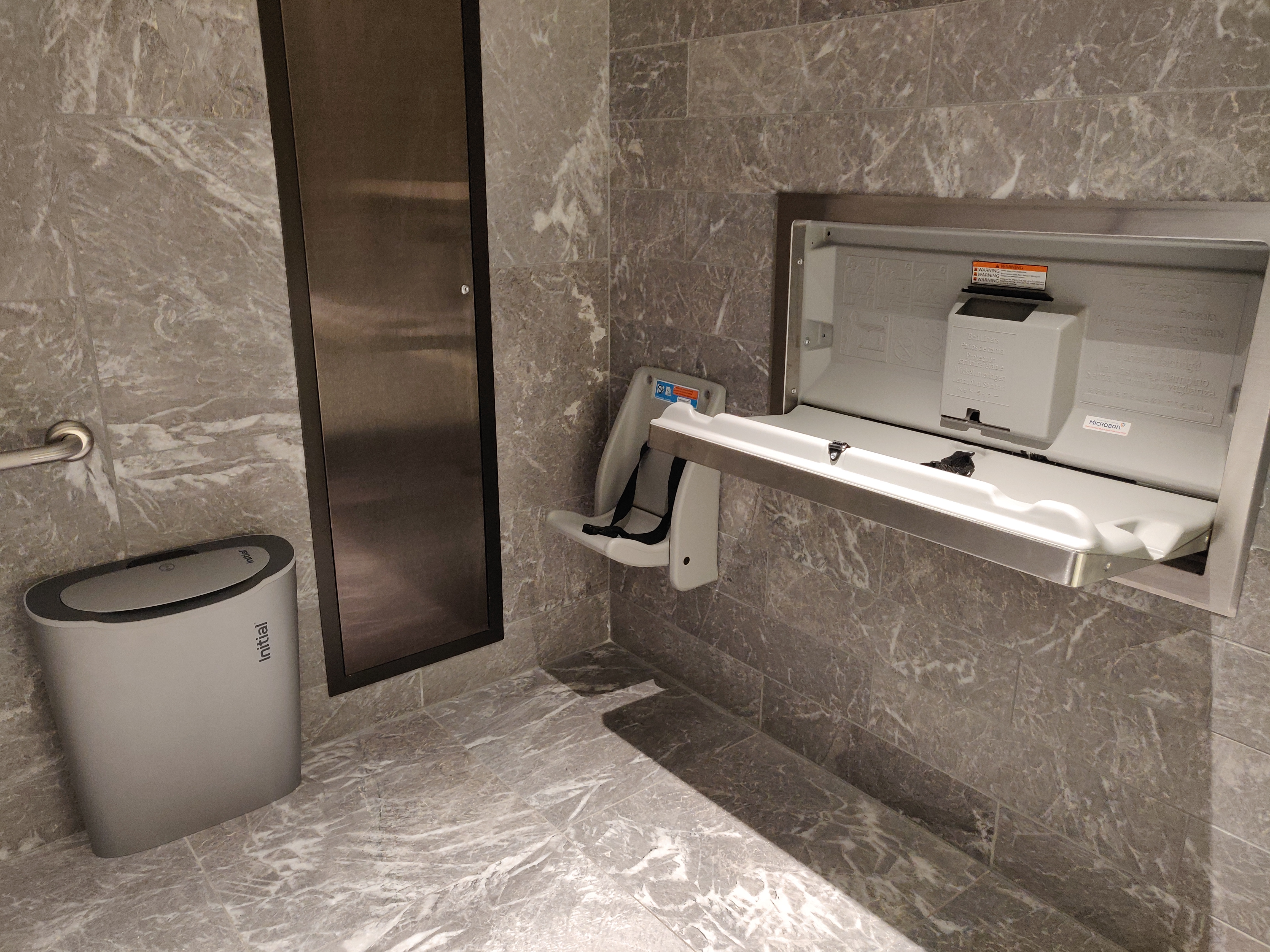
This toilet provides both baby change facilities as well as a toddler seat to assist caregivers to manage children of different ages.
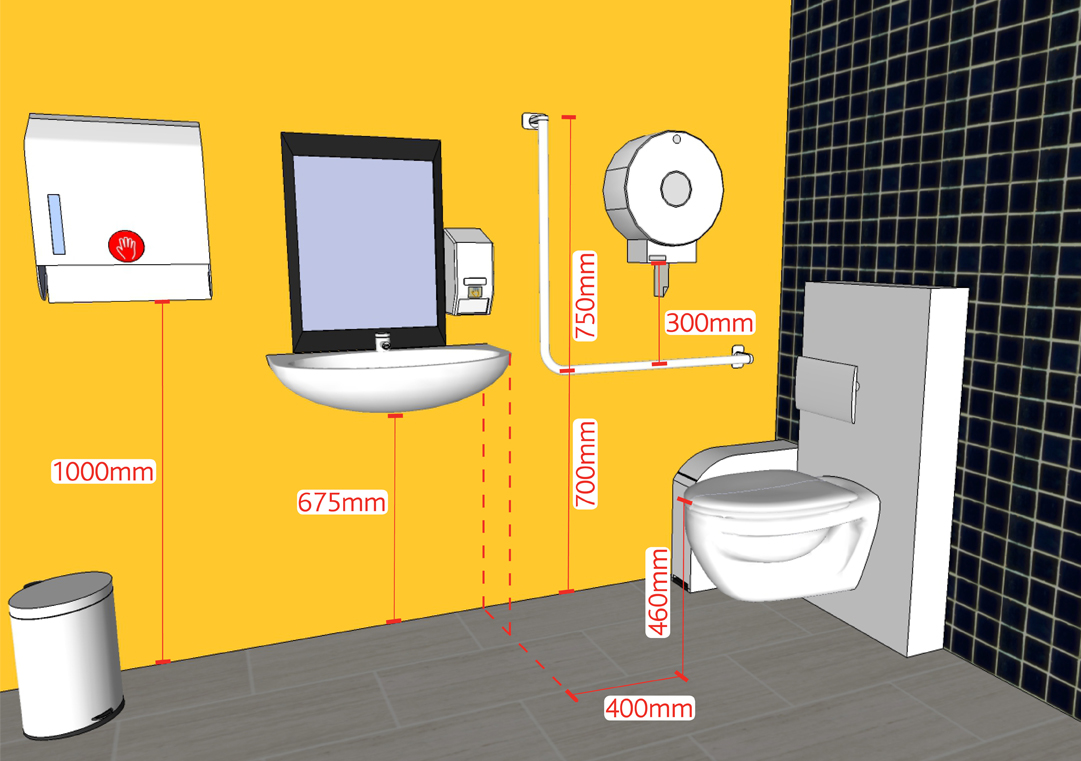
This diagram demonstrates the location of fixtures including the location of an L-shaped grab rail. Grab rails provide people support when moving on and off the toilet. It is important that fixtures such as the toilet roll holder do not impede grasp of the grab rail. Accessible toilets and family rooms need to have enough space for the user, an assistant, plus mobility equipment, whether that is a wheelchair, four wheeled stroller or pram. The minimum room size of accessible toilets should be 2300 mm wide x 2500 mm. Ensure there is at least 830 mm of clear space without fixtures or bins beside the toilet as this space is needed for wheelchairs.
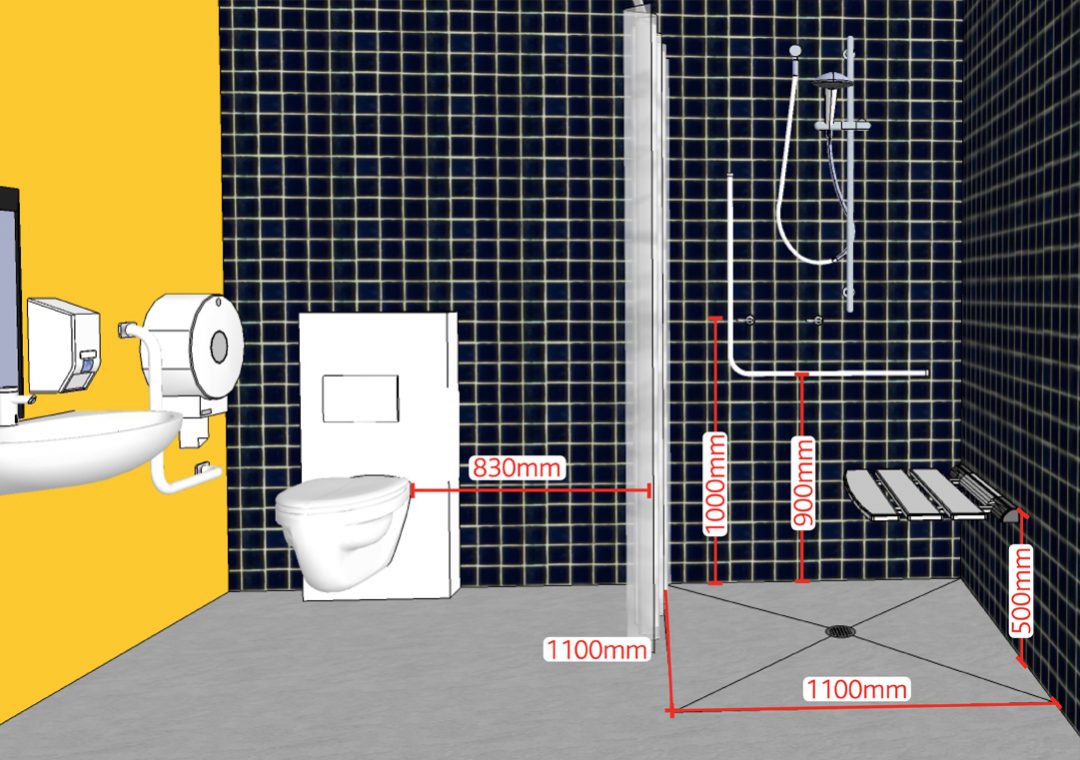
In showers, a shower bench, hand rails and hand-held shower head should be provided.
Wayfinding
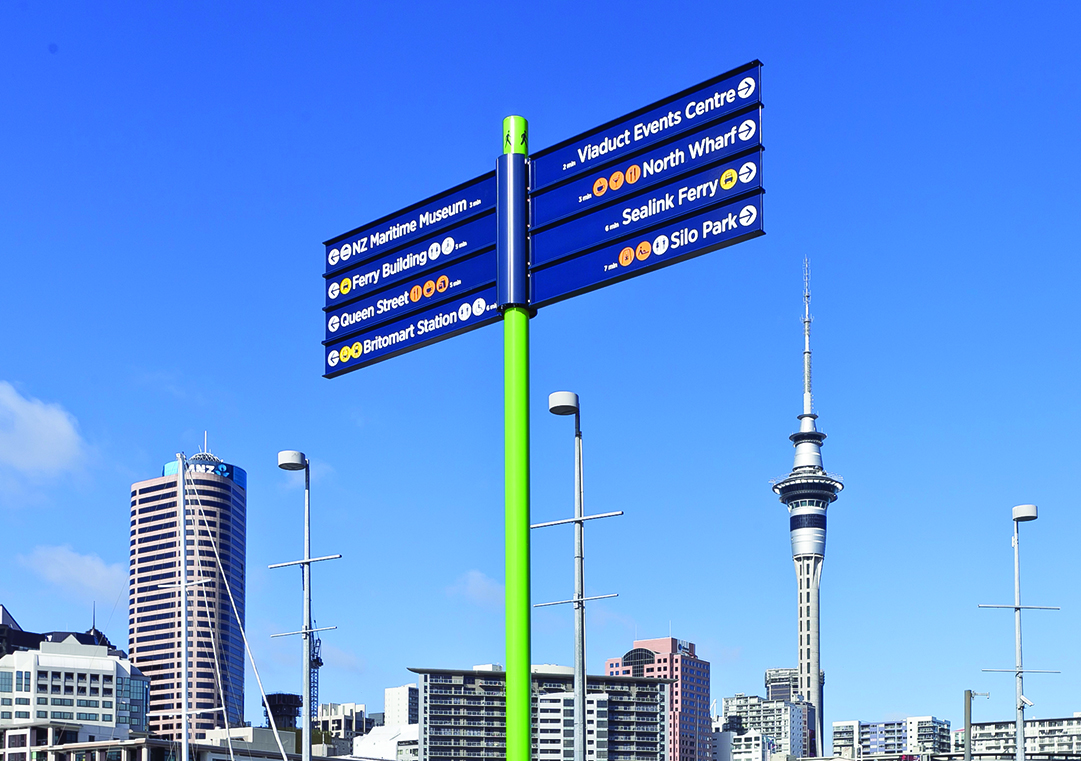
This sign, located on a busy pedestrian network, provides clear directions to public transport options and local landmarks. These wayfinding fins have good colour contrast and are able to be seen from a distance.
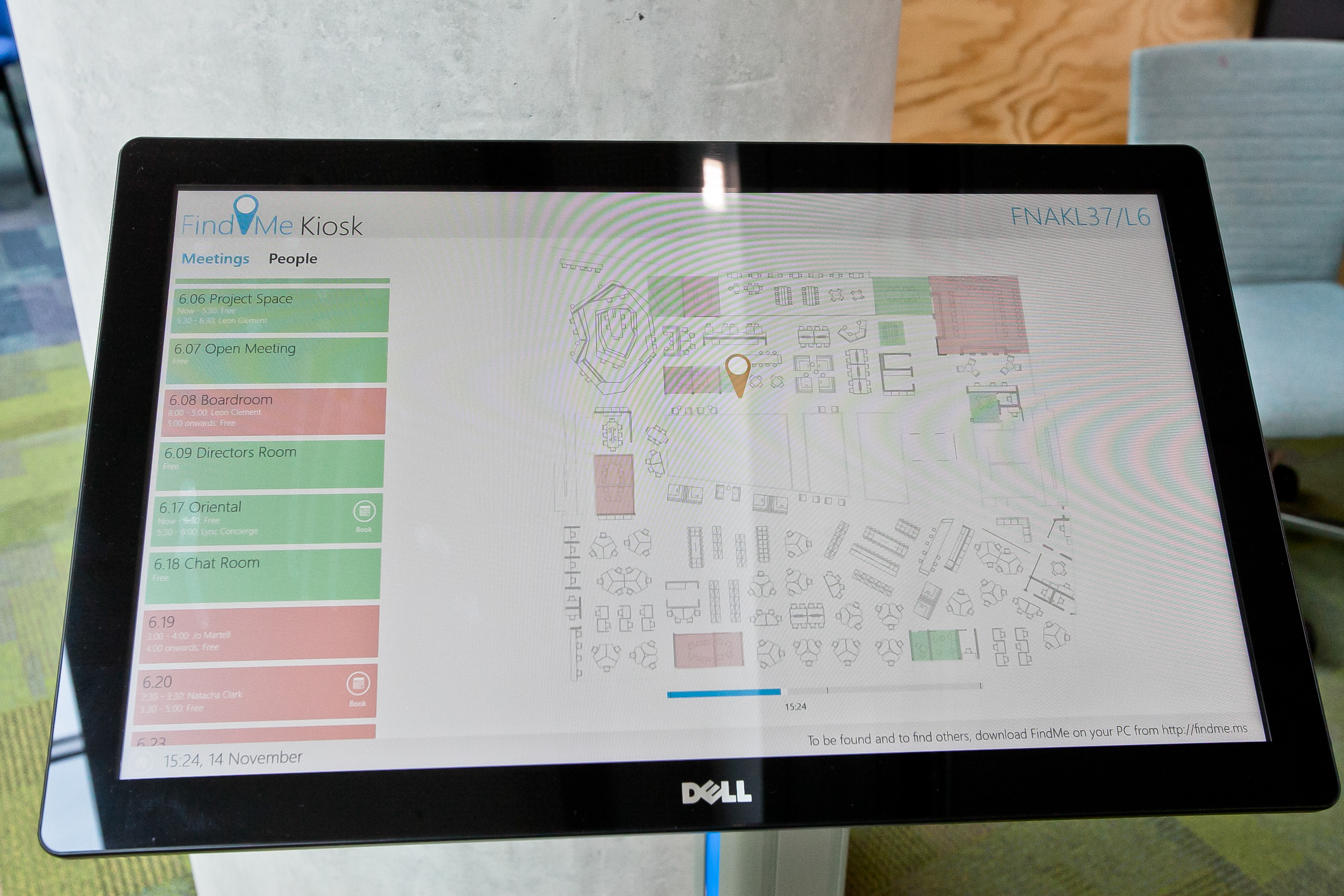
Providing digital maps for different office floors can assist wayfinding both for staff and visitors. Digital they can be updated as required. Strong colour contrast would improve readability.
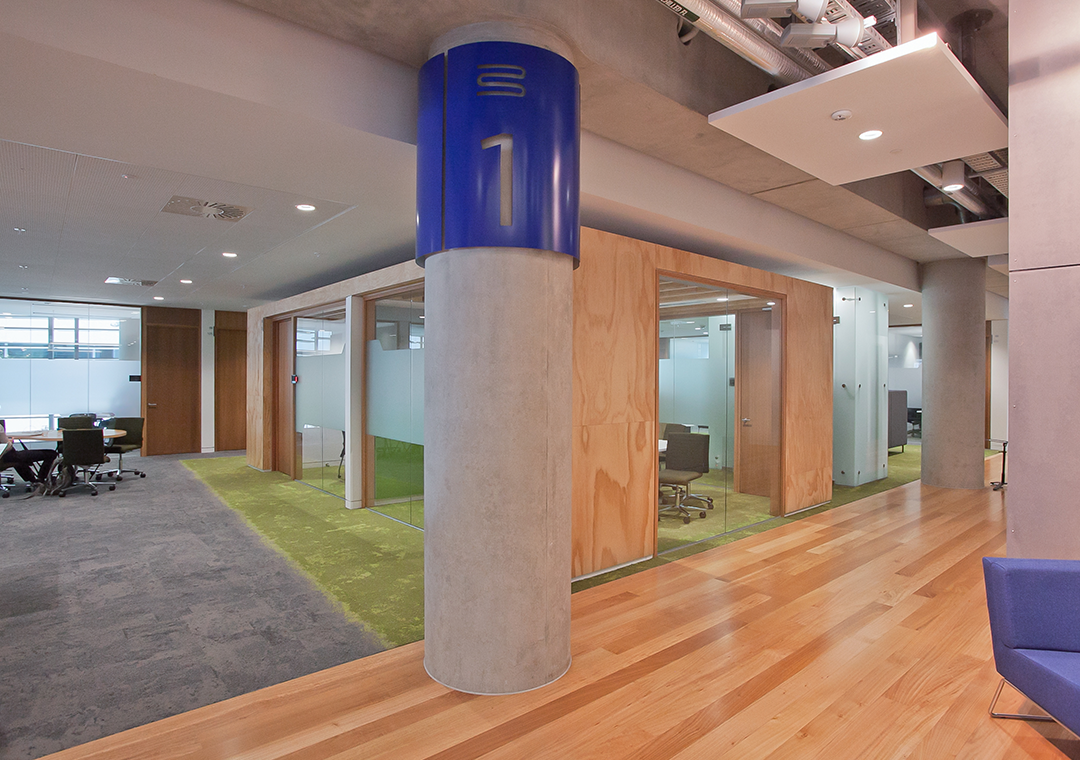
Different types of spaces can be marked by material and colour changes. In this case, a wooden floor is used for circulation areas, grey carpet is for open-plan office space, and green carpet marks private meeting rooms. Colour coded floor numbering can assist with wayfinding.
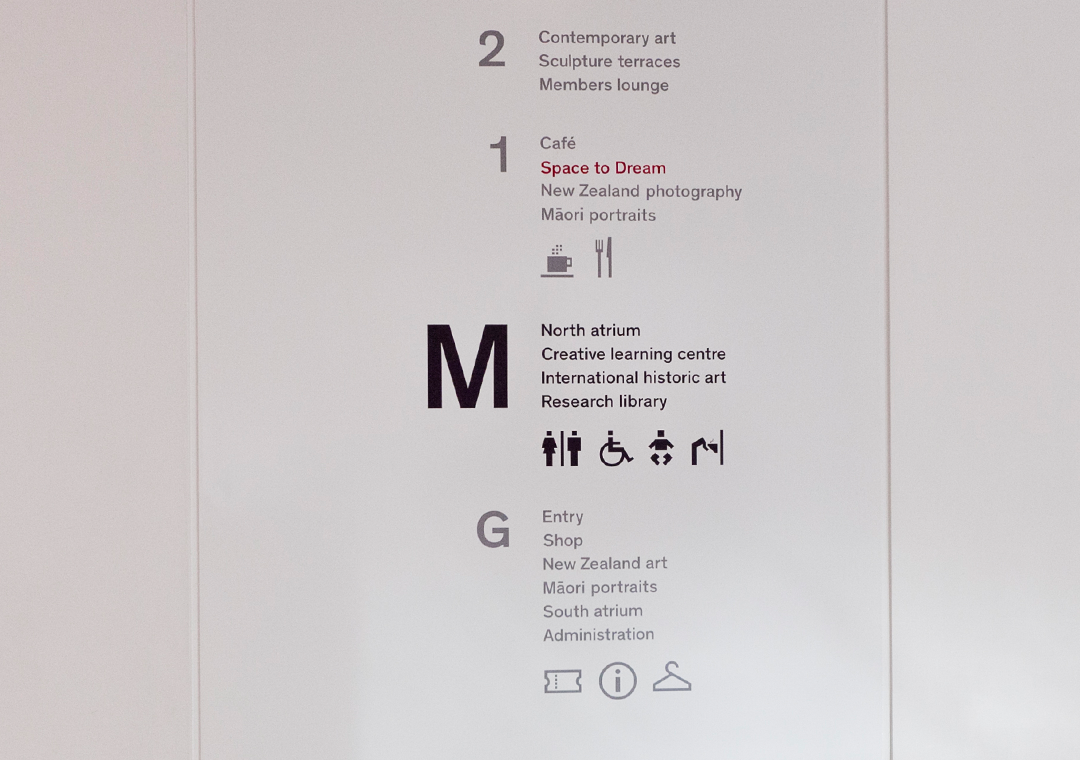
A building directory located at the main access point on each level informs users both what floor they are on and the services provided on other floors.
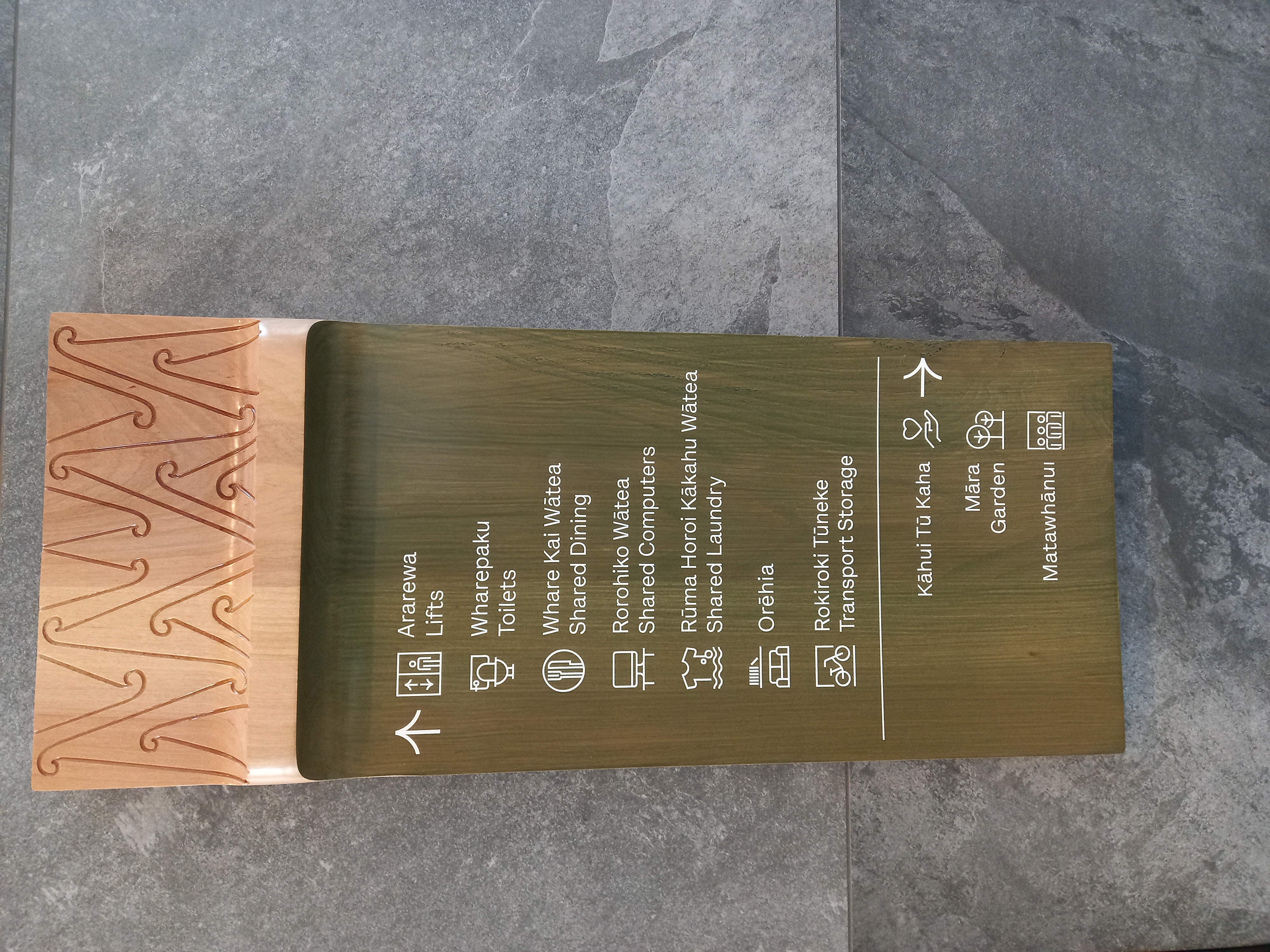
Sentence case improves readability of wayfinding signage. Bilingual signage is supported. To increase accessibility consider providing raised tactile lettering and Braille.
Auckland Council Design guides
More Universal design guides
This section provides additional guides and resources to help you apply universal design principles to your project.