

Base images sourced from Irish Wheelchair Association - Best Practice Access Guidelines - Designing Accessible Environments
Accessible space dimensions
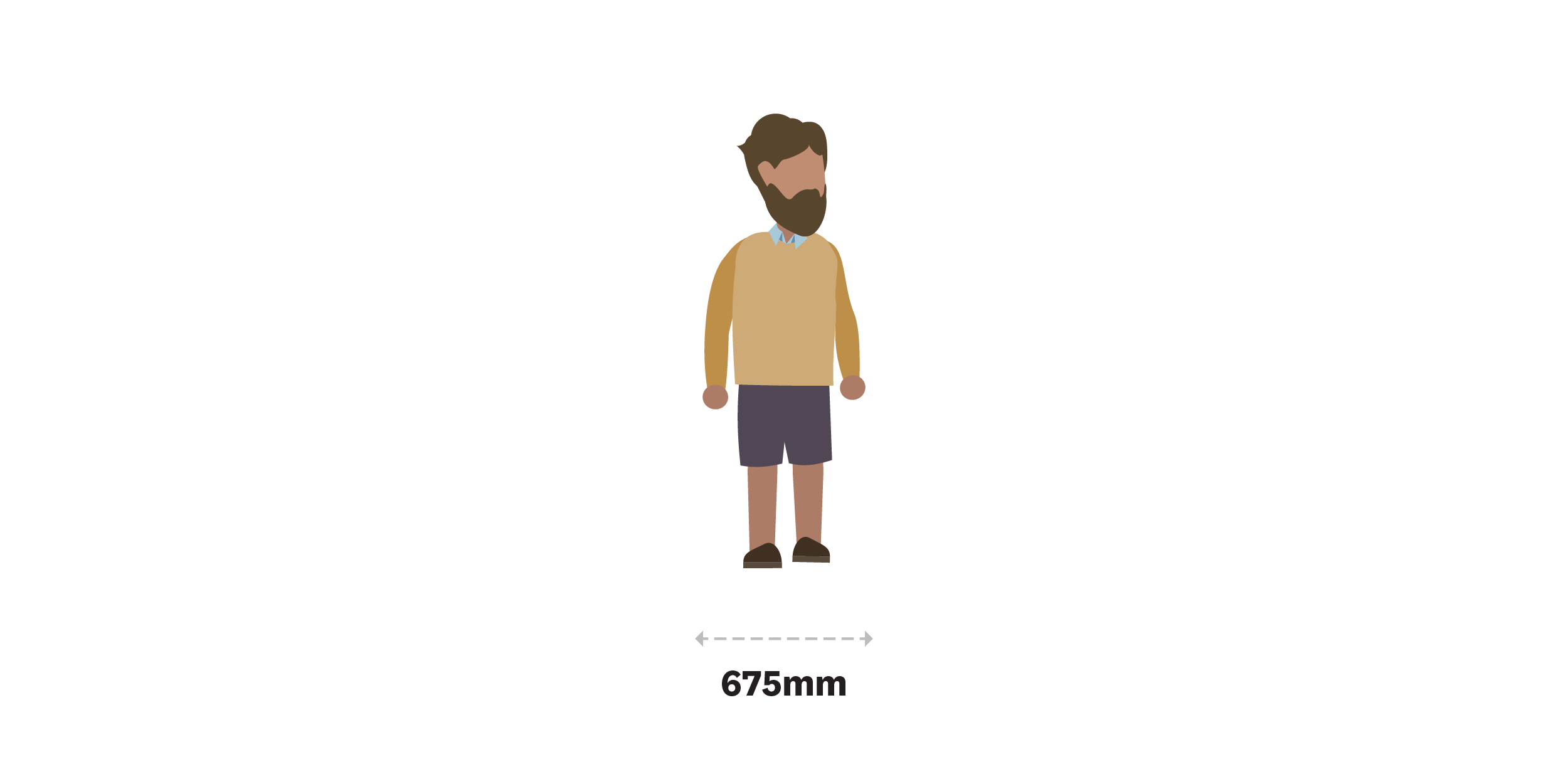
A person walking needs a space 675mm wide.
Retrieved from Irish Wheelchair Association. (2020). Best Practice Access Guidelines - Designing Accessible Environments. p. 44.
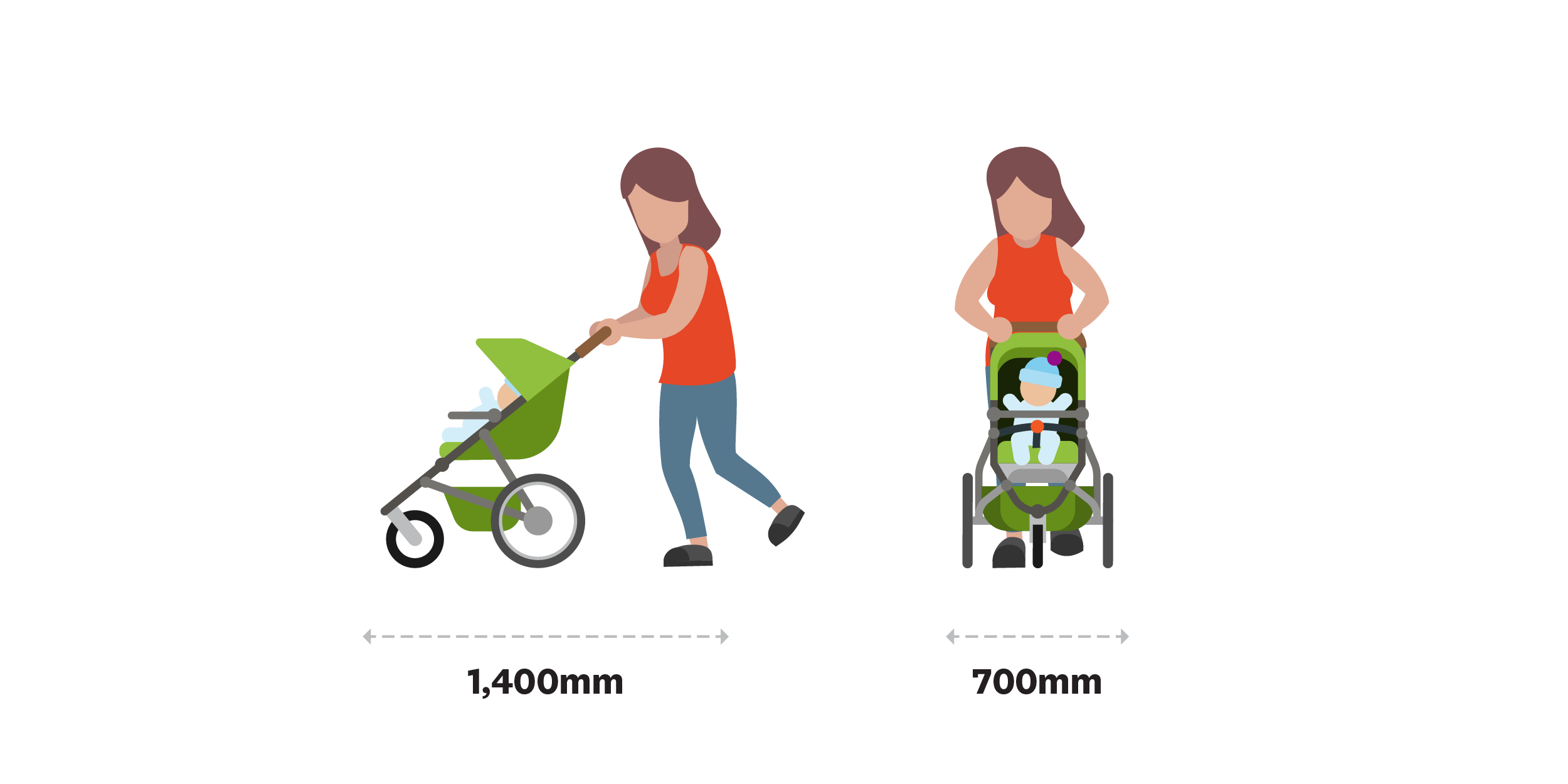
A person with a mountain buggy needs a space 1400mm long and 700mm wide.
Dimensions sourced from NZ’s most common average buggy sizes Standards New Zealand (2001). NZS: 4121 Design for access and mobility - Buildings and associated facilities.
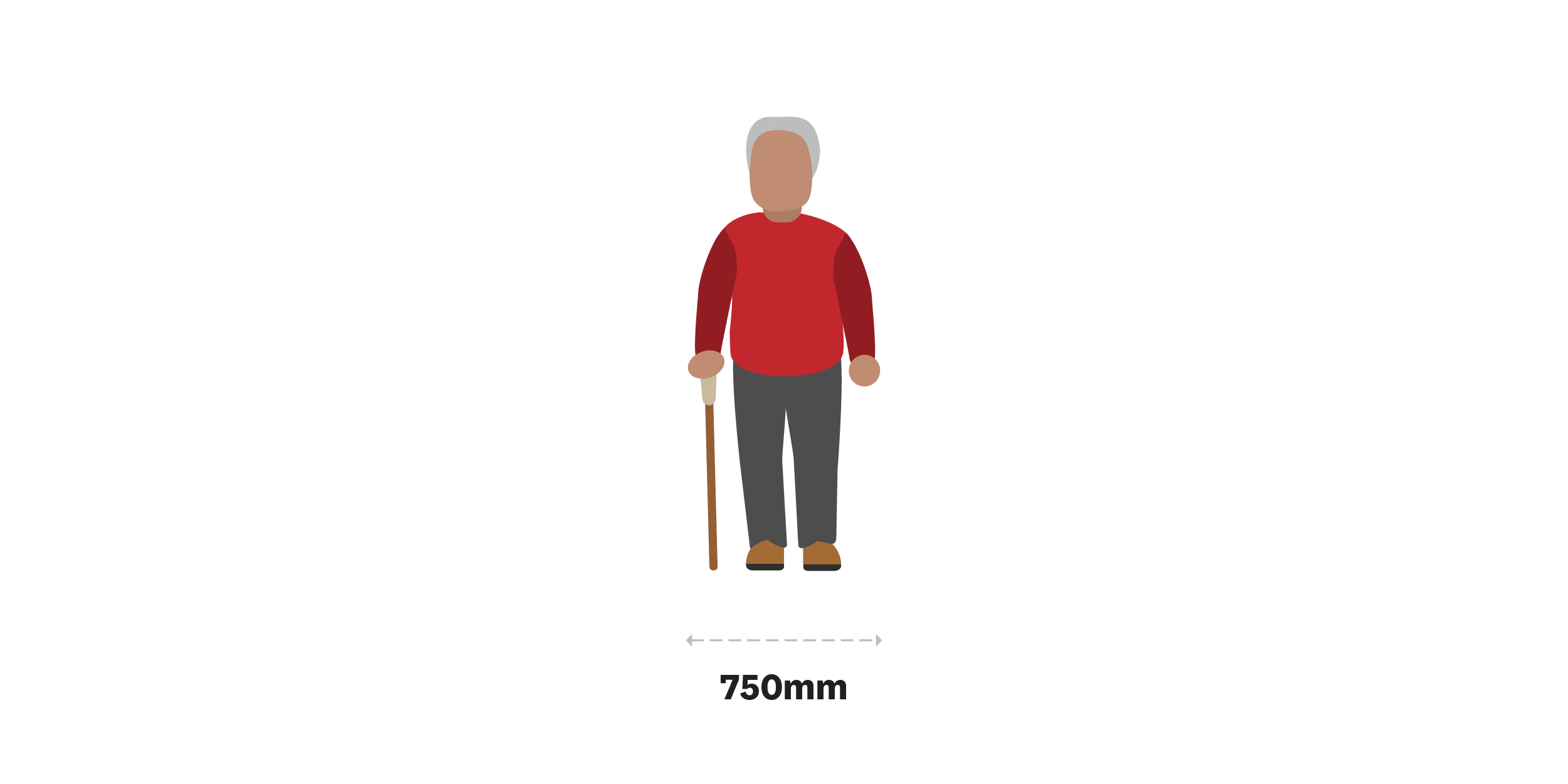
A person with a walking stick needs a space 750mm wide.
Retrieved from Irish Wheelchair Association. (2020). Best Practice Access Guidelines - Designing Accessible Environments. p. 44.
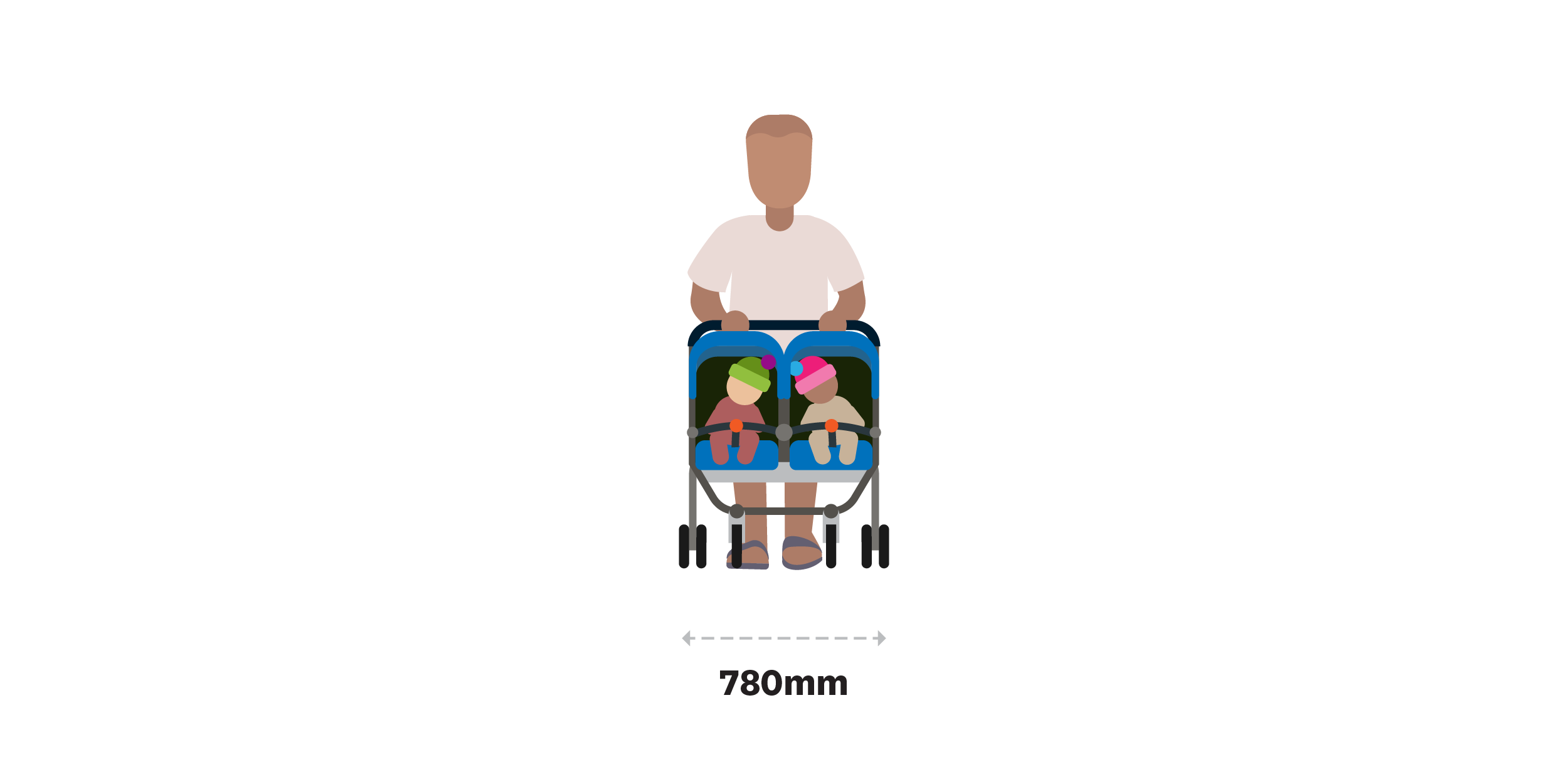
Person with a side-by-side stroller needs a space 780mm wide.
Dimension sourced from NZ’s average side-by-side stroller sizes.
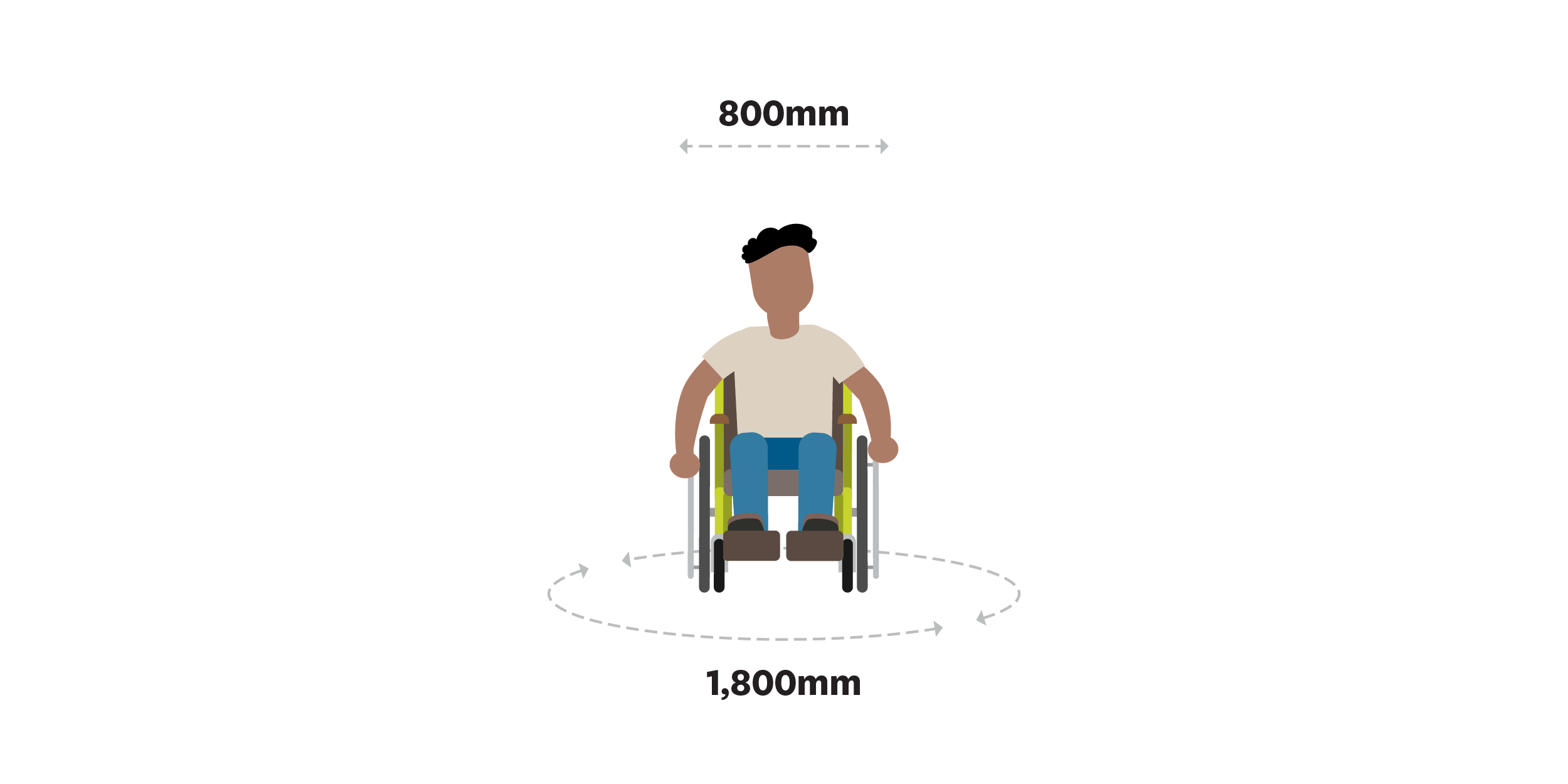
A person in a manual wheelchair needs a space 800mm wide, with a space 1800mm in diameter to turn around.
Retrieved from Irish Wheelchair Association. (2020). Best Practice Access Guidelines - Designing Accessible Environments. p. 44.
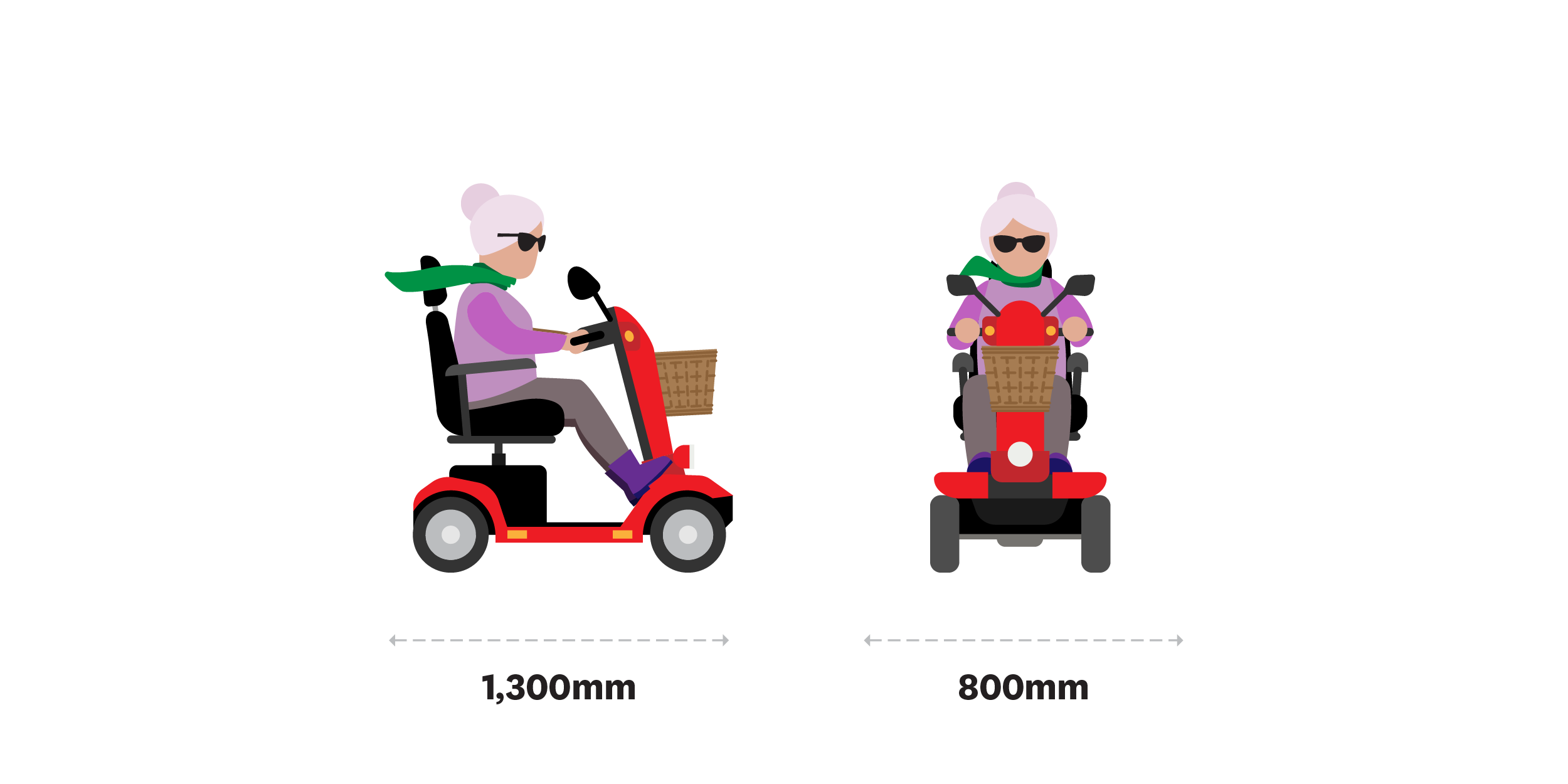
A person with an electric mobility scooter needs a space 1300mm long and 800mm wide.
Dimension sourced from NZ’s average mobility scooter sizes.
Retrieved from Irish Wheelchair Association. (2020). Best Practice Access Guidelines - Designing Accessible Environments. p. 44.
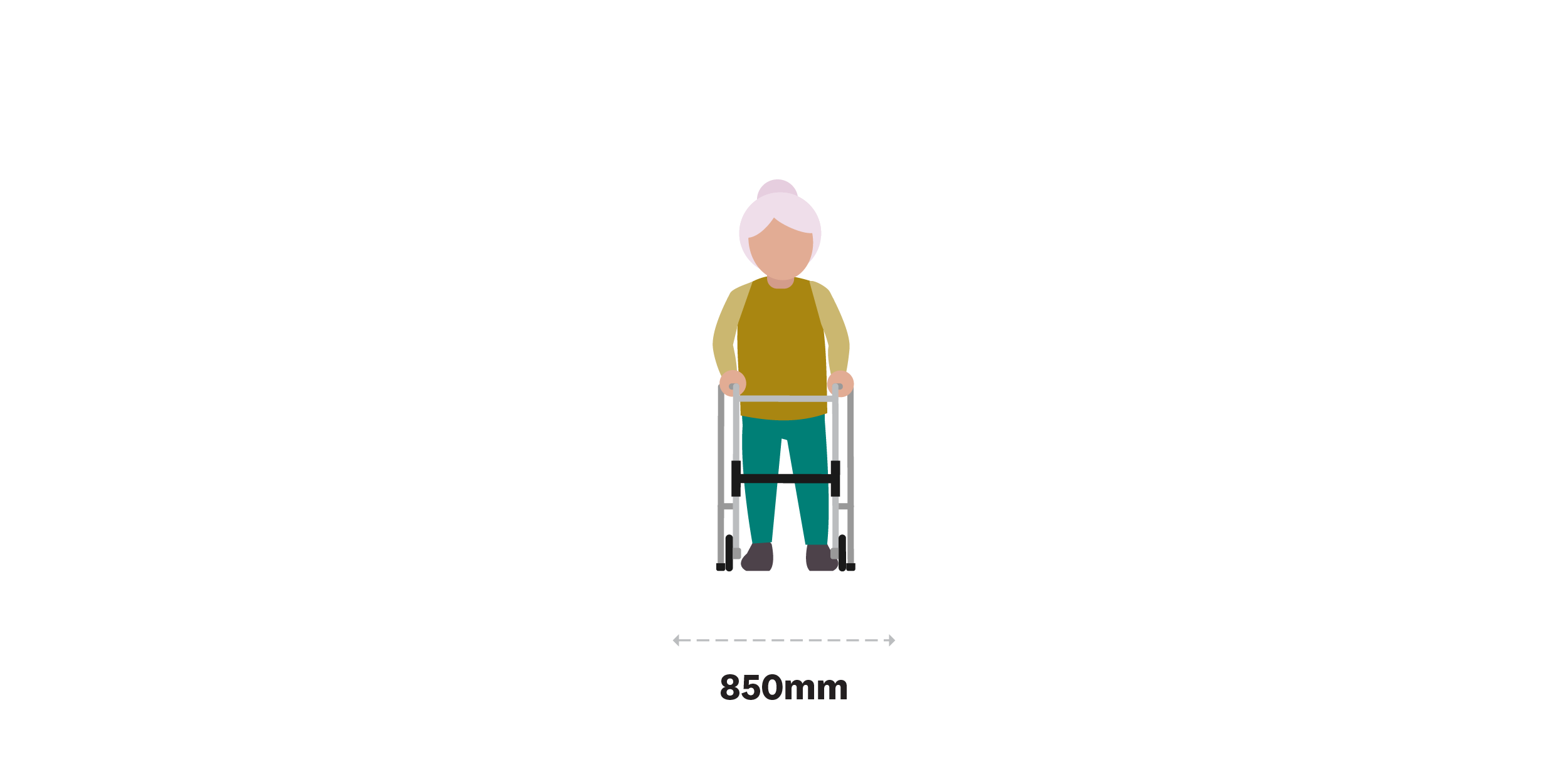
Person with a walking frame needs a space 850mm wide.
Retrieved from Irish Wheelchair Association. (2020). Best Practice Access Guidelines - Designing Accessible Environments. p. 44.

A person with a grocery crate needs a space 900mm wide.
Dimension sourced from NZ’s average grocery crate sizes.
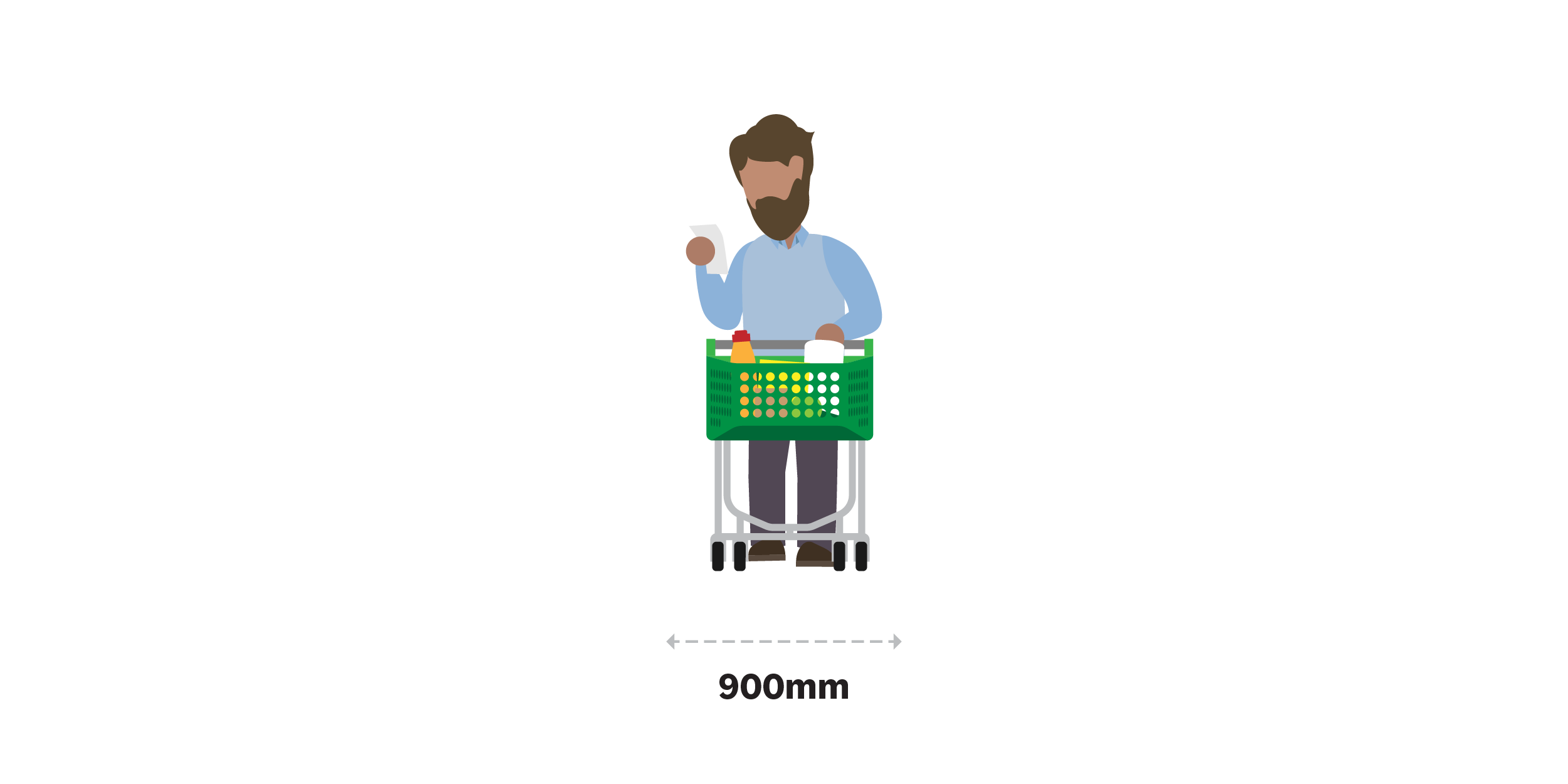
A person with a shopping trolley needs a space 900mm wide.
Dimension sourced from NZ’s average shopping trolley sizes.
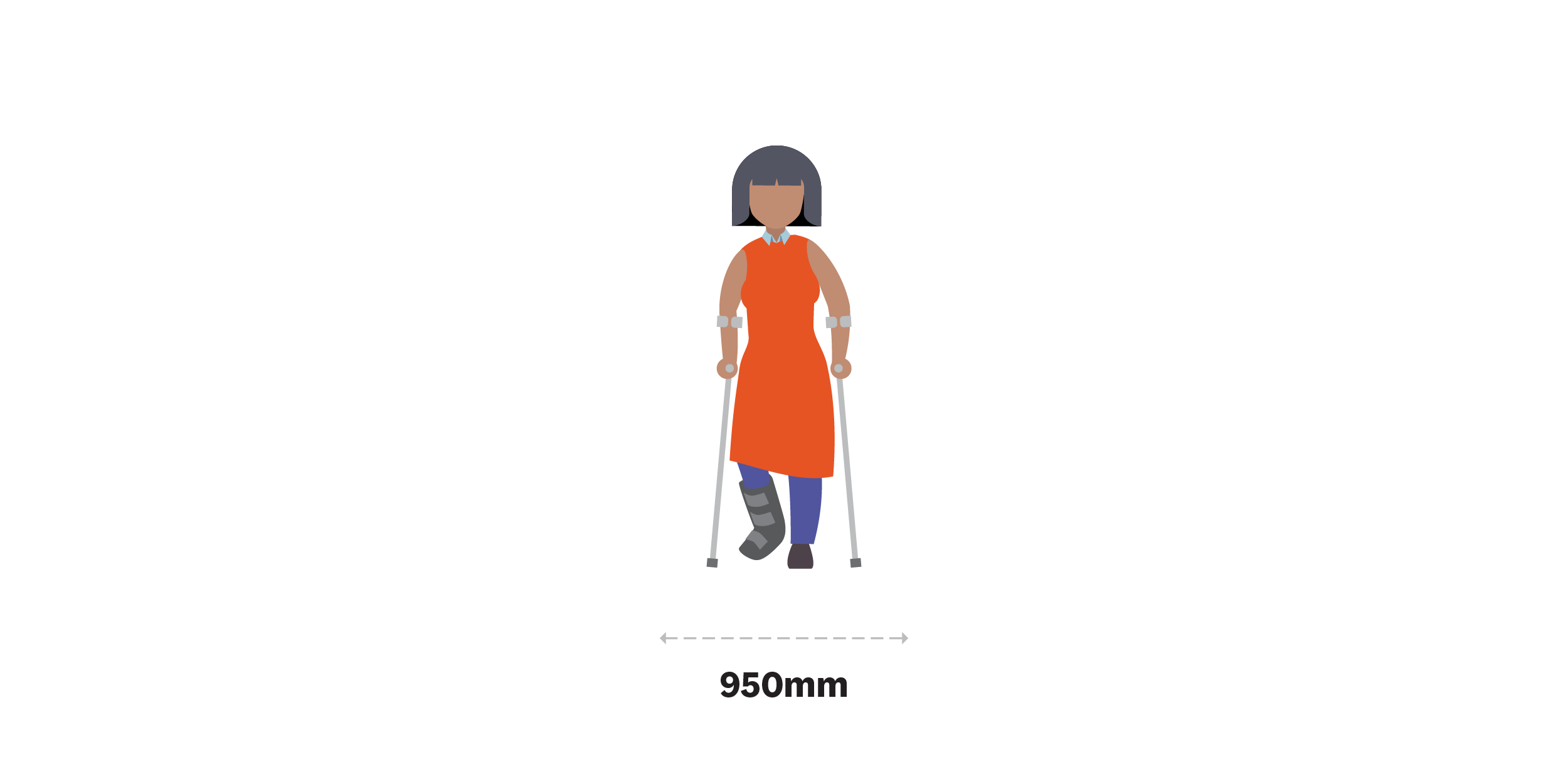
A person using forearm crutches needs a space 950mm wide.
Retrieved from Irish Wheelchair Association. (2020). Best Practice Access Guidelines - Designing Accessible Environments. p. 44.
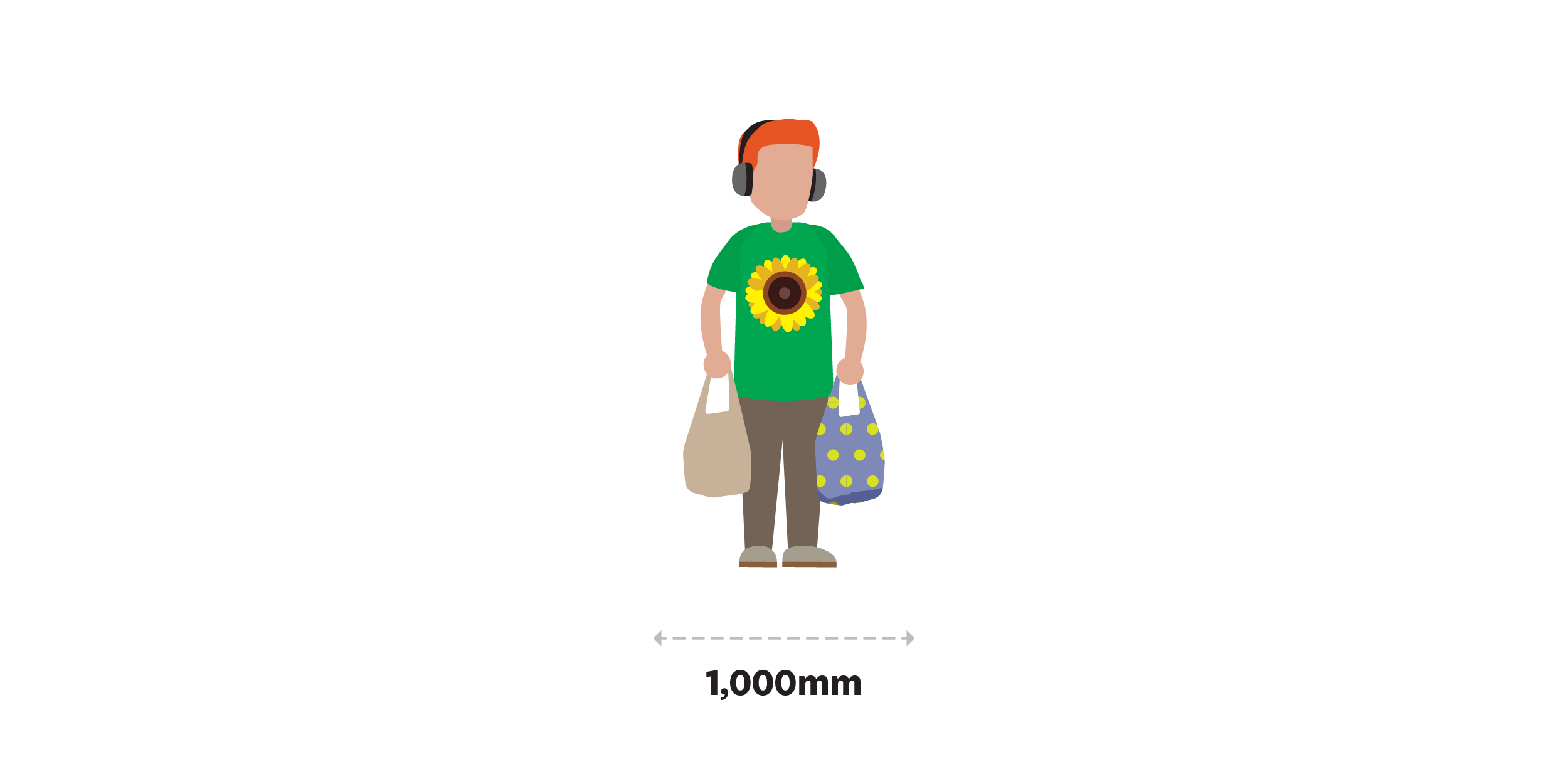
A person with shopping bags needs a space 1m wide.
Dimension sourced from anthropometric measurements.
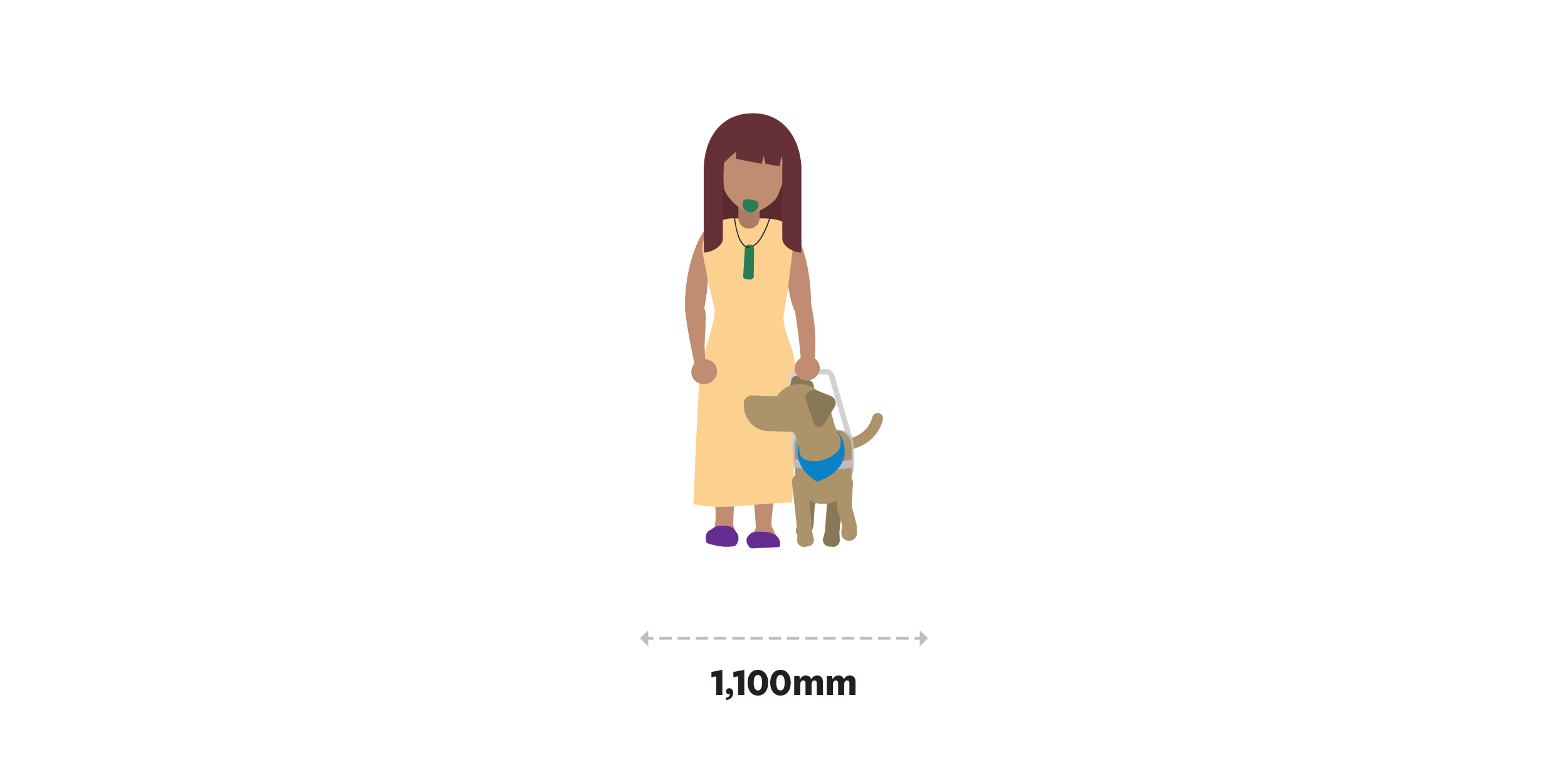
A person with an assistance dog needs a space 1,100mm wide.
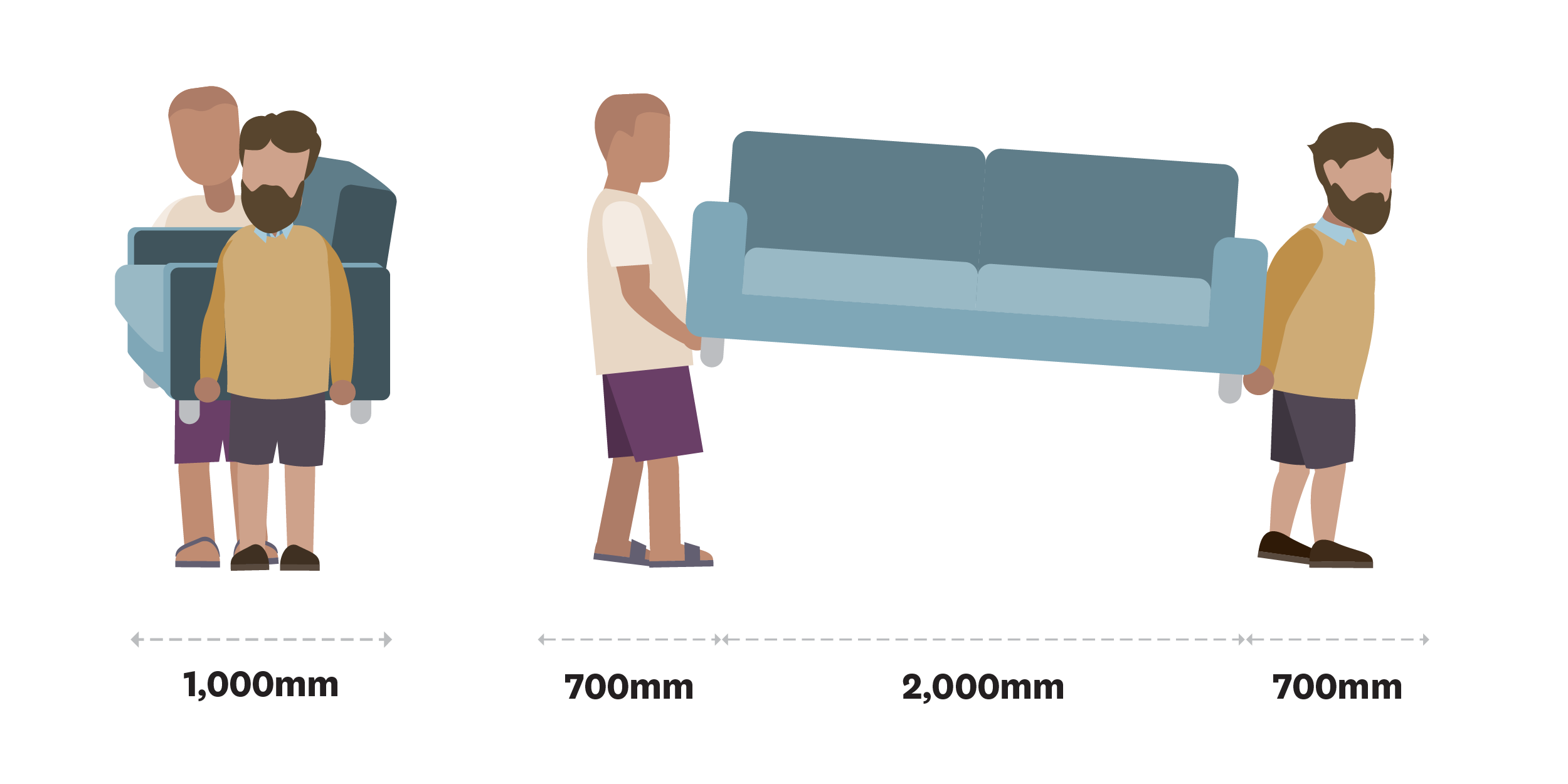
People moving furniture need a space 2m long for the furniture, 700mm for each person carrying, and 1m wide.
Retrieved from Auckland Council. (2022). Auckland Design Manual - Living and dining spaces.
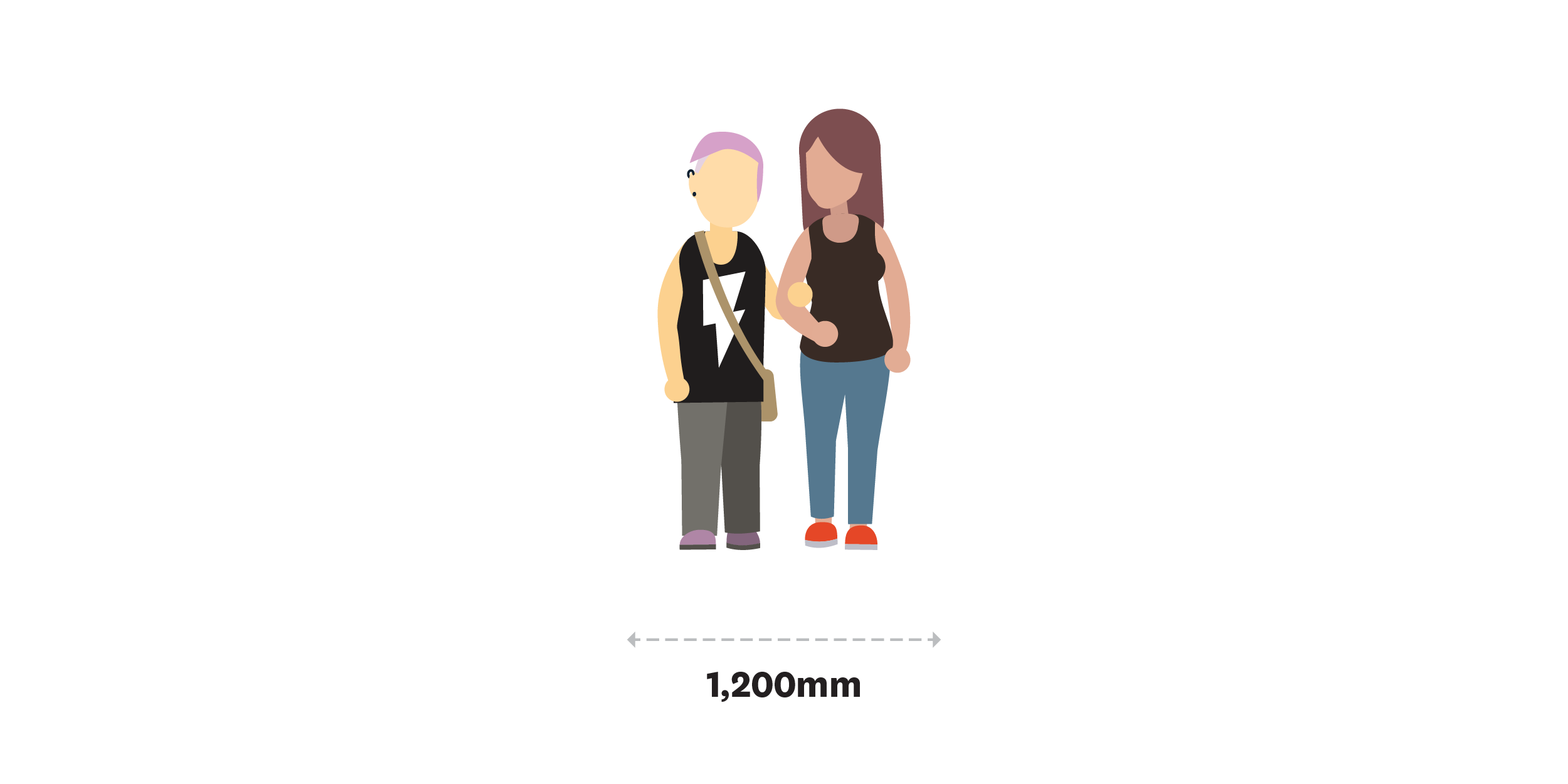
Person walking with a person assisting needs a space 1200mm wide.
Retrieved from Wellington, NZ: SNZ.
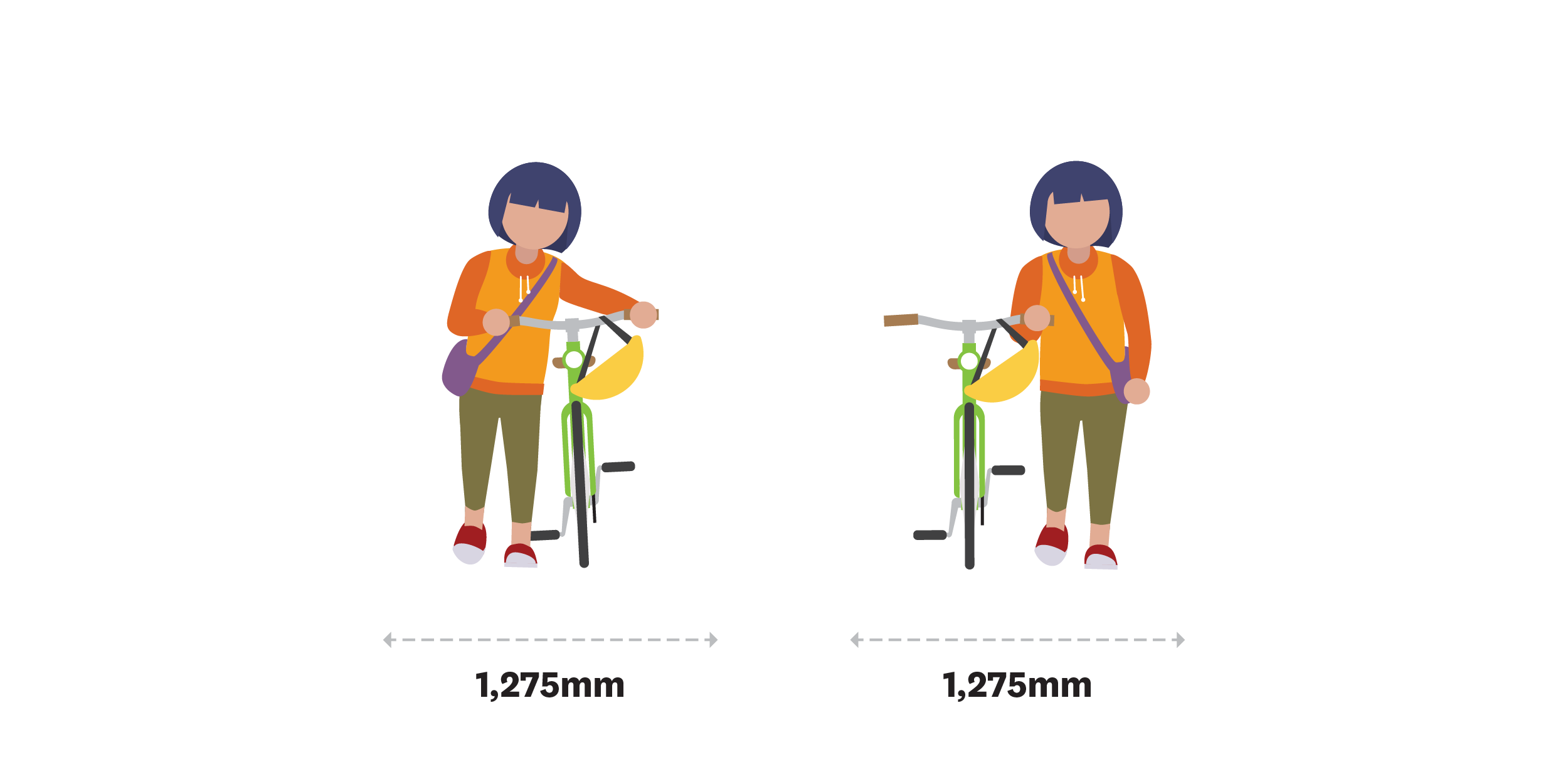
A person walking with a bicycle needs a space 1275mm wide.
Dimension sourced from NZ’s average bike sizes.
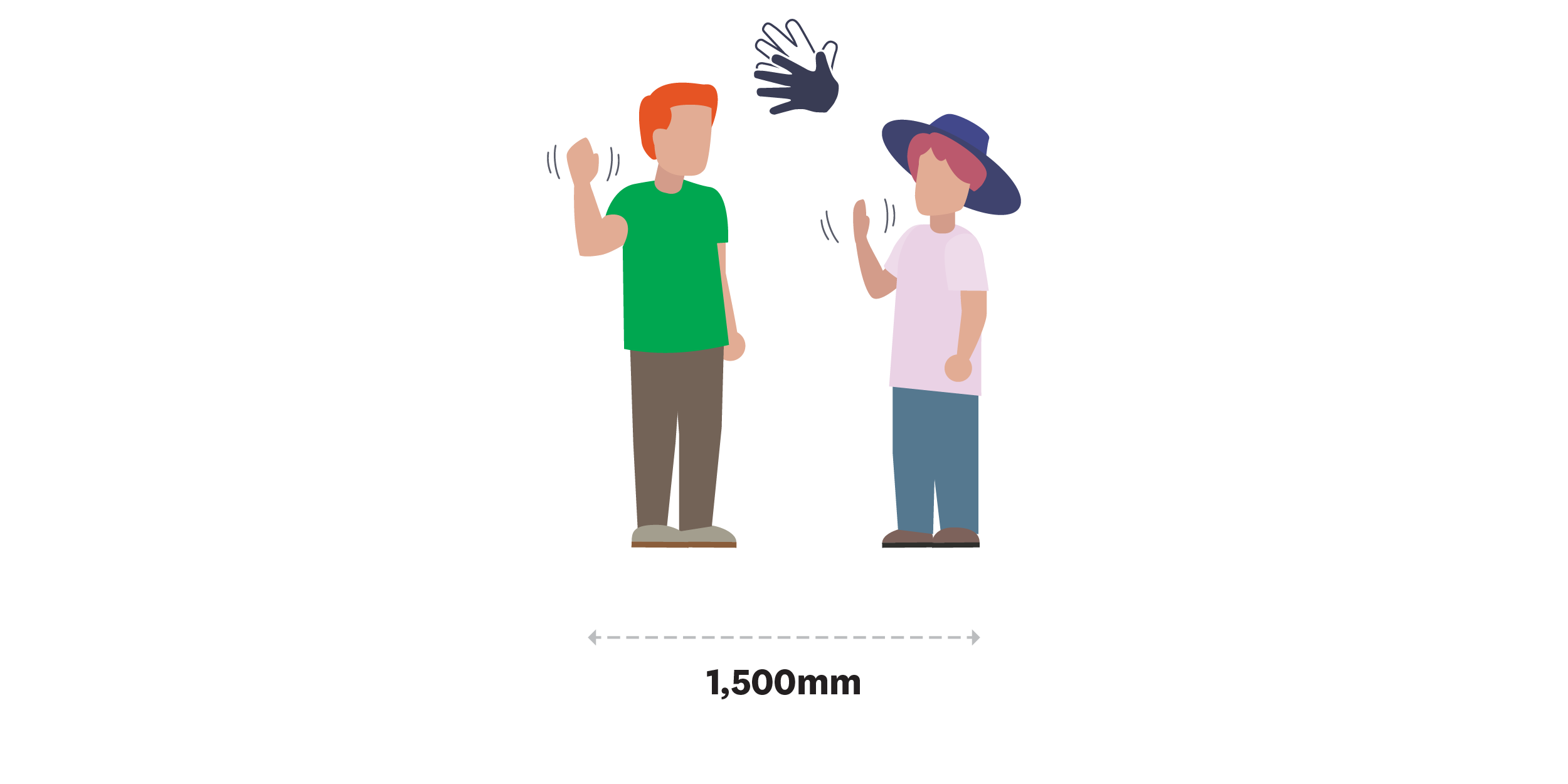
People communicating using NZ sign language need a space 1500mm in diameter.
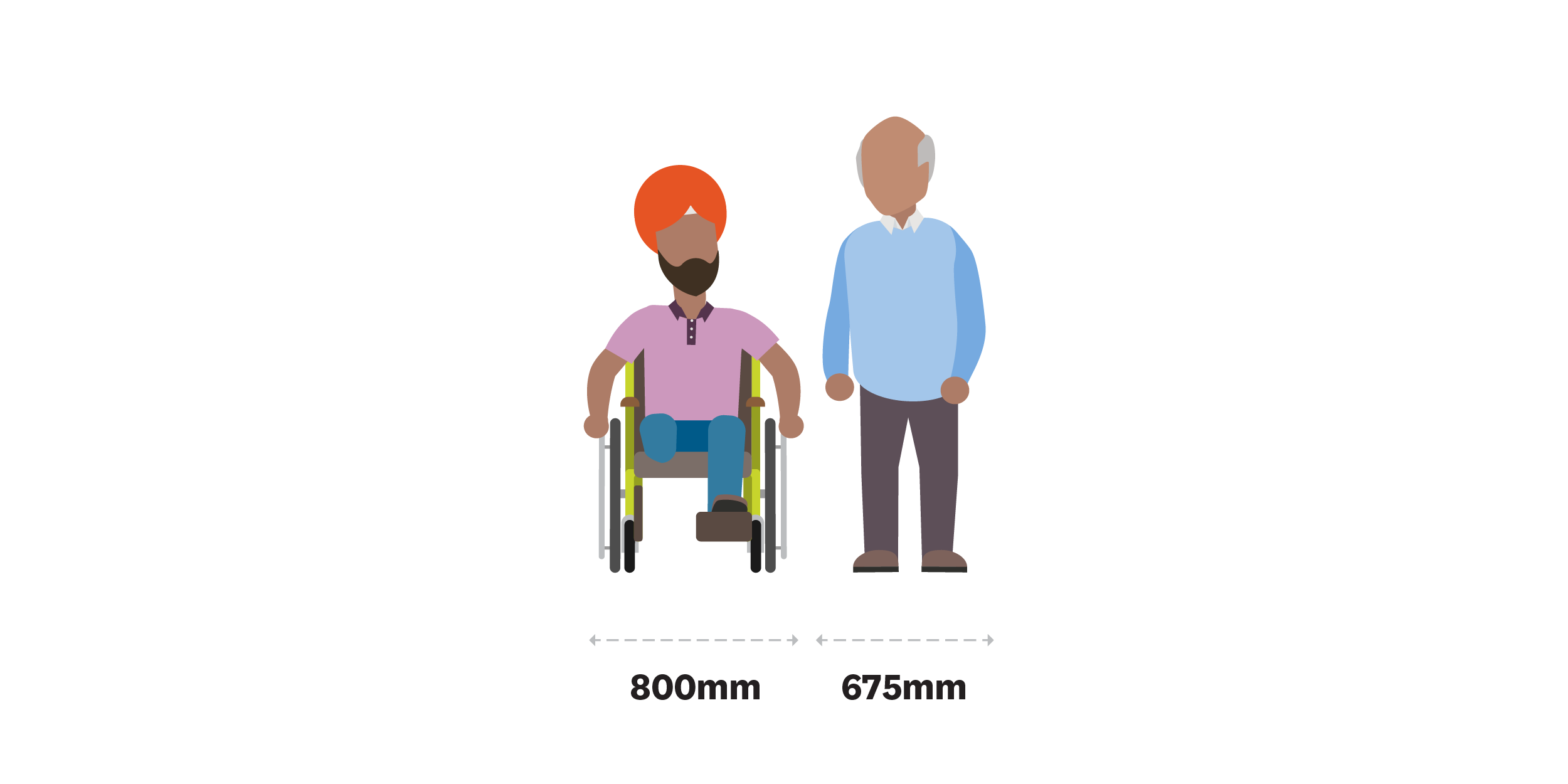
A person next to a person with a wheelchair needs a space 675mm wide, next to the 800mm space for the person using the wheelchair.
Retrieved from Irish Wheelchair Association. (2020). Best Practice Access Guidelines - Designing Accessible Environments. p. 44.
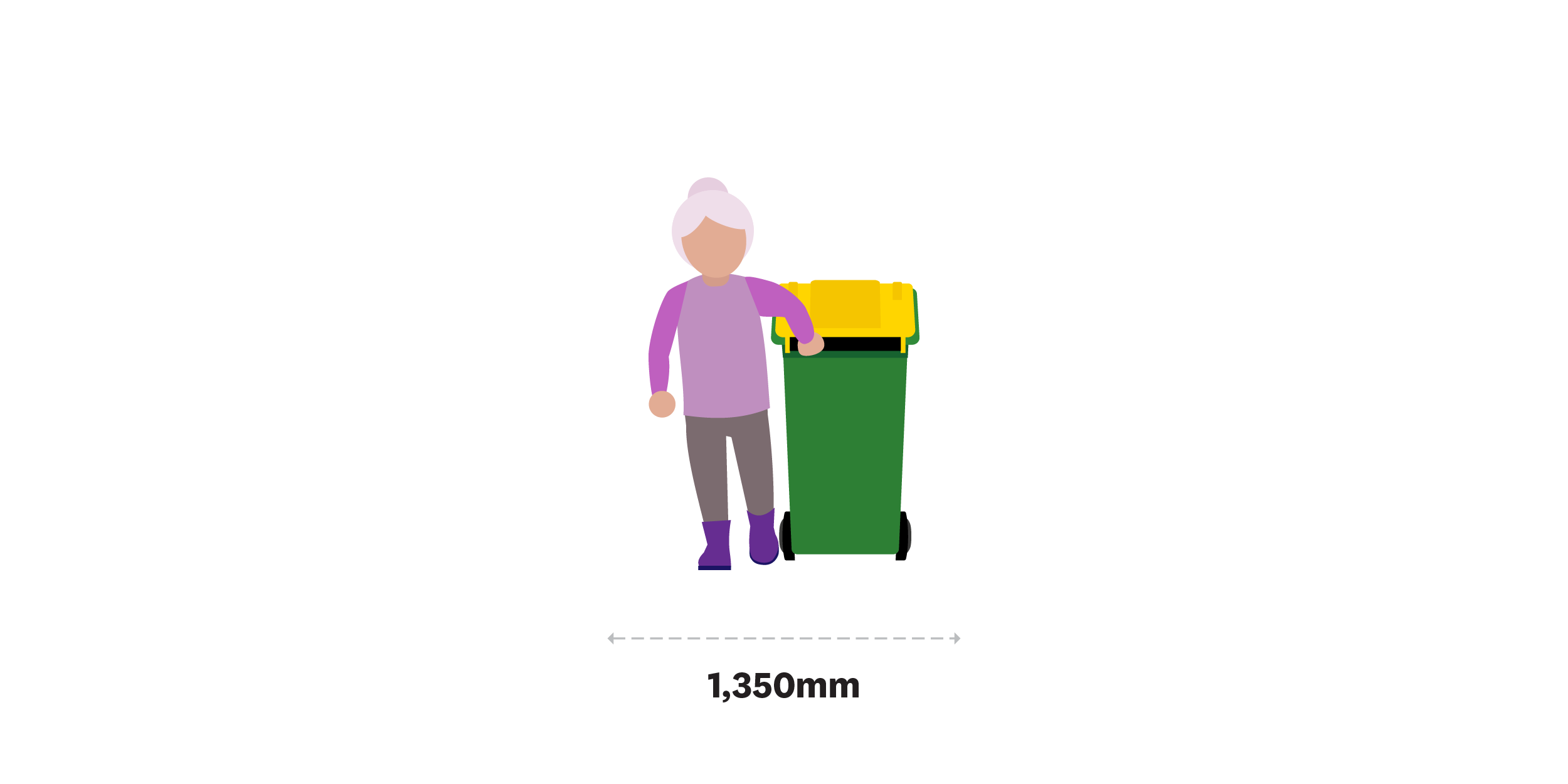
A person with a wheelie bin needs a space 1350mm wide.
Retrieved from Auckland Council. (2019). Design Element R7: Design for Waste.
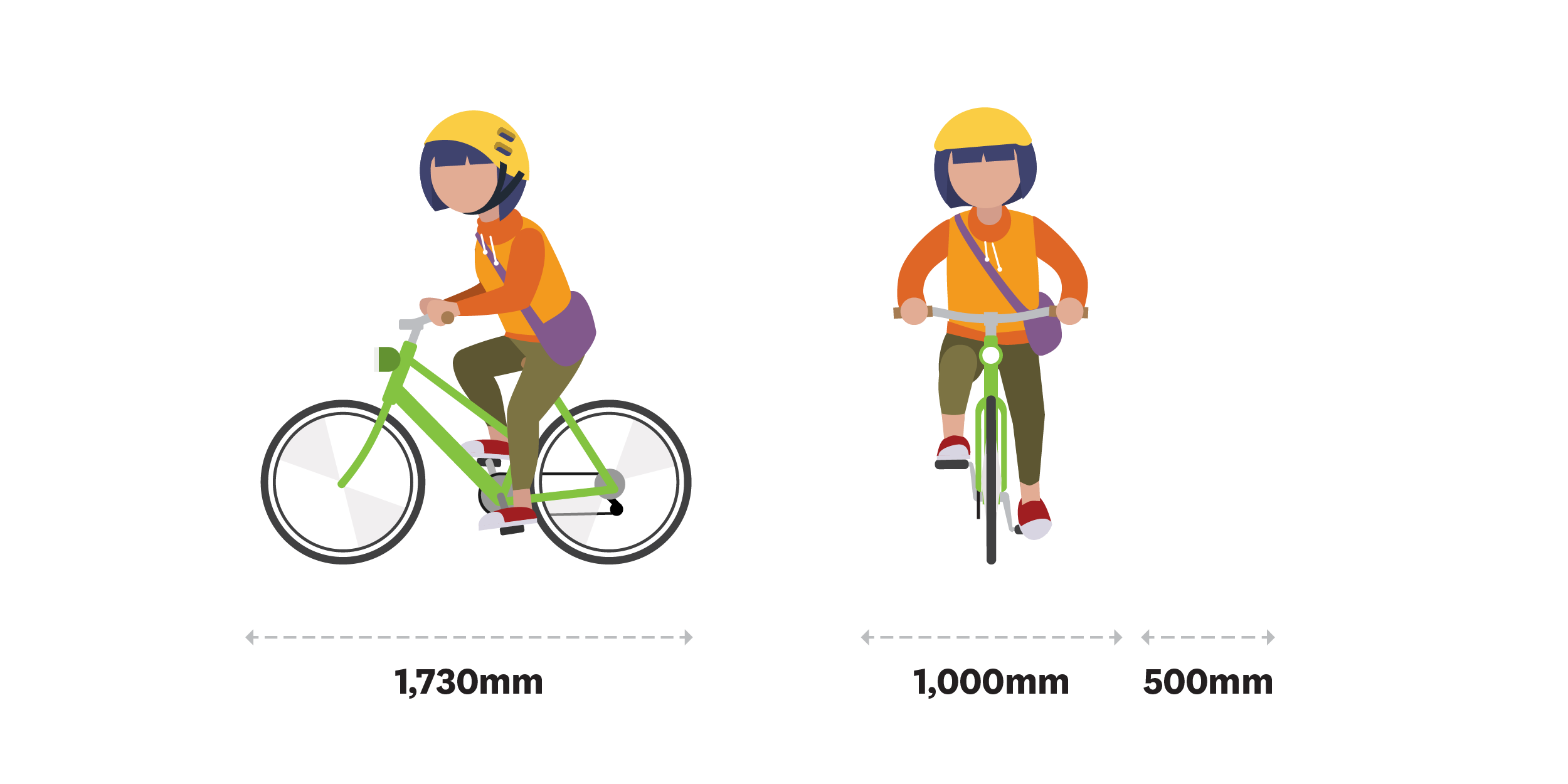
A person on a bicycle needs a space 1730mm long and 1000mm wide, with 500mm clearance on either side.
Retrieved from Sustrans. (2019). Space Requirements.
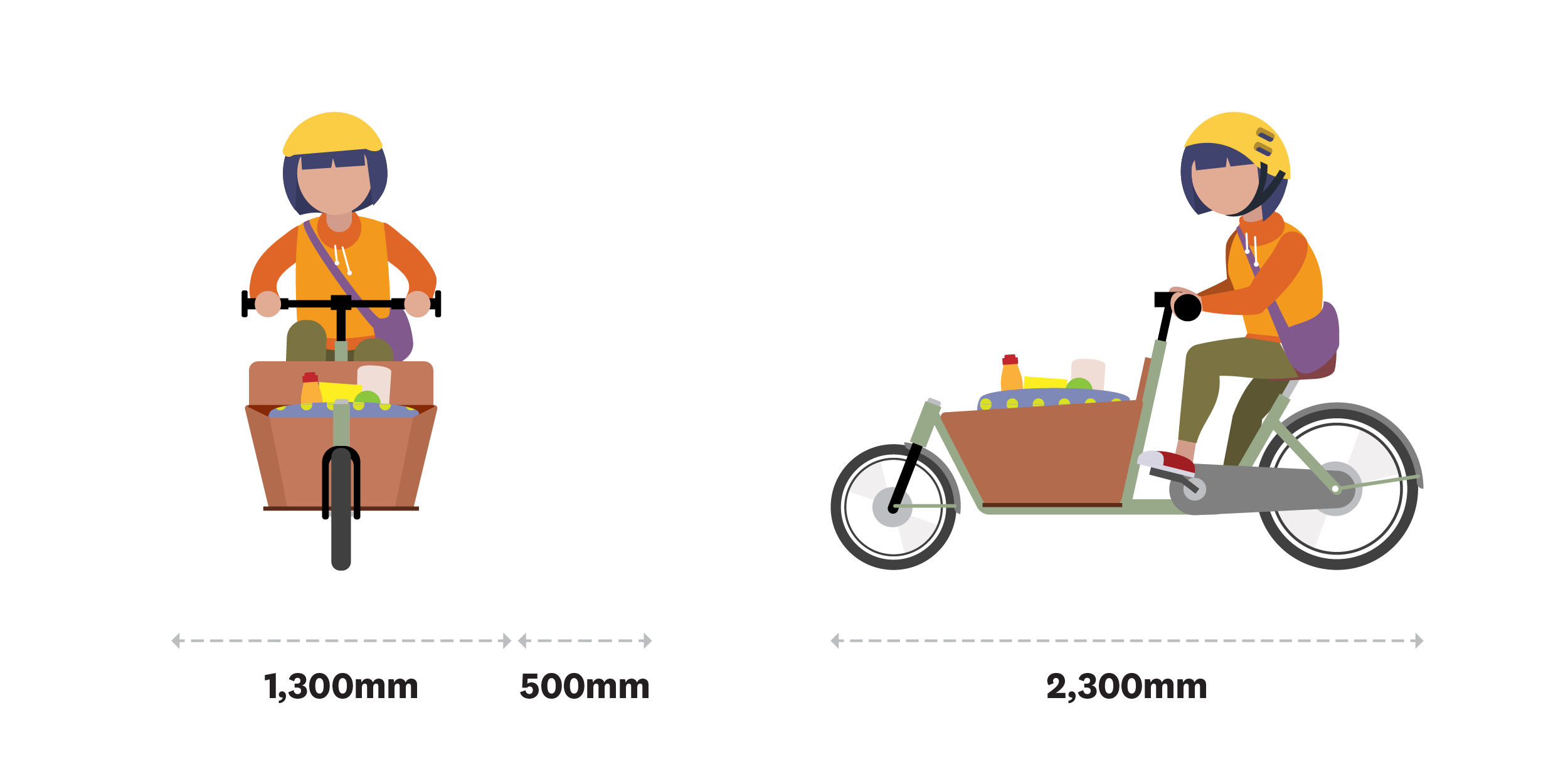
A person on a cargo bicycle needs a space 2300mm long and 1300mm wide with 500mm clearance on each side.
Retrieved from Sustrans. (2019). Space Requirements.
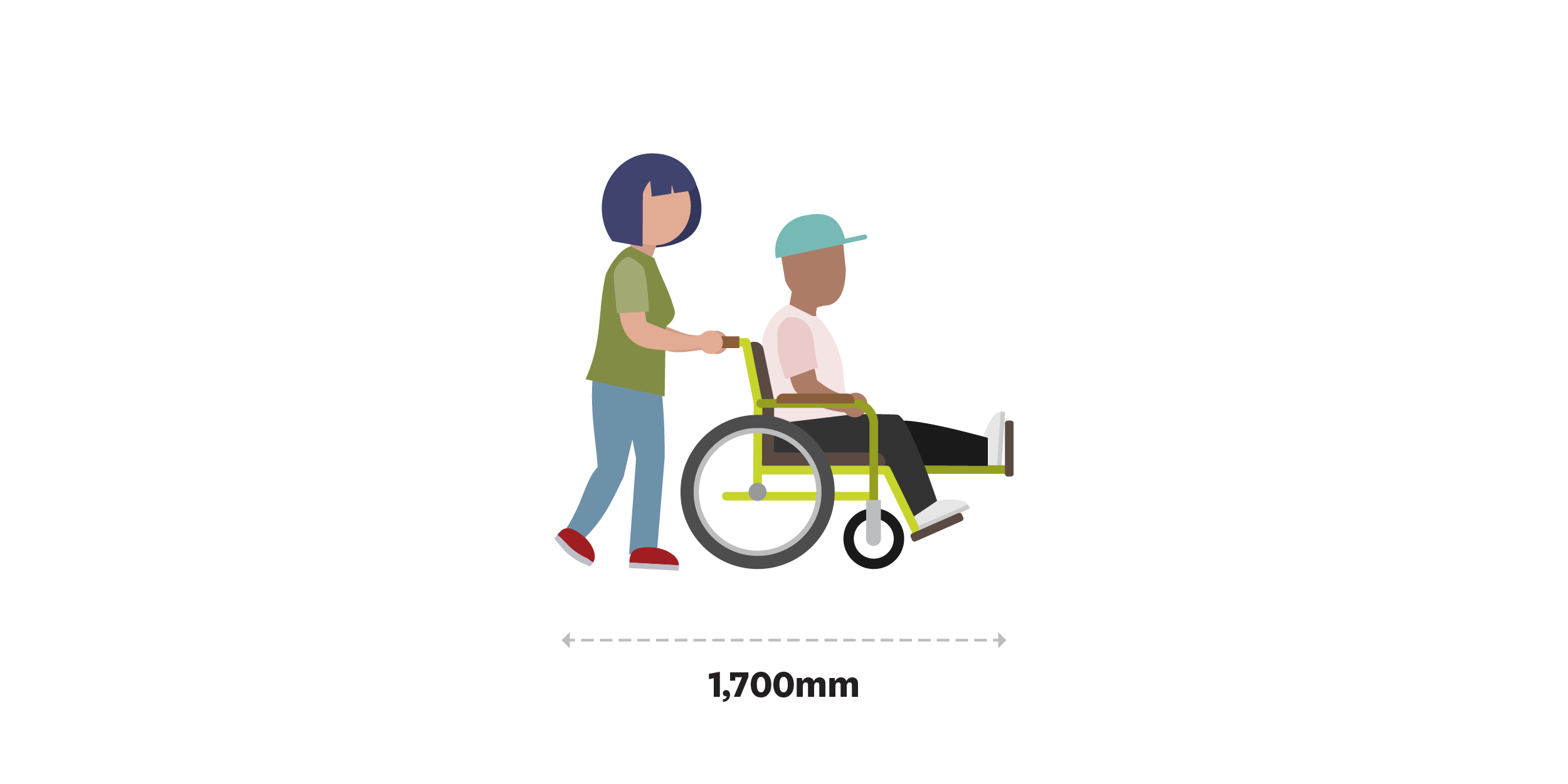
Person with a wheelchair with an elevating leg rest needs a space 1700mm long.
Retrieved from Irish Wheelchair Association. (2020). Best Practice Access Guidelines - Designing Accessible Environments. p. 44.
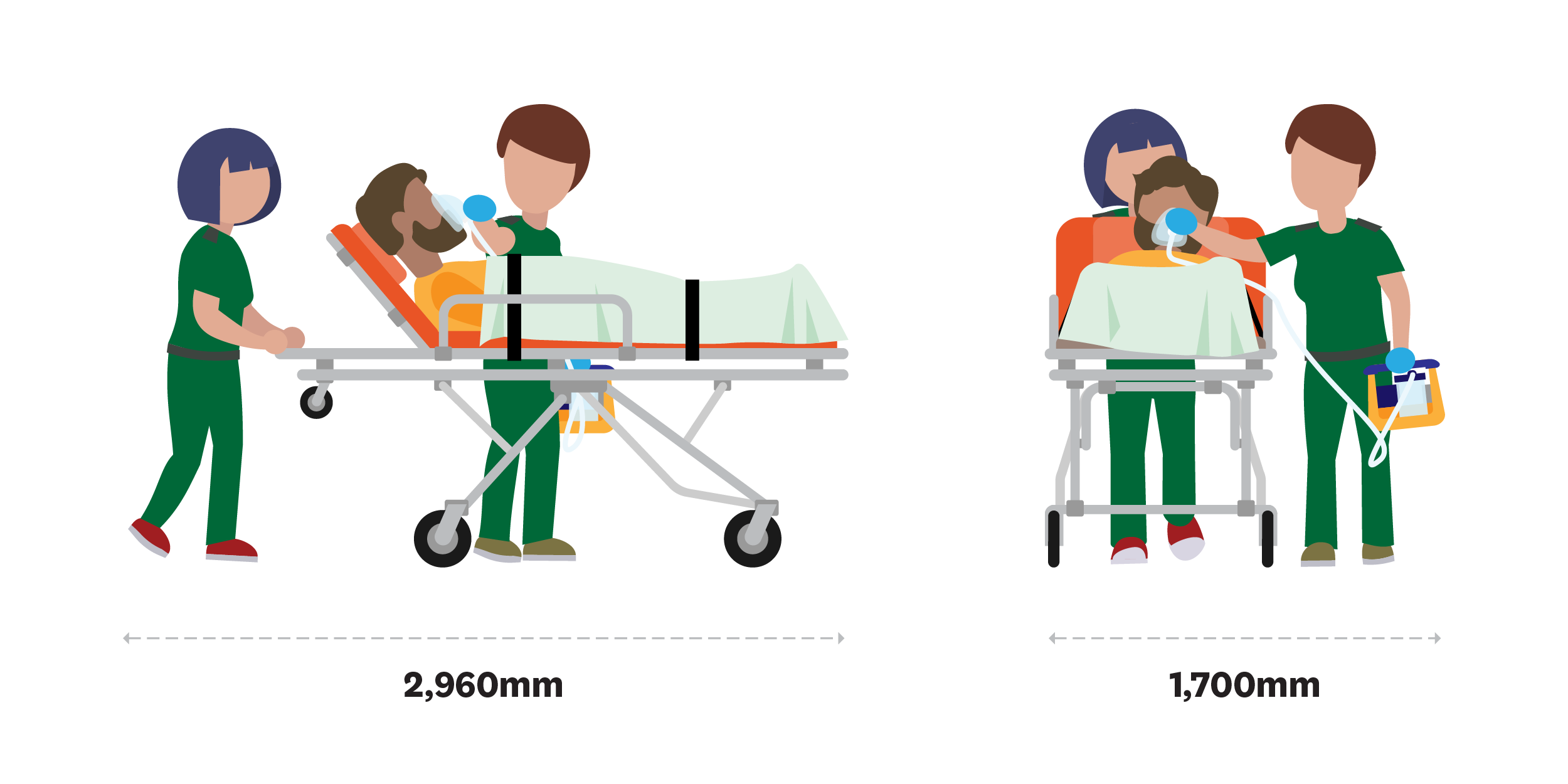
Ambulance officers need a space 2960mm long and 1700mm wide.
Retrieved from Stryker. (2020). Power-PRO XT powered ambulance cot.
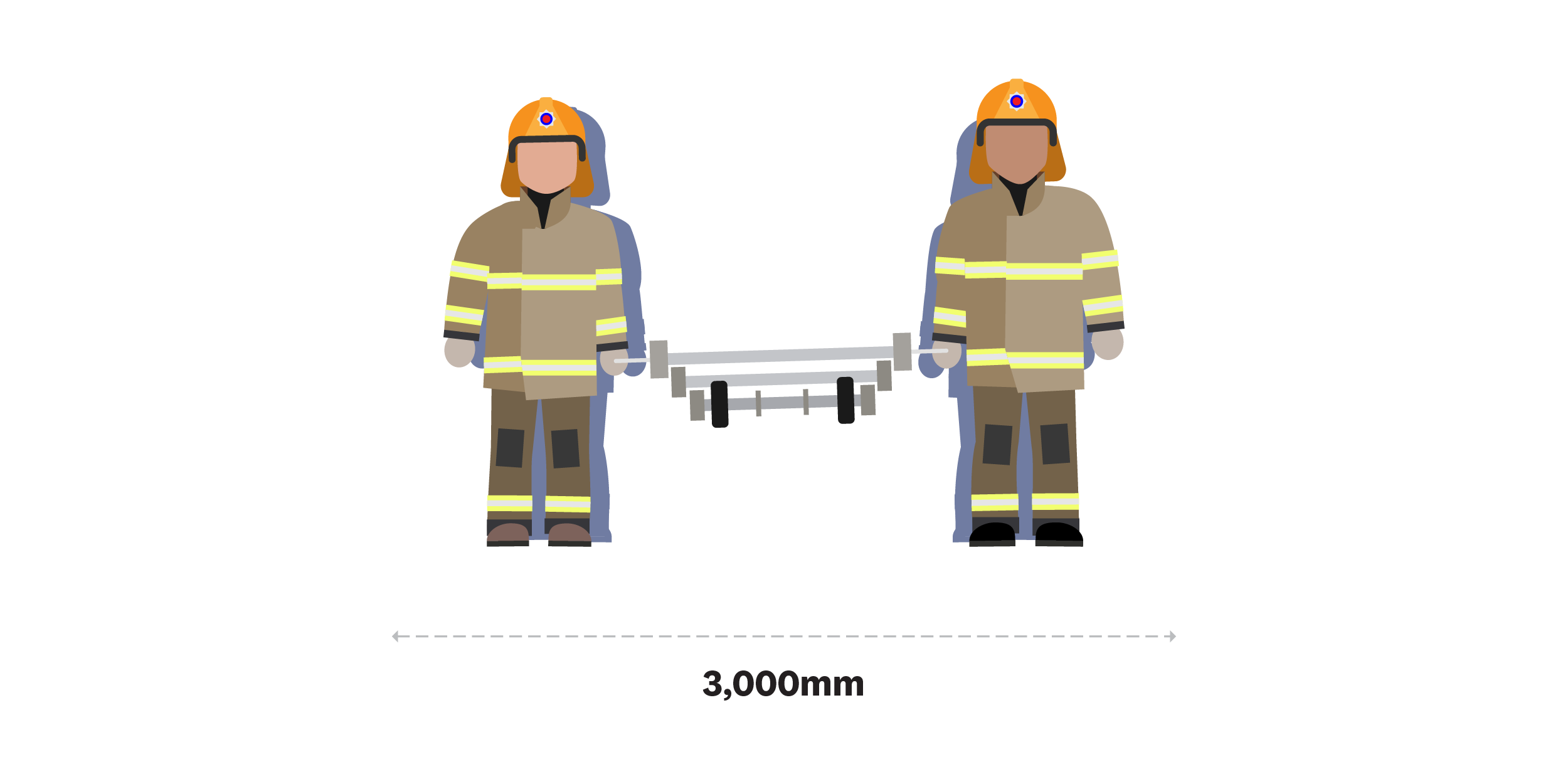
Four fire fighters with a fire service ladder need a space 3m wide.
Fire and Emergency New Zealand, personal communication, 2025.
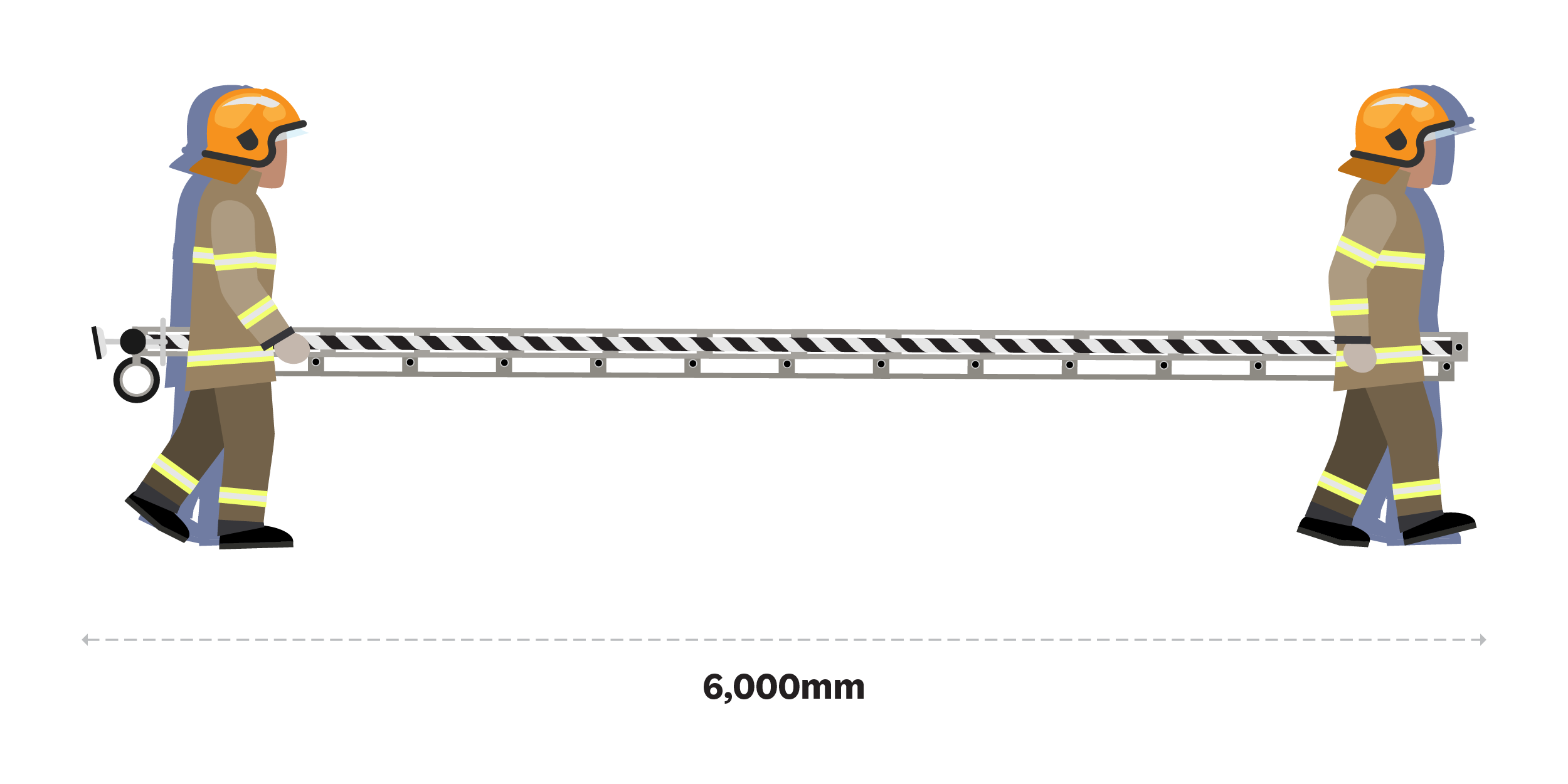
Four fire fighters with a fire service ladder need a space 6m long
Fire and Emergency New Zealand, personal communication, 2025.