

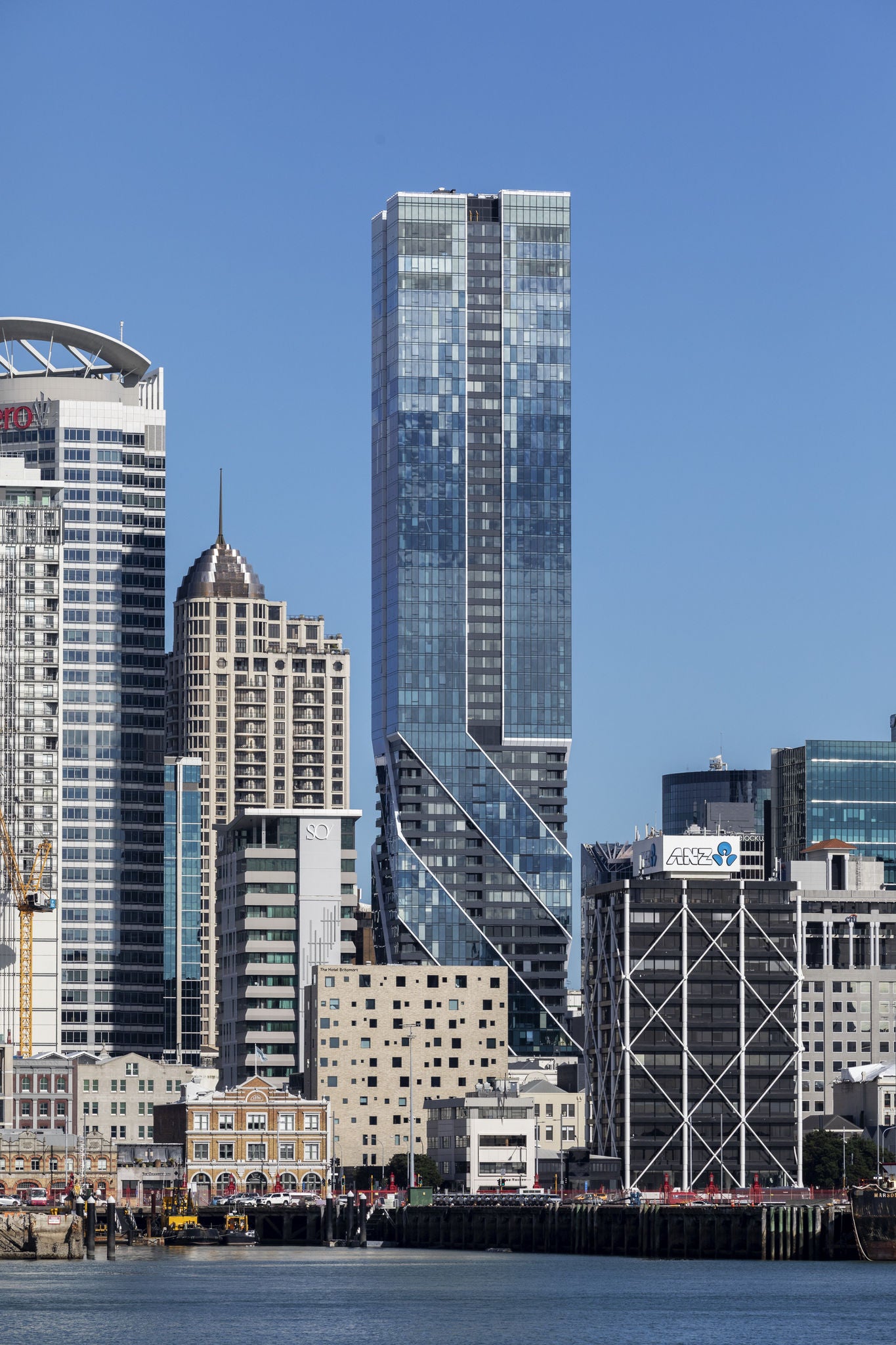
The Pacifica seen from the Waitemata harbour.
Tāmaki Makaurau is a city shaped by fire and water—its volcanic cones (maunga) rising across the landscape, each with its own story, memory, and meaning. These maunga, including the revered Maungawhau (Mt Eden), are not just geographic features—they are ancestors, landmarks, and guardians of whakapapa.
The Auckland Urban Design Panel (AUDP) champions the embedding of these cultural narratives into the city’s built form. The Panel’s advocacy has ensured that design proposals honour and reflect the mauri of the maunga, giving these sacred places a visible presence in Auckland’s evolving urban fabric.
Once flowing openly along what is now Queen Street, Te Waihorotiu was a lifeline for local iwi, running from the ridgeline of Karangahape down to the Waitematā. Though it now flows beneath the city, its presence is remembered and reimagined in designs reviewed by the AUDP—bringing the stream’s legacy to life in subtle ways that respect the past and inspire the future.
From the union and separation of Ranginui and Papatūānuku to the emergence of Te Ao Mārama, Auckland’s story is deeply rooted in Māori cosmology. Through AUDP’s leadership, projects such as City Rail Link have embedded these pūrākau into the architectural expression of place. This is more than symbolism—it’s a commitment to a future that honours the past.
The success of transformational projects like the City Rail Link is in part due to the AUDP’s collaborative approach. By working closely with designers, mana whenua, and Council teams, the Panel has elevated outcomes through shared values and early engagement.
The Panel’s early input has helped streamline complex projects, reducing risk and providing clarity before applications are formally lodged—saving time and resources while lifting design quality.
The Panel has consistently championed the use of the Te Aranga Māori Design Principles, supporting their early adoption and ongoing application. This has ensured Māori values are carried through every layer of design—from strategy to detailing—and are reflected in both the process and outcomes.
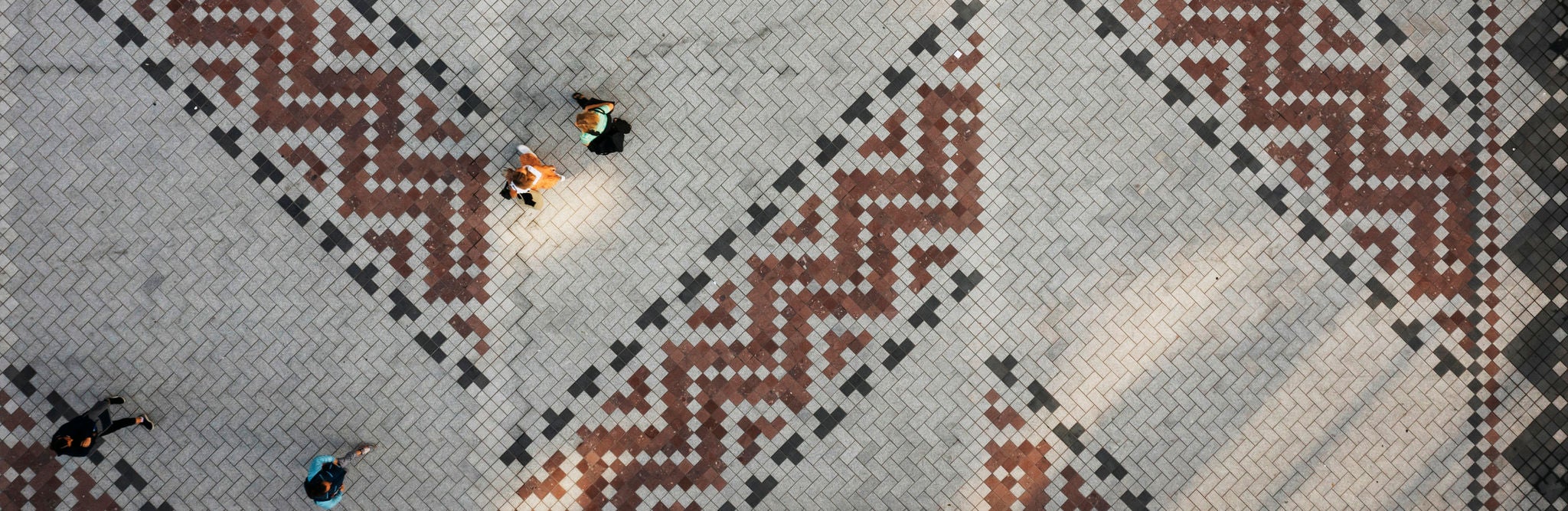
A birds eye view of the Te Komititanga paving artwork at Commercial bay Waitemata station, one of the signature collaborations with AUDP.
Auckland is changing—and so too is the role of design. The AUDP has evolved to respond to growing urban pressures and intensification, including the creation of a dedicated Medium Density Residential Panel (MDRP) to guide higher-density housing. This ensures designs are not just permitted, but purposeful—responsive to both people and place.
The AUDP provides a space where urban designers, architects, landscape architects, planners, property professionals and Māori design experts come together to challenge, refine, and uplift design thinking. The result is a cross-pollination of ideas that benefits both the city and the professions that shape it.
As an impartial review body, the AUDP brings an independent voice to complex developments. Its multi-disciplinary lens and professional integrity provide developers and Council with trusted feedback that enhances both outcomes and public confidence.
This rigorous process ensures projects uphold design excellence, reflect community values, and align with the aspirations of Auckland Council’s plans and strategies.
The AUDP has played a pivotal role in supporting Auckland Council’s urban regeneration efforts—ensuring that redevelopments like the Northcote Neighbourhood and Kōtuitui Terraces reflect high-quality design, celebrate identity, and foster community wellbeing.
These reviews have reinforced design excellence as a public good—lifting the quality of life in growing neighbourhoods.
Nga Aho plays a vital role within the AUDP, bringing cultural expertise that ensures Māori perspectives and values are woven into the fabric of Auckland’s design future. Their involvement fosters deep engagement with iwi and hapū, helping shape projects that honour ancestral connections and reflect the richness of te ao Māori.
Through this approach, the Panel champions Auckland Council’s vision for a city that is inclusive, equitable, and proudly grounded in Māori identity - creating places that tell stories, strengthen belonging, and inspire generations to come.
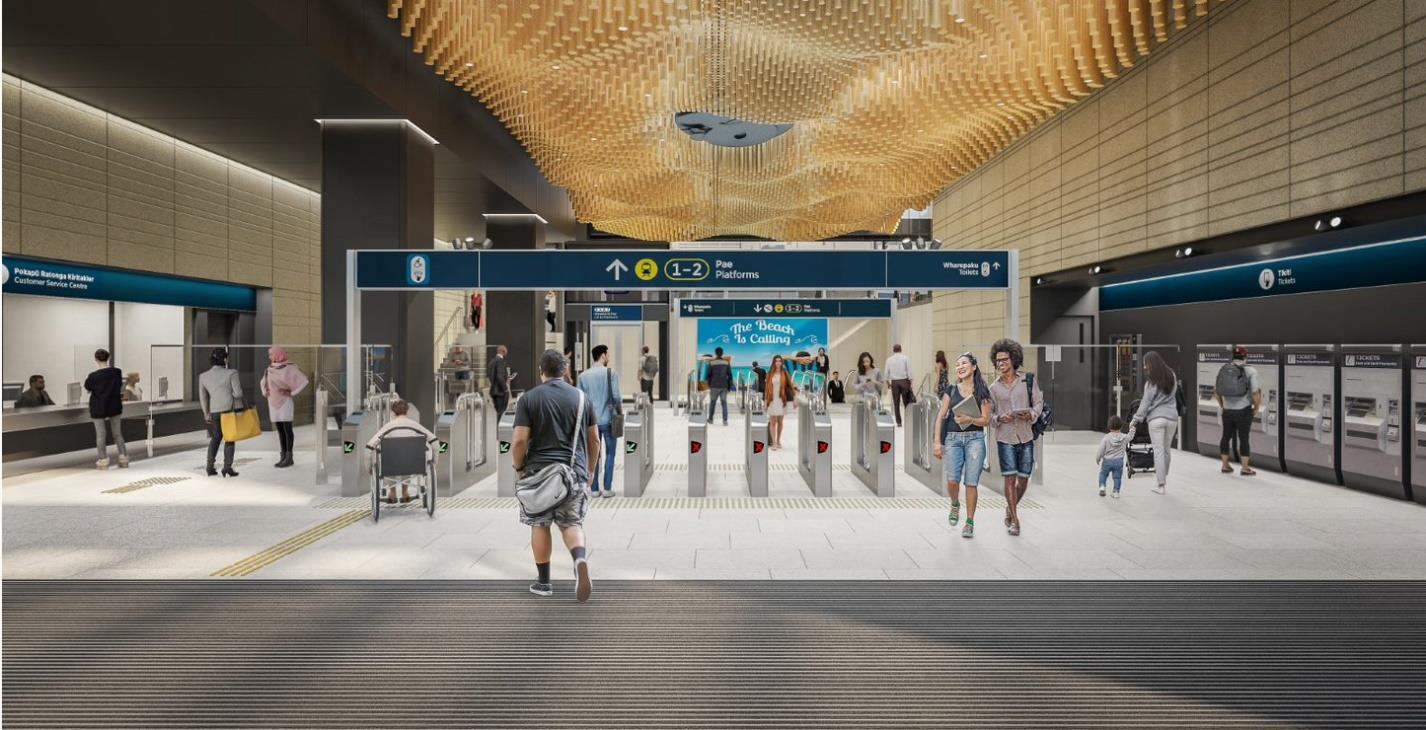
A render of the reed ceiling of Te Waihorotiu station during the collaboration between CRL and AUDP.
Here are examples of the keystone projects shaped by AUDP and their applicants over the last twenty years.
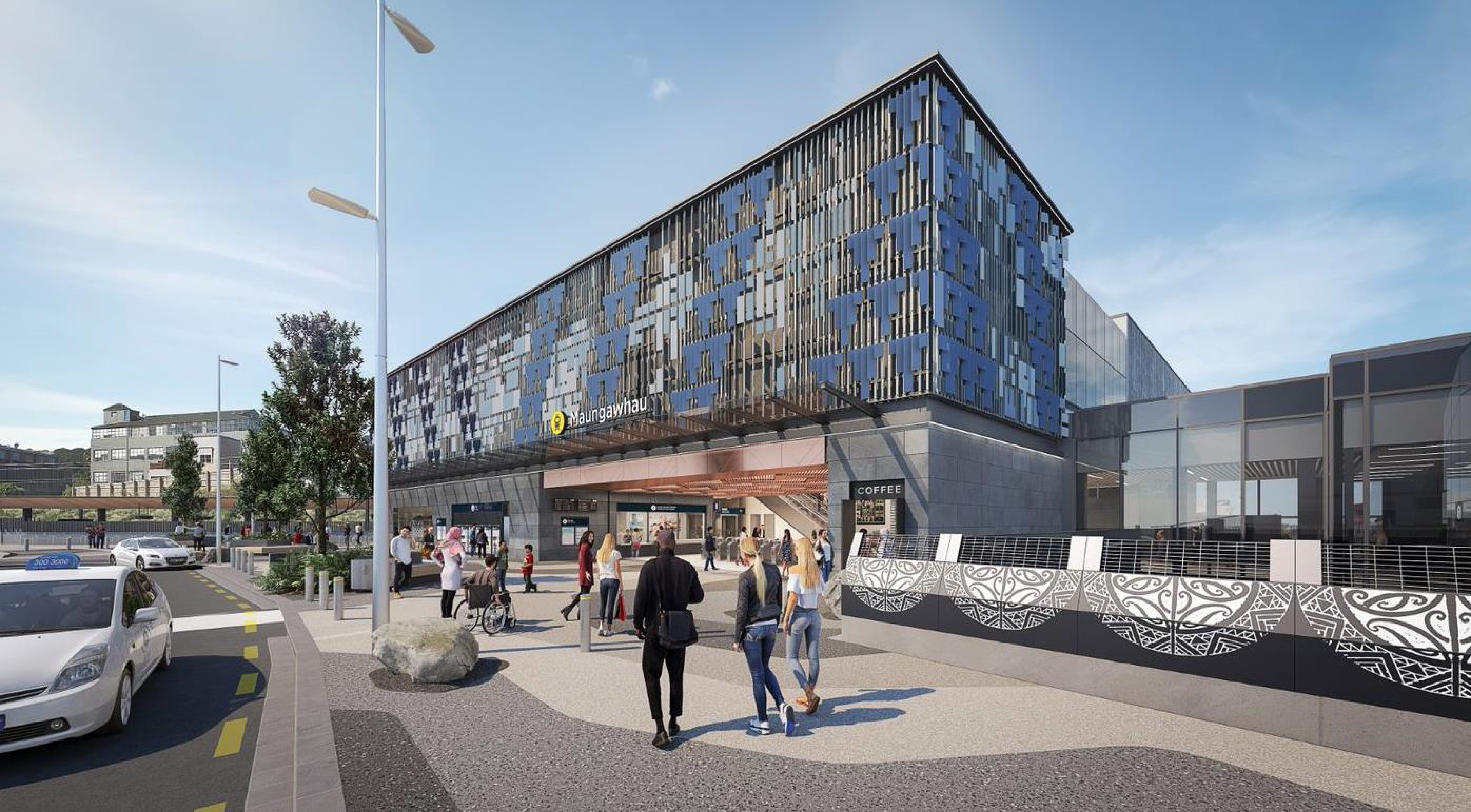
The City Rail Link (CRL) project in Auckland will add three new stations to the rail network: Maungawhau (formerly Mt Eden), Karanga-a-Hape (Karangahape), and Te Waihorotiu (Aotea).
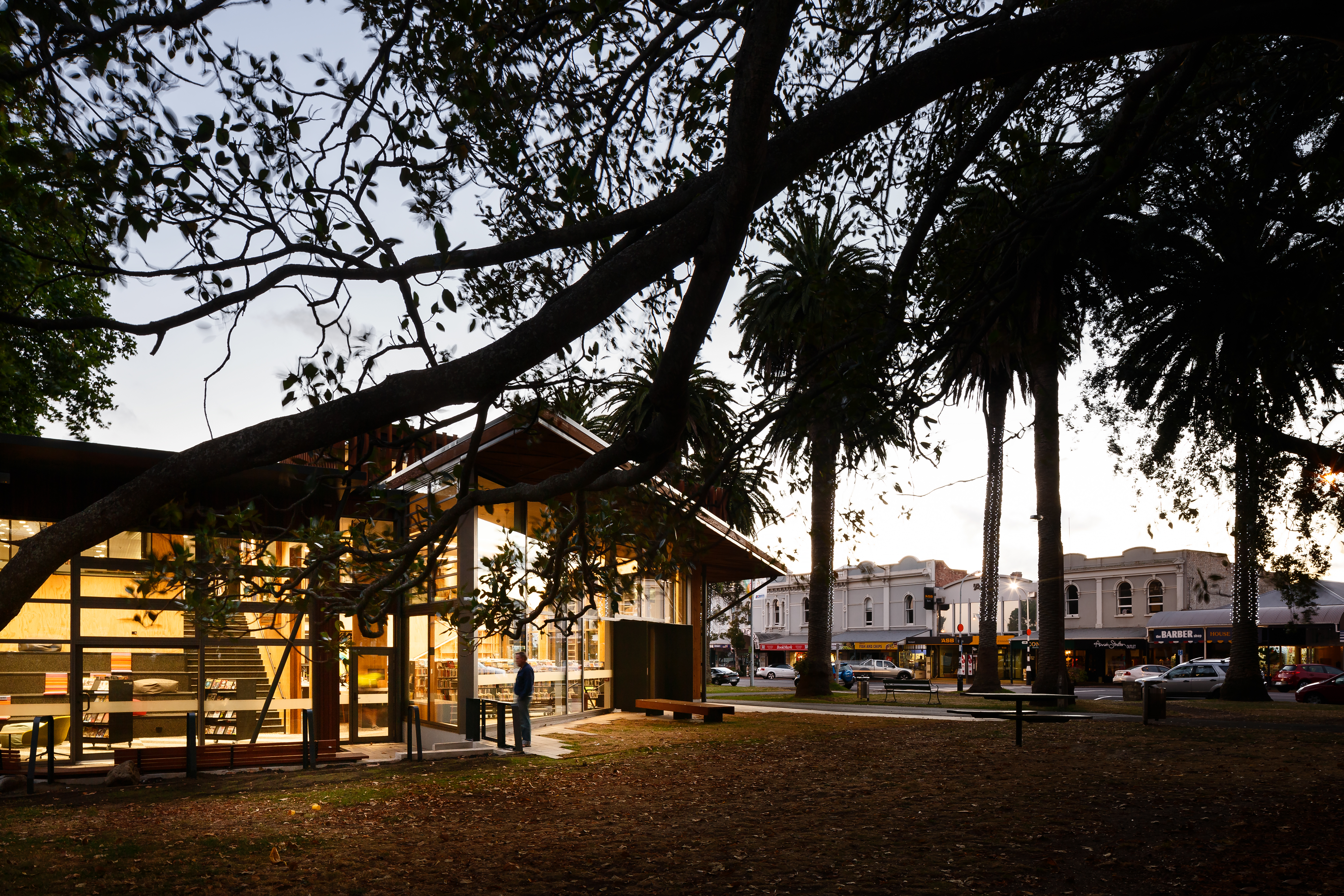
The Devonport Library redevelopment transformed a cherished community space into a cutting-edge library that bridges modernity with tradition. Designed to embody 21st-century library principles, the project balances innovation with respect for Devonport Village’s distinctive heritage and character. Today, the library provides a vibrant and inclusive hub, fostering learning, connection, and community engagement.
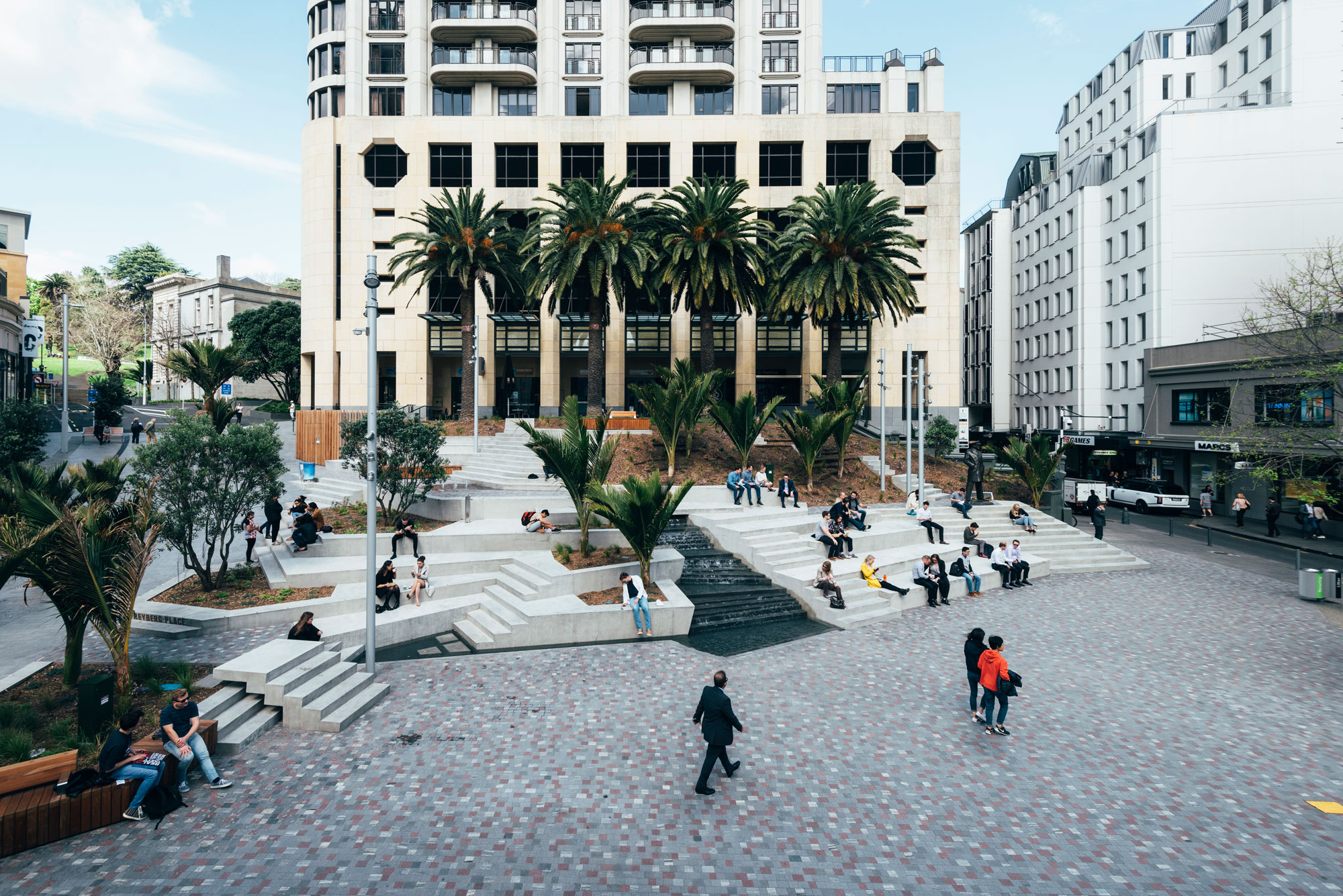
Freyberg Place, put simply, is a public space that explores the overlaps between public art and architecture.
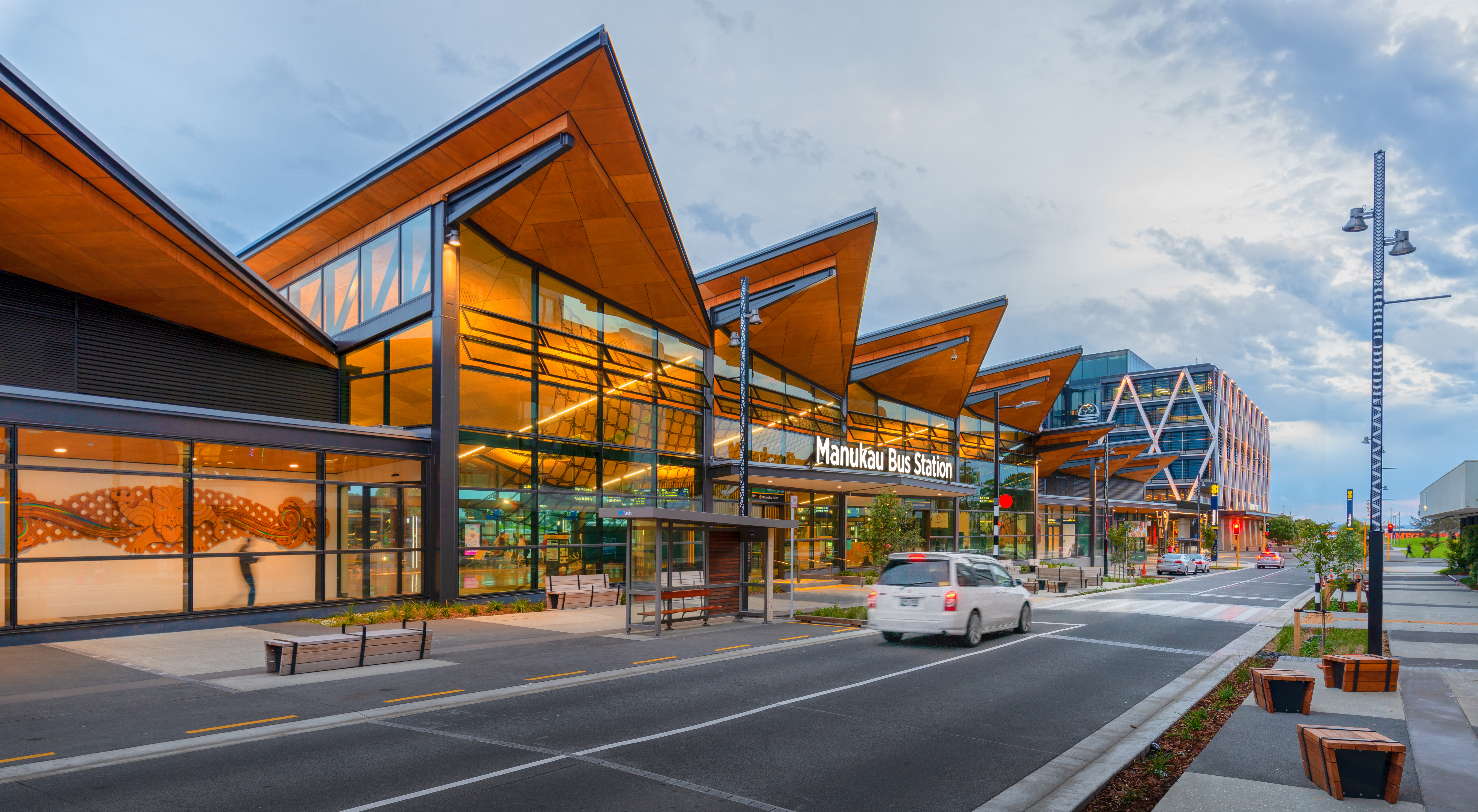
With people, place, and sustainability at its heart, the bright, airy Manukau Bus Station revitalises the town centre and sets a new standard for simple, integrated travel.
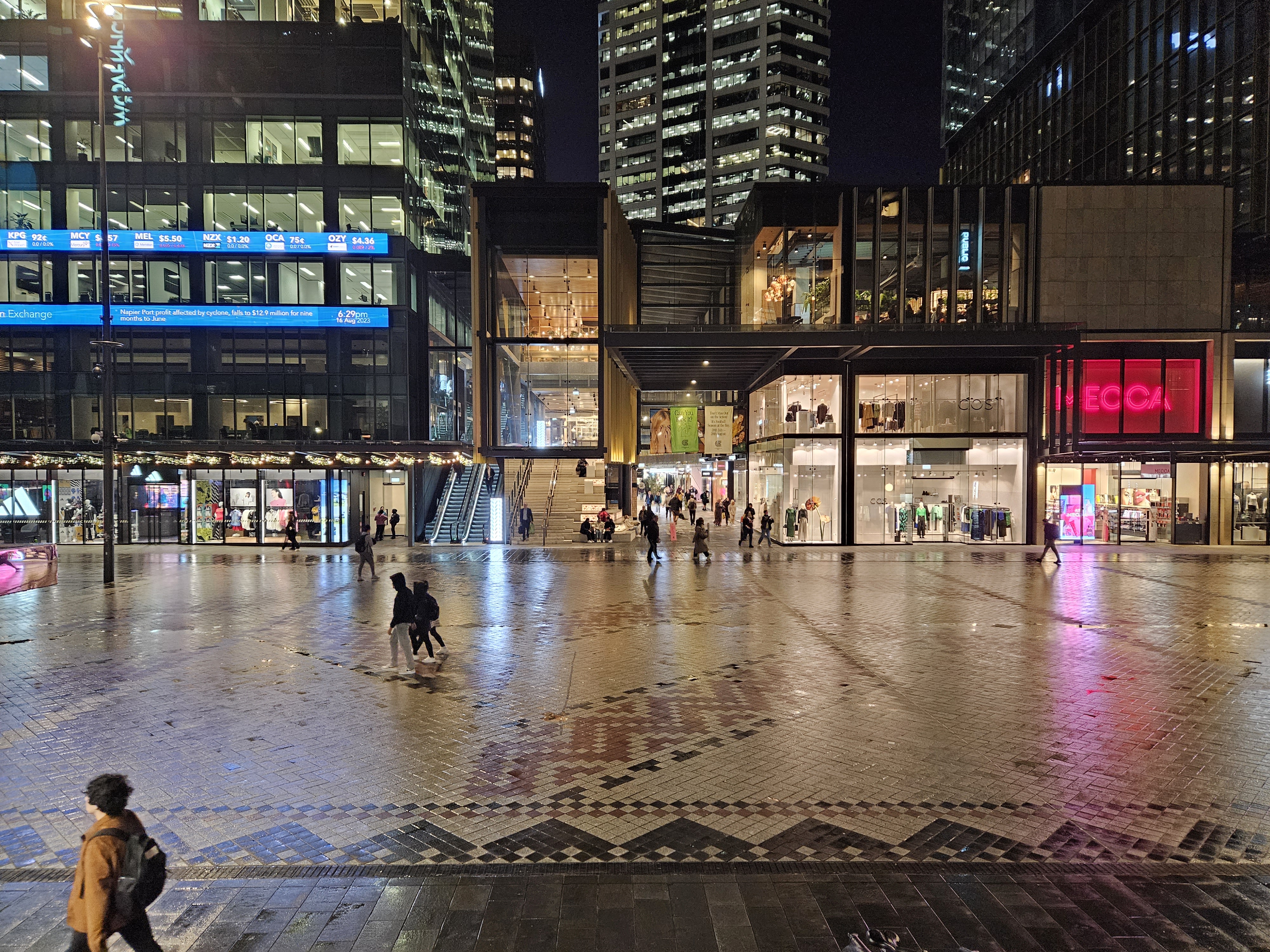
Overlooking Waitematā Harbour, Te Komititanga forms a new civic heart for Auckland City’s downtown and waterfront precinct.
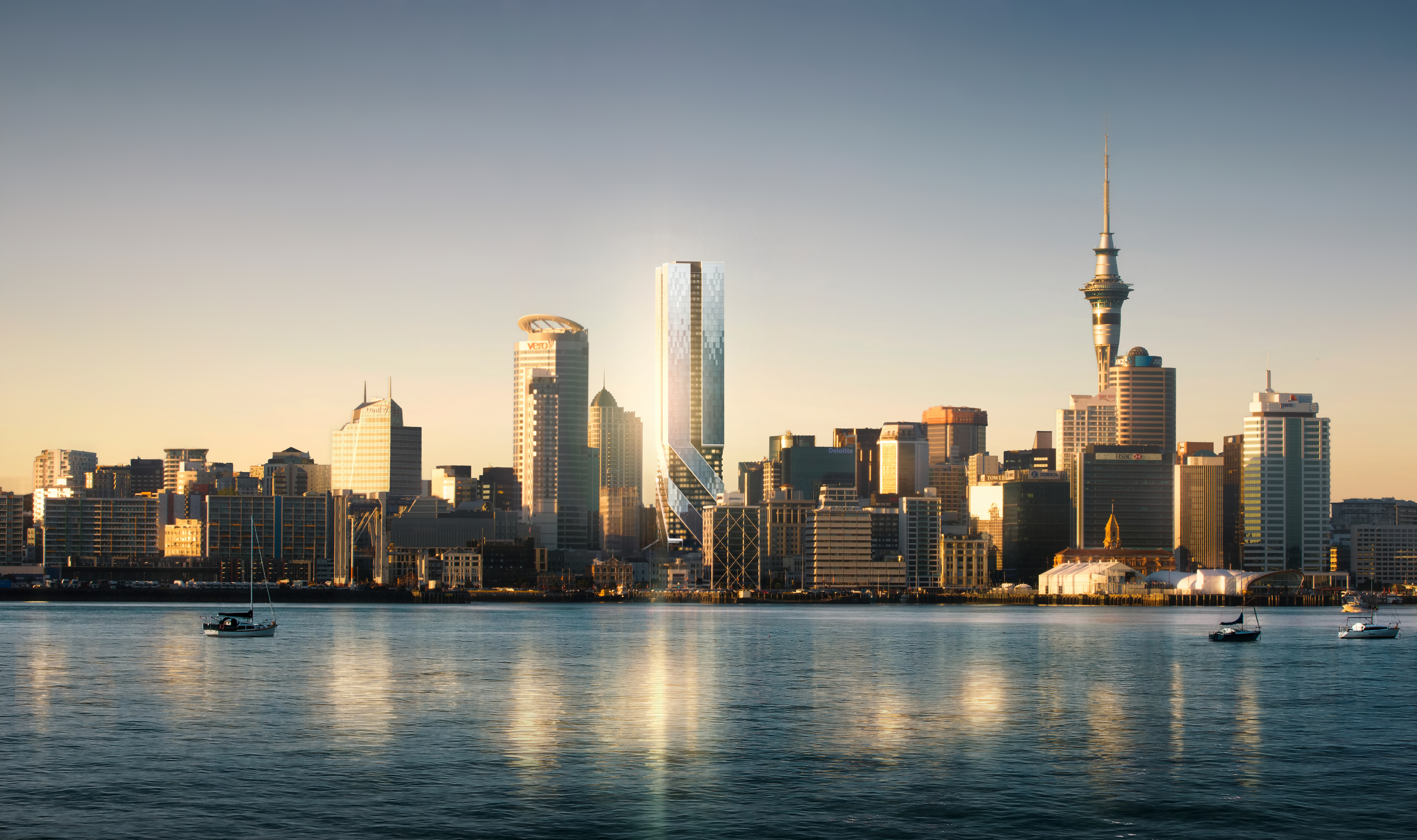
The Pacifica - in its lifespan, this site has undergone a notable design evolution over several years, engaging various architects and design teams.
The Auckland Urban Design Panel (AUDP) held its first meeting on 01 April 2003, and carried out its first project review on 14 April 2003. The project reviewed was fittingly a waterfront project: the re-use of Halsey Street wharf and reclamation for a proposed Viaduct Harbour events facility. At that time the area was part of the Americas Cup village but has since become home to the Viaduct Events Centre. Auckland City Council was the applicant, represented by John Duthie and Mark Vinall. Mathew Twose (City Planning section of ACC) authored the briefing document for the Panel, which asked the Panel “to recommend a set of urban design guidelines or principles that could assist in guiding the future use and development of this area as an events area or marine stadium”.
The inaugural panel comprised Gordon Moller and Diane Brand (NZIA affiliation), Doug Leighton (NZILA affiliation), Paul Phillips and Mark Townsend (NZ Property Council affiliation). The panel was chaired by John Hunt.
In the early years of its operation panel sessions were held in the VIP rooms of the Town Hall, which added a certain sense of occasion to the proceedings. While there was a marked resistance from developers and their design consultants to present to the panel in the early period of its operation, this gradually shifted, subsequently requiring a second panel to operate as well. Over time, with increasing depth of urban design expertise within the City Council, a single panel, meeting weekly but sometimes reviewing more than one project per session, became the norm.
Notes prepared by John Hunt, 28 March 2023